Biofluorescence
Overview
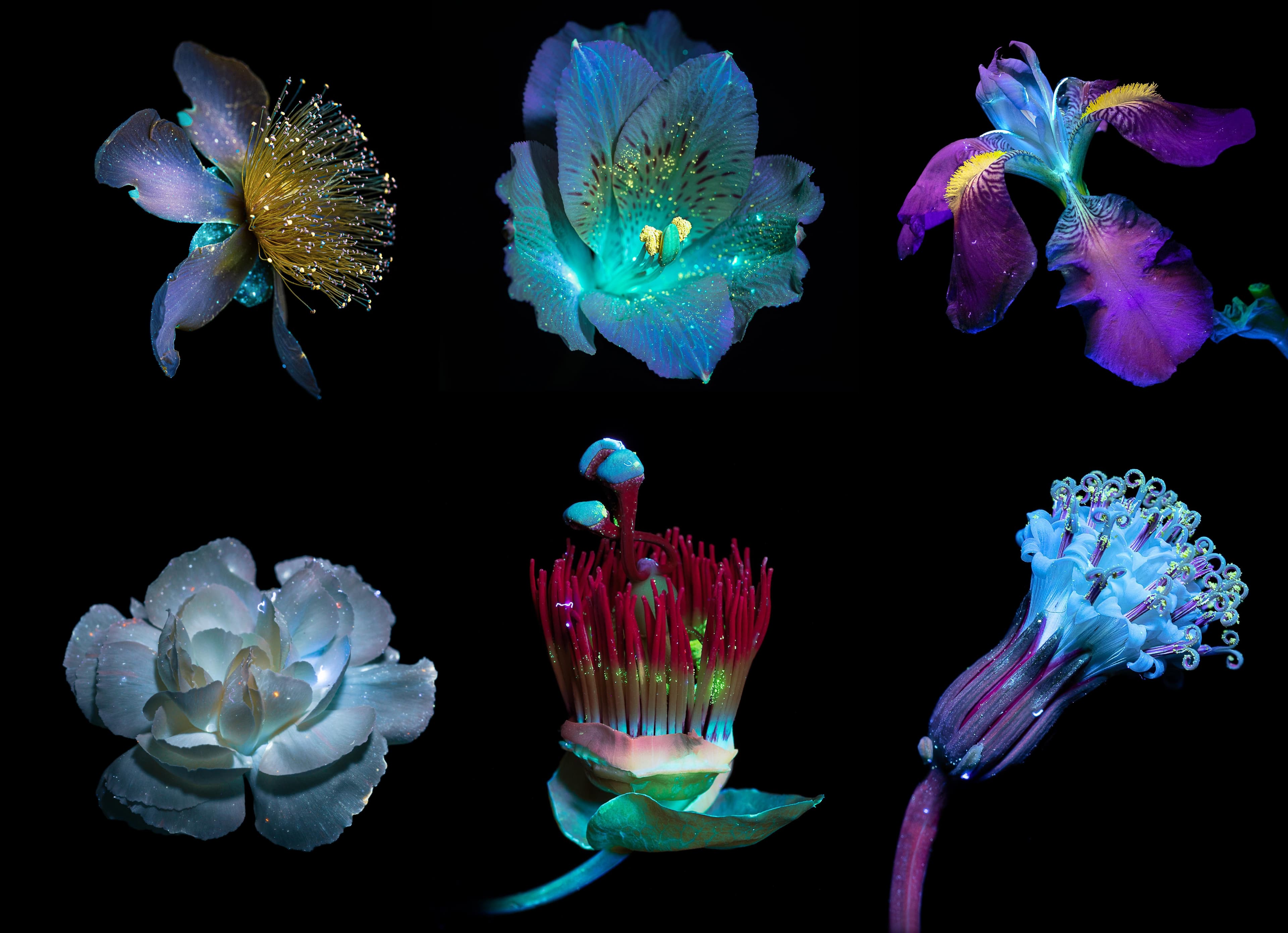
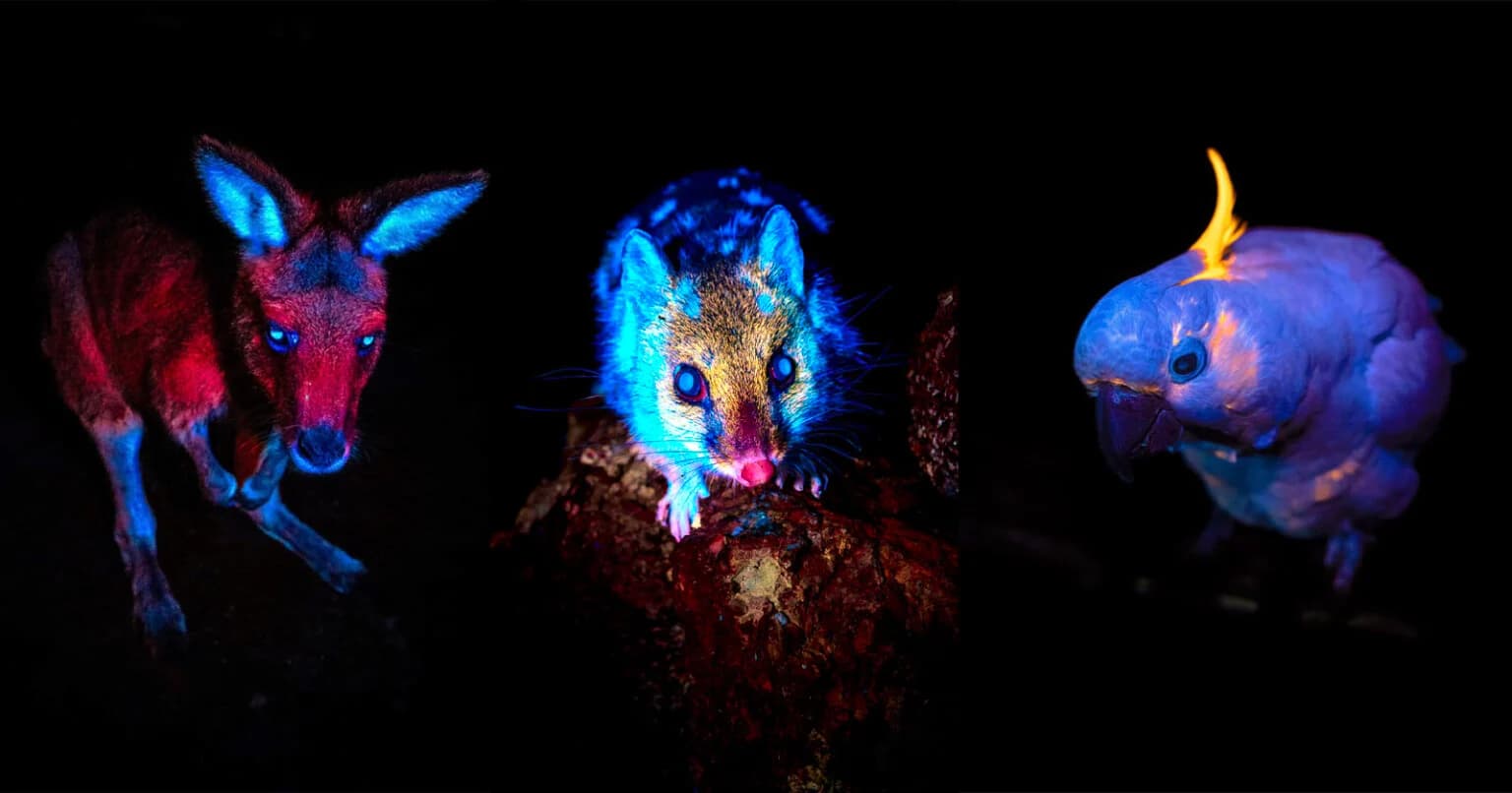
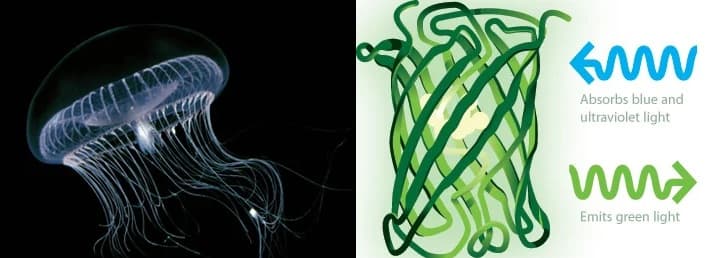
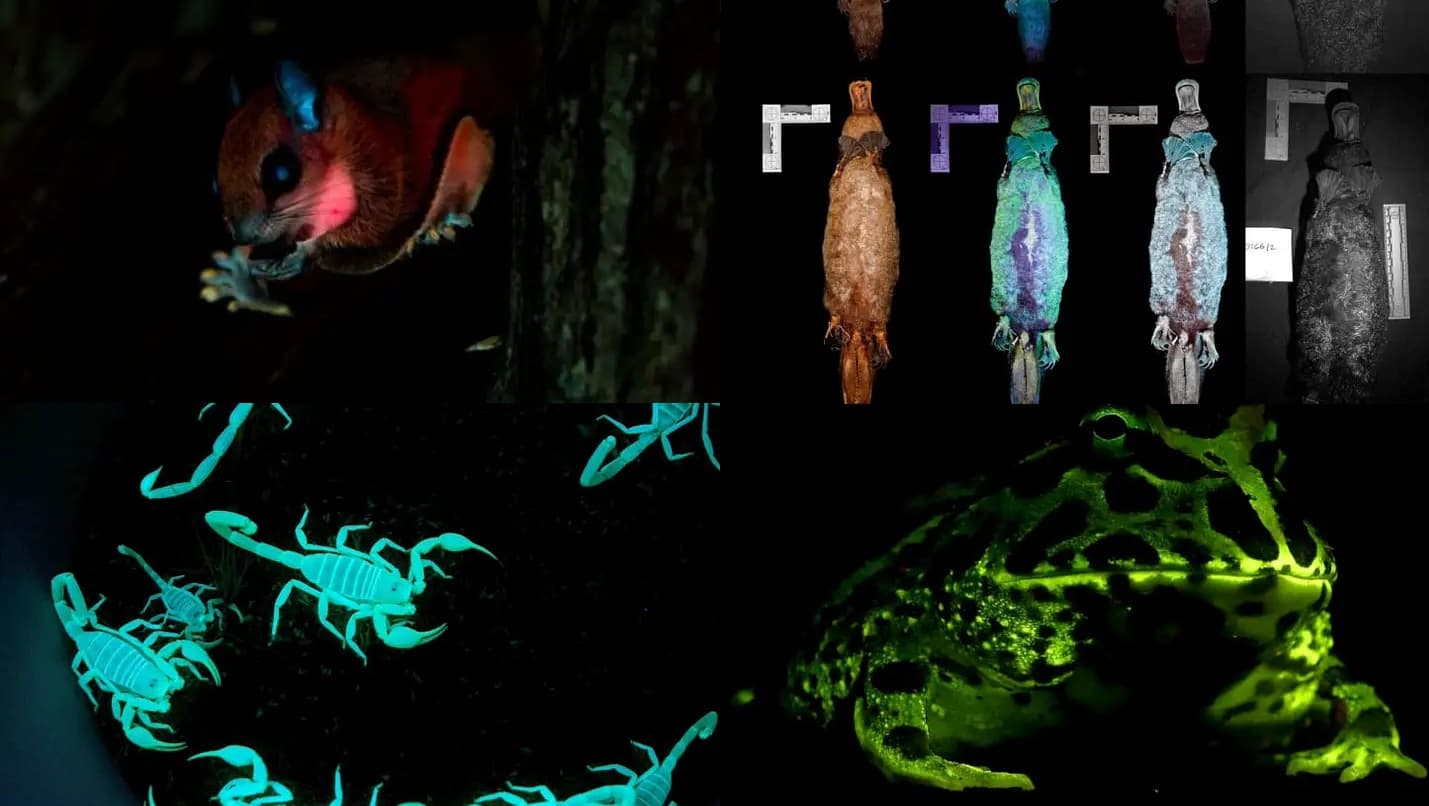
Biofluorescence is the emission of light by an organism after it has absorbed a different type of light. Biofluorescent organisms typically absorb high-energy light and almost immediately emit lower-energy light, resembling the phosphorescence of glow-in-the-dark objects but on much shorter timescales. The phenomenon is sometimes mistaken for bioluminescence, in which an organism produces its own light due to a chemical reaction.
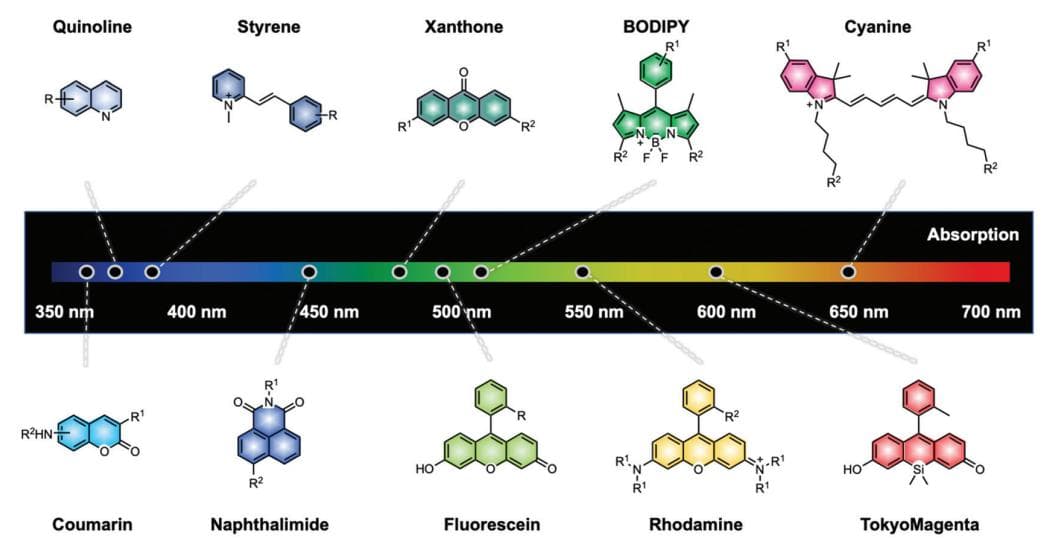
Unlike pigments, which absorb specific wavelengths of light and reflect others to give organisms their coloration, biofluorescence arises from electron transitions in molecules called fluorophores. Incoming light is first absorbed by an electron, which pushes it to a higher energy level for a few nanoseconds. During that time, the fluorophore loses some energy through vibration. With less energy available, the electron emits lower-energy, longer-wavelength light as it drops to its previous energy level.
Thousands of animals exhibit biofluorescence, which is thought to be involved in courtship, communication, attracting prey, and environmental defense. The chlorophyll in photosynthetic plants also fluoresces a soft red after absorbing ultraviolet radiation, such as from sunlight. Since the first fluorophore was isolated in 1962, scientists have tagged proteins with fluorophores to observe biochemical processes, including gene expression and the spread of disease.
1440 Findings
Hours of research by our editors, distilled into minutes of clarity.









Explore Science & Technology
Dive into the dynamic world of science and technology, where curiosity has brought about extraordinary understandings of the universe and creativity has led to the breakthroughs and innovations that have transformed our world. Explore a wide range of topics, from the natural and physical sciences to cutting-edge technologies and the people who shaped them, each of which is accompanied by carefully curated resources meant to inform, engage, and inspire those eager to uncover the nature of reality.
Featured Topics
- 3D Printing
- Algae
- Algorithms
- Asteroids
- Atoms
- Auroras
- Batteries
- Big Bang
- Bill Nye
- Biological Cells
- Bioluminescence
- Bioremediation
- Biosphere 2
- Black Holes
- Calculators
- Chaos Theory
- Climatology
- Comets
- Computer Viruses
- Coral Reefs
- Critical Minerals
- Crude Oil
- Cryptography
- Dark Energy
- Dark Matter
- Dark Web
- Data Centers
- David Attenborough
- Deep-Sea Mining
- Deepfakes
- Dinosaurs
- DNA
- Earth
- Earth's Atmosphere
- Earthquakes
- Eclipses
- El Niño-Southern Oscillation
- Electric Grids
- Electric Vehicles
- Electricity
- Environmental Protection Agency
- Extremophiles
- Fireworks
- Fracking
- General Relativity
- Generative AI
- Geothermal Power
- Grace Hopper
- Graphics Processing Unit
- Greenhouse Gases
- Helium
- Hubble Space Telescope
- Hurricanes
- International Space Station
- Internet
- Invasive Species
- James Webb Space Telescope
- Jupiter
- Keystone Species
- Large Hadron Collider
- Large Language Models
- Lasers
- Light
- Lightning
- LIGO
- Marie Curie
- Mars
- Memory
- Microchips
- Microplastics
- Mixed Reality
- Molecular Gastronomy
- Nancy Roman
- NASA
- National Science Foundation
- Neutron Stars
- Nikola Tesla
- Nobel Prize
- Nuclear Power
- Particle Accelerators
- Photosynthesis
- Plate Tectonics
- Pollinators
- Pontifical Academy of Sciences
- Quantum Computing
- Quantum Mechanics
- Radioactivity
- Rosalind Franklin
- Scientific Theory
- Self-Driving Cars
- Smart Cities
- Solar Power
- Sound
- Space Shuttle
- Space Tourism
- Space Trash
- Standard Model
- Stephen Hawking
- Sun
- Tardigrades
- Tesla
- Time
- Tornadoes
- Tsunamis
- Turbulence
- Viking Project
- Volcanoes
- Voyager Mission
- Water
- Wikipedia
- Wind Power