Particle Accelerators
Overview
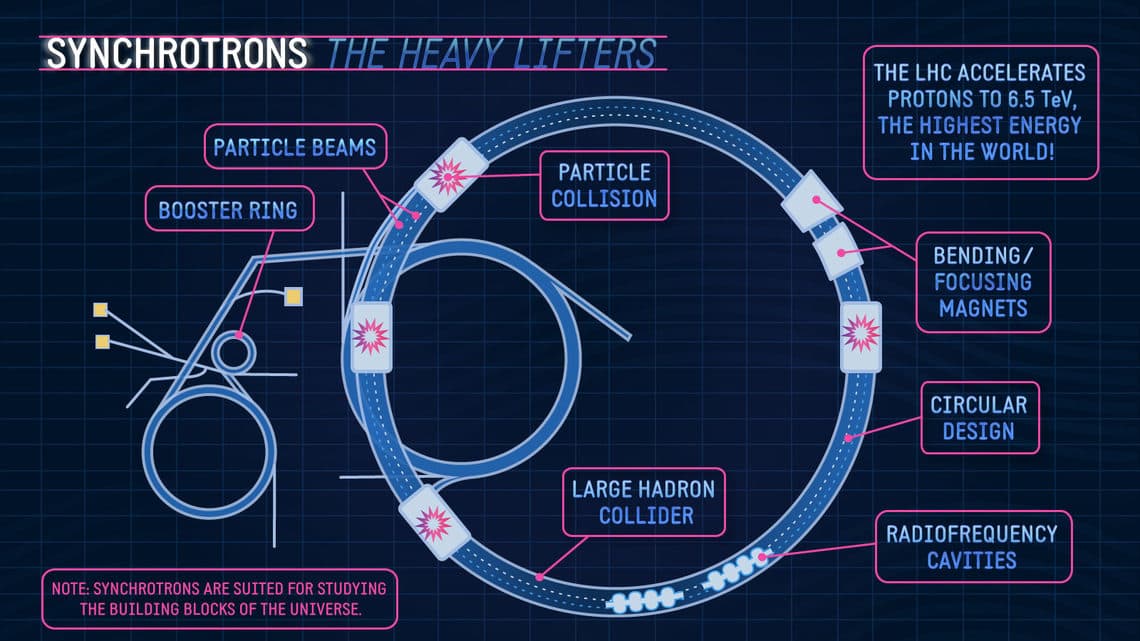
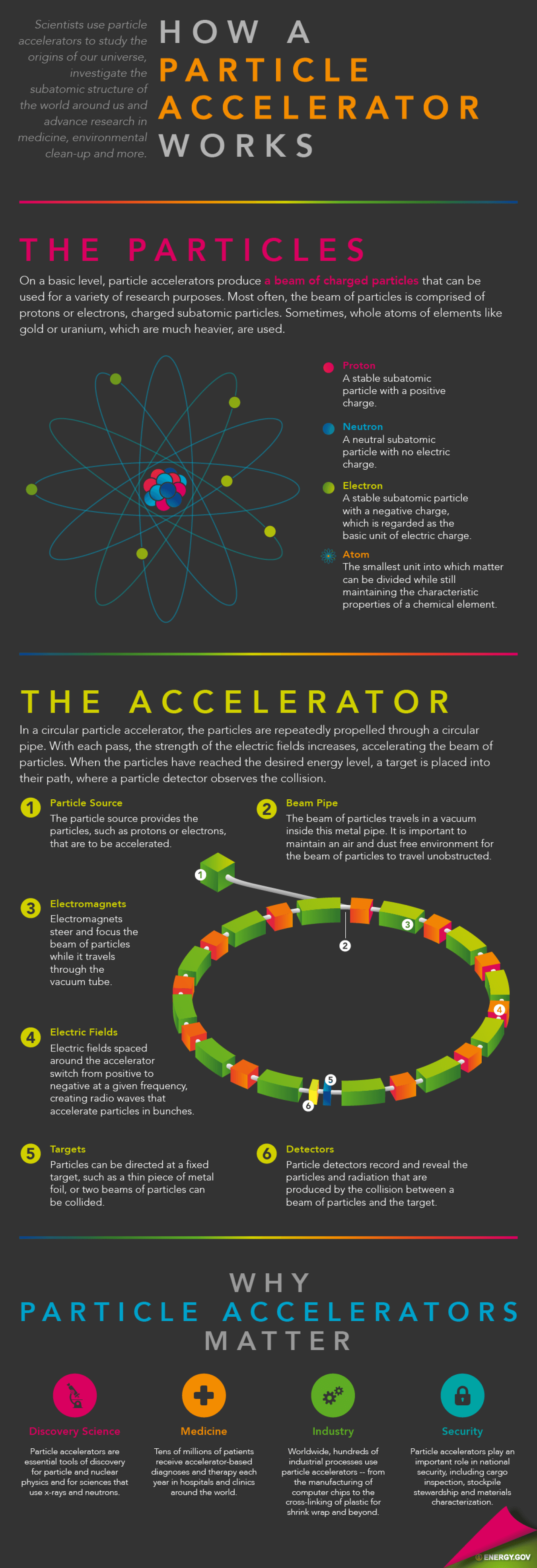
Particle accelerators are machines that accelerate and steer beams of charged particles, such as electrons, into collisions with one another or with another target. More than 30,000 exist worldwide, with most used to sterilize medical equipment, produce radiopharmaceuticals for cancer therapy, and detect chemical contaminants.
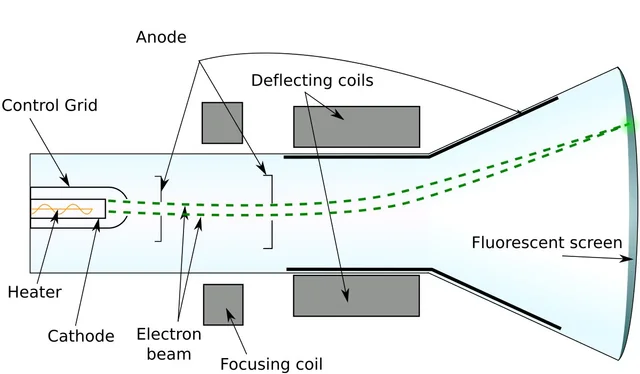
Based on the path taken by particles, they are categorized as either linear accelerators (linacs) or circular accelerators. Both types include four key components: a source that produces charged particles, electric fields to accelerate them, magnetic fields to steer and focus them, and a vacuum within which they can travel unobstructed to their target.
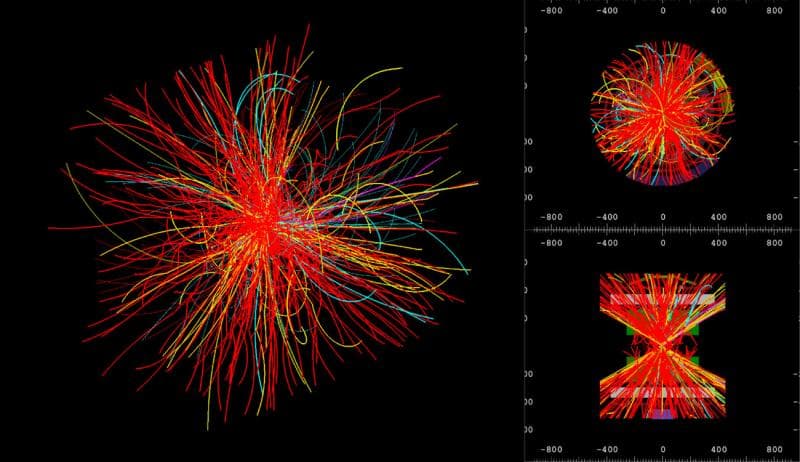
Particle accelerators are sometimes referred to as "atom smashers" because the first generation of these devices used atoms as collision targets rather than subatomic particles. Today, the largest accelerators most often use protons to probe subatomic structures and the origins of the universe by reaching temperatures in the trillions and accelerating matter up to 99.9999991% the speed of light.
1440 Findings
Hours of research by our editors, distilled into minutes of clarity.








Explore Science & Technology
Dive into the dynamic world of science and technology, where curiosity has brought about extraordinary understandings of the universe and creativity has led to the breakthroughs and innovations that have transformed our world. Explore a wide range of topics, from the natural and physical sciences to cutting-edge technologies and the people who shaped them, each of which is accompanied by carefully curated resources meant to inform, engage, and inspire those eager to uncover the nature of reality.
Featured Topics
- 3D Printing
- Algae
- Algorithms
- Asteroids
- Atoms
- Auroras
- Batteries
- Big Bang
- Bill Nye
- Biofluorescence
- Biological Cells
- Bioluminescence
- Bioremediation
- Biosphere 2
- Black Holes
- Calculators
- Chaos Theory
- Climatology
- Comets
- Computer Viruses
- Coral Reefs
- Critical Minerals
- Crude Oil
- Cryptography
- Dark Energy
- Dark Matter
- Dark Web
- Data Centers
- David Attenborough
- Deep-Sea Mining
- Deepfakes
- Dinosaurs
- DNA
- Earth
- Earth's Atmosphere
- Earthquakes
- Eclipses
- El Niño-Southern Oscillation
- Electric Grids
- Electric Vehicles
- Electricity
- Environmental Protection Agency
- Evolution
- Extremophiles
- Fireworks
- Fracking
- General Relativity
- Generative AI
- Geothermal Power
- Grace Hopper
- Graphics Processing Unit
- Greenhouse Gases
- Helium
- Hubble Space Telescope
- Hurricanes
- International Space Station
- Internet
- Invasive Species
- James Webb Space Telescope
- Jane Goodall
- Jupiter
- Keystone Species
- Large Hadron Collider
- Large Language Models
- Lasers
- Light
- Lightning
- LIGO
- Marie Curie
- Mars
- Memory
- Microchips
- Microplastics
- Mixed Reality
- Molecular Gastronomy
- Nancy Roman
- NASA
- National Science Foundation
- Neptune
- Neutron Stars
- Nikola Tesla
- Nobel Prize
- Nuclear Power
- Oceans
- Particle Accelerators
- Photosynthesis
- Plate Tectonics
- Pollinators
- Pontifical Academy of Sciences
- Quantum Computing
- Quantum Mechanics
- Radioactivity
- Rosalind Franklin
- Scientific Theory
- Self-Driving Cars
- Smart Cities
- Solar Power
- Sound
- Space Shuttle
- Space Tourism
- Space Trash
- Standard Model
- Stephen Hawking
- Sun
- Tardigrades
- Tesla
- Time
- Tornadoes
- Tsunamis
- Turbulence
- Viking Project
- Volcanoes
- Voyager Mission
- Water
- White Dwarfs
- Wikipedia
- Wind Power