Jane Goodall
Overview
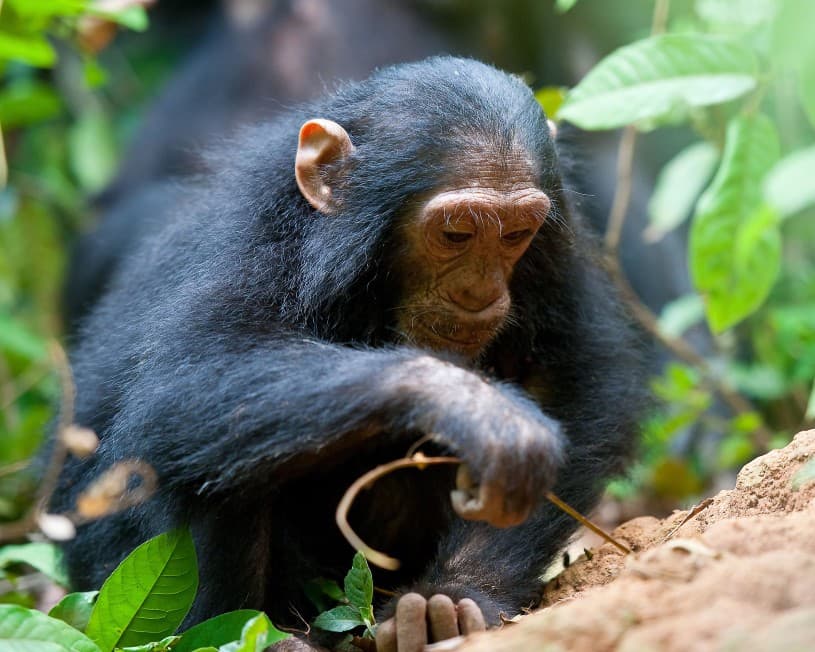
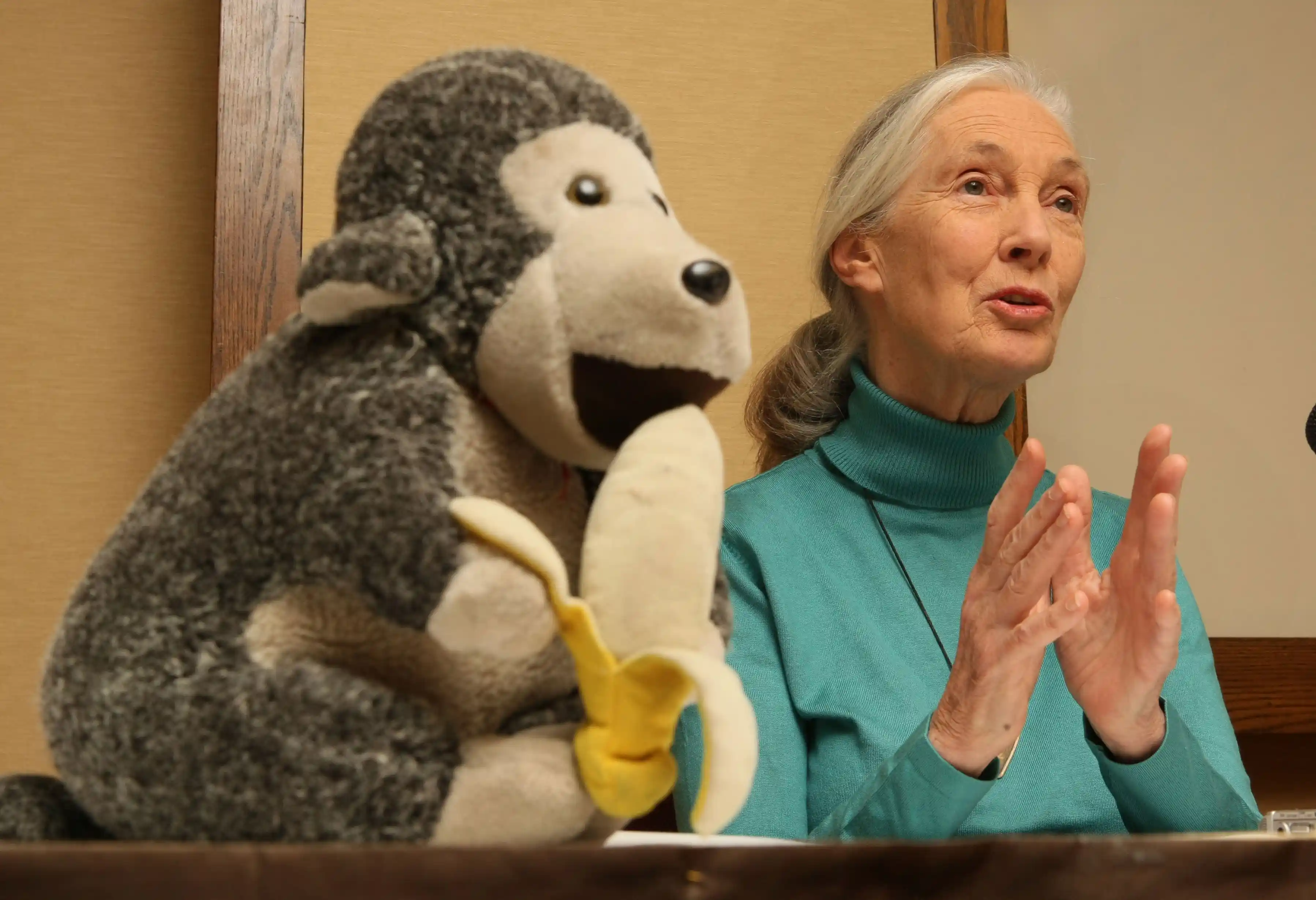
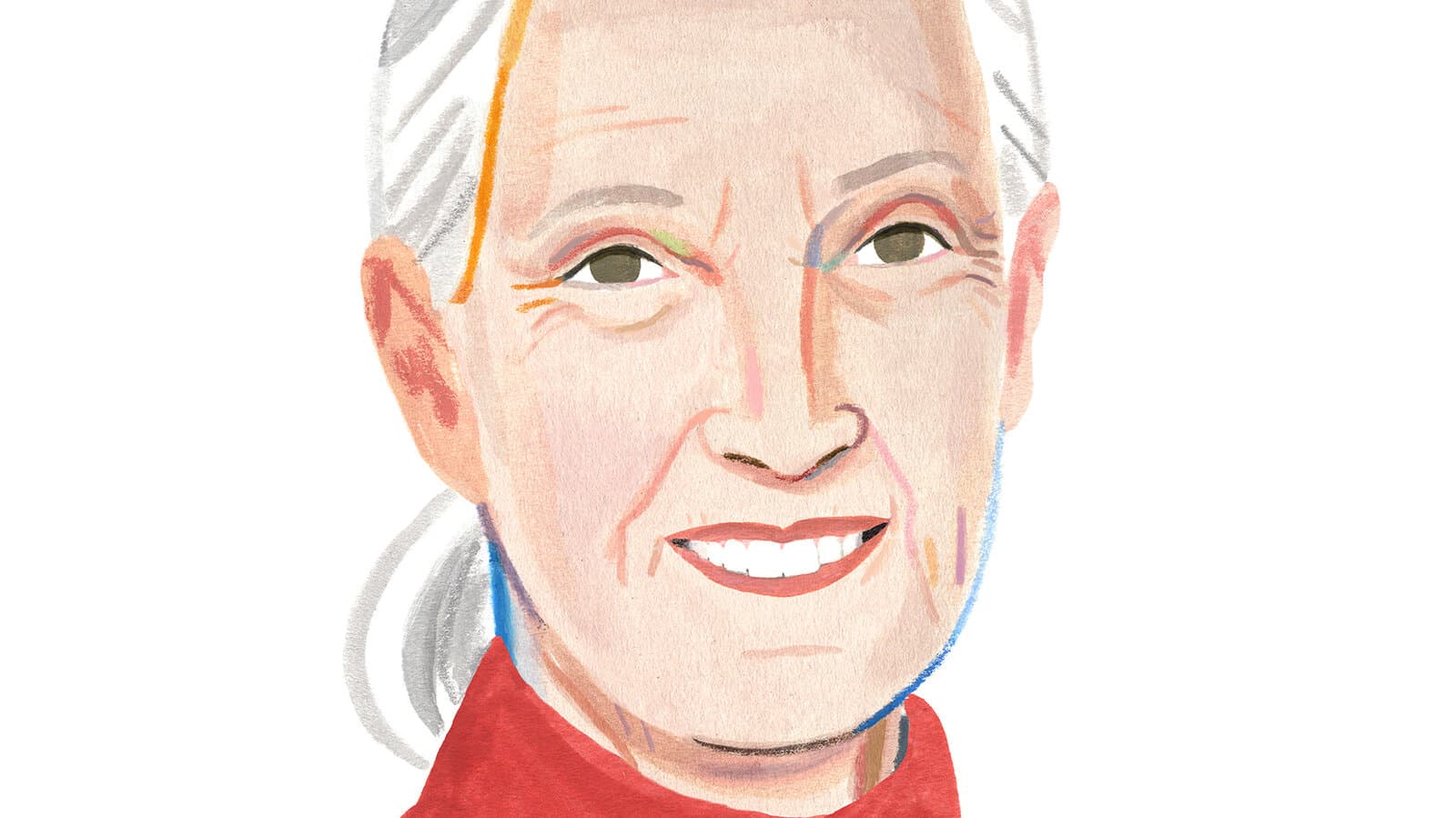
Valerie Jane Morris-Goodall was a primatologist and environmental activist, best known for her fieldwork with chimpanzees in Tanzania. By observing that chimps made and used tools, had personalities, developed social bonds, and exhibited other characteristics long considered exclusive to humans, Goodall reshaped the view that humanity was unique within the animal kingdom. Over more than six decades, Goodall increasingly championed wildlife protection, habitat restoration, animal welfare, and community-led, global conservation.
Born in London in 1934, Goodall became interested in Africa and in living with animals after reading about Tarzan and Dr. Dolittle as a child. At 26, she was sent by paleoanthropologist Louis Leakey to study primates in their natural habitats. Her groundbreaking work earned her international recognition and contributed to her doctorate from Cambridge, despite not having a bachelor's degree.
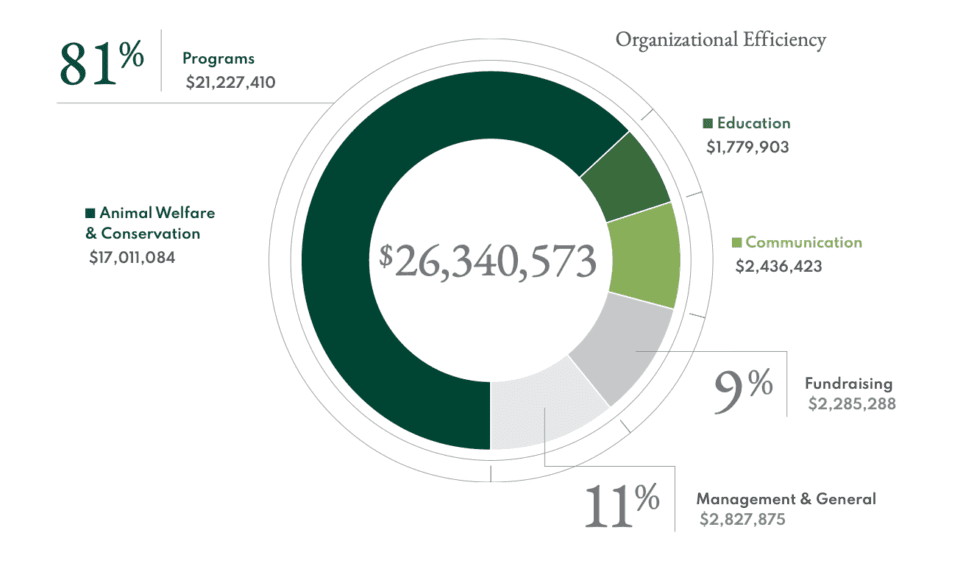
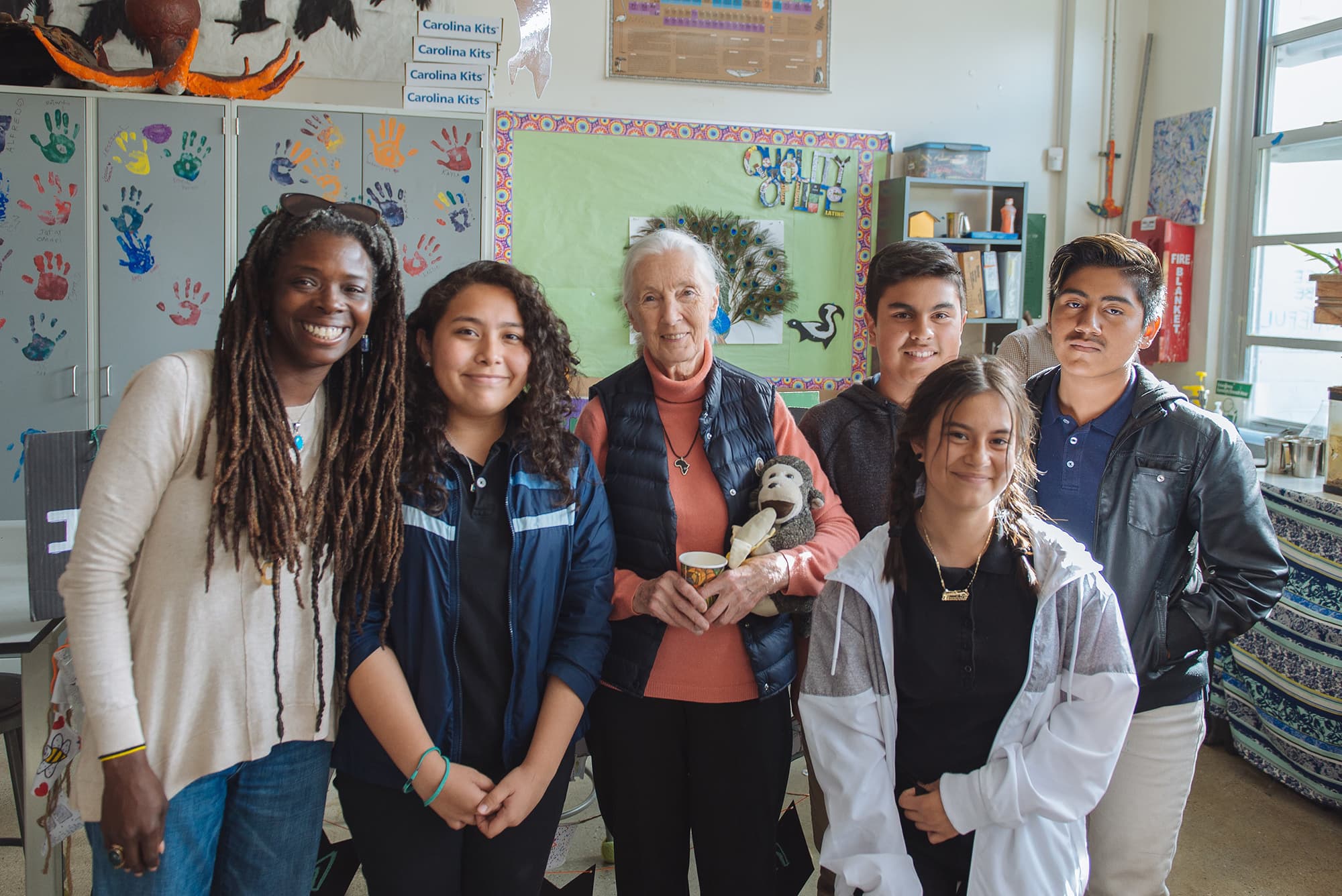
In 1986, Goodall shifted her focus from research to activism and policy, expanding the scope of the Jane Goodall Institute—founded in 1977—into a worldwide conservation organization. Since 1991, its Roots & Shoots program has empowered youth to enact positive change in their communities, while Goodall continued to travel nearly 300 days a year advocating for ecological stewardship.
Goodall died at 91, nine months after she received the Presidential Medal of Freedom.
1440 Findings
Hours of research by our editors, distilled into minutes of clarity.









Explore Science & Technology
Dive into the dynamic world of science and technology, where curiosity has brought about extraordinary understandings of the universe and creativity has led to the breakthroughs and innovations that have transformed our world. Explore a wide range of topics, from the natural and physical sciences to cutting-edge technologies and the people who shaped them, each of which is accompanied by carefully curated resources meant to inform, engage, and inspire those eager to uncover the nature of reality.
Featured Topics
- 3D Printing
- Algae
- Algorithms
- Asteroids
- Atoms
- Auroras
- Batteries
- Big Bang
- Bill Nye
- Biological Cells
- Bioluminescence
- Bioremediation
- Biosphere 2
- Black Holes
- Calculators
- Chaos Theory
- Climatology
- Comets
- Computer Viruses
- Coral Reefs
- Critical Minerals
- Crude Oil
- Cryptography
- Dark Energy
- Dark Matter
- Dark Web
- Data Centers
- David Attenborough
- Deep-Sea Mining
- Deepfakes
- Dinosaurs
- DNA
- Earth
- Earth's Atmosphere
- Earthquakes
- Eclipses
- El Niño-Southern Oscillation
- Electric Grids
- Electric Vehicles
- Electricity
- Environmental Protection Agency
- Extremophiles
- Fireworks
- Fracking
- General Relativity
- Generative AI
- Geothermal Power
- Grace Hopper
- Graphics Processing Unit
- Greenhouse Gases
- Helium
- Hubble Space Telescope
- Hurricanes
- International Space Station
- Internet
- Invasive Species
- James Webb Space Telescope
- Jupiter
- Keystone Species
- Large Hadron Collider
- Large Language Models
- Lasers
- Light
- Lightning
- LIGO
- Marie Curie
- Mars
- Memory
- Microchips
- Microplastics
- Mixed Reality
- Molecular Gastronomy
- Nancy Roman
- NASA
- National Science Foundation
- Neutron Stars
- Nikola Tesla
- Nobel Prize
- Nuclear Power
- Particle Accelerators
- Photosynthesis
- Plate Tectonics
- Pollinators
- Pontifical Academy of Sciences
- Quantum Computing
- Quantum Mechanics
- Radioactivity
- Rosalind Franklin
- Scientific Theory
- Self-Driving Cars
- Smart Cities
- Solar Power
- Sound
- Space Shuttle
- Space Tourism
- Space Trash
- Standard Model
- Stephen Hawking
- Sun
- Tardigrades
- Tesla
- Time
- Tornadoes
- Tsunamis
- Turbulence
- Viking Project
- Volcanoes
- Voyager Mission
- Water
- Wikipedia
- Wind Power