Computer Viruses
Overview
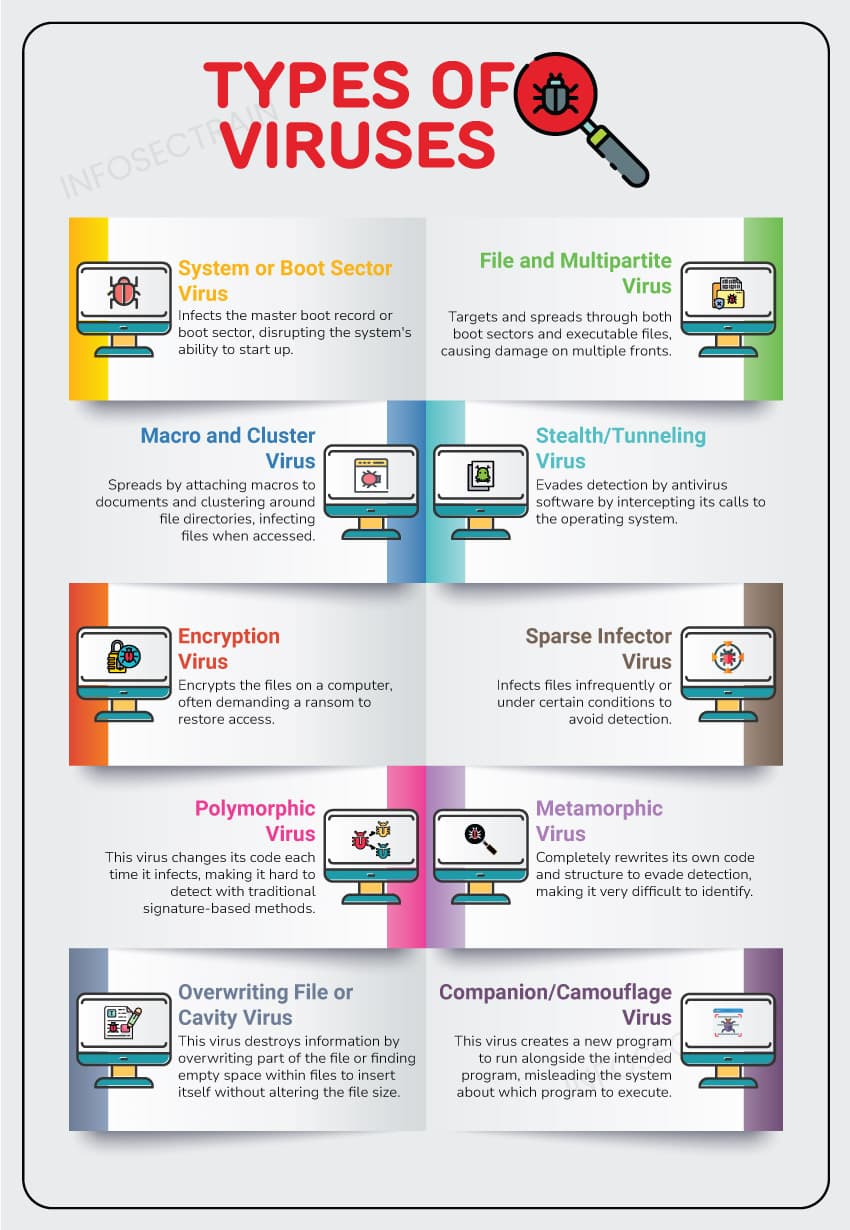
A computer virus is a type of code that copies itself into other software when a user runs an infected program or file. This action causes damage by altering programs, corrupting files, and compromising digital security. The term was first used in 1984 to describe all types of self-duplicating software and has since been misused as a catch-all for a broad range of malicious software, including adware and spyware. However, computer viruses are distinct from other malware because they require human action to spread.
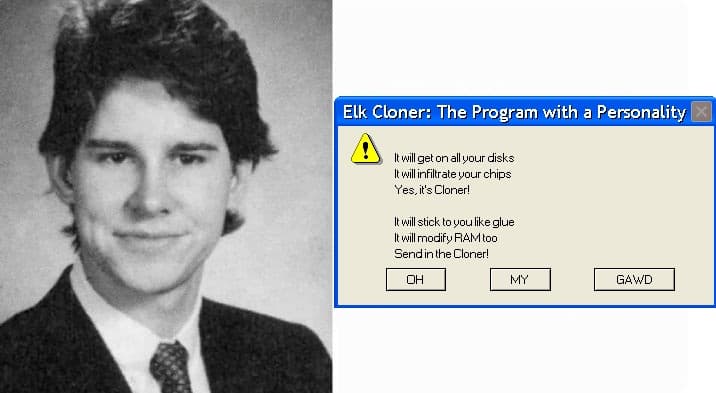
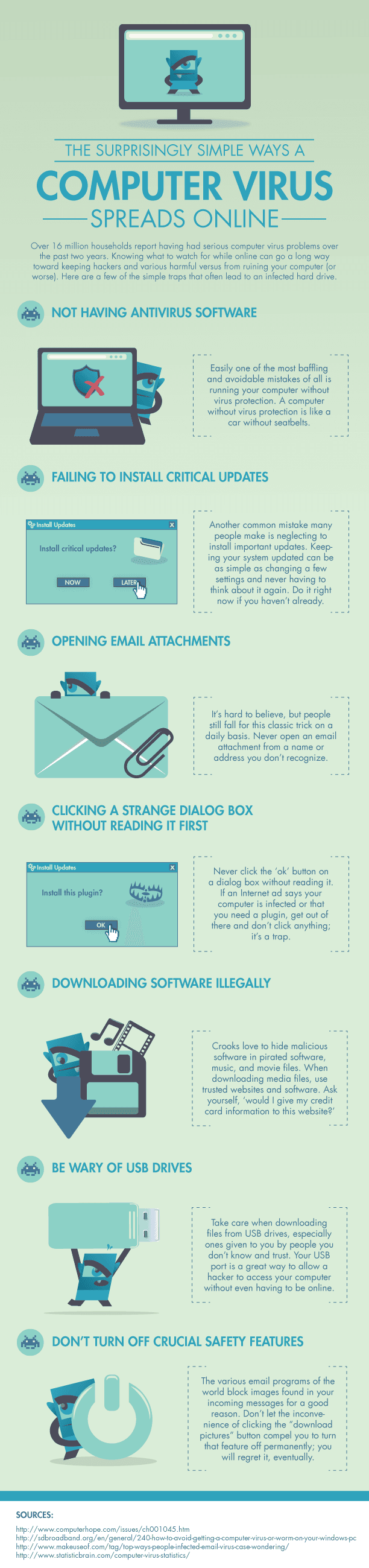
The idea of self-replicating software originated with John von Neumann, a mathematician and computer scientist who worked on the Manhattan Project. The first computer virus to spread beyond a research lab, Elk Cloner, was written by 15-year-old Richard Skrenta and spread through floppy disk sharing. Subsequent viruses also propagated via physical media, but the widespread adoption of the internet led to infections occurring more commonly through the downloading of software, such as compromised email attachments.
Software developed to detect and remove early computer viruses became the precursors to modern antivirus software—a misnomer for tools used to protect against all forms of malware. Computer viruses have become increasingly rare due to these tools, more secure computing architecture (e.g., web-based programs that don't need to be downloaded), and the shift by cybercriminals toward more lucrative methods, such as ransomware.
1440 Findings
Hours of research by our editors, distilled into minutes of clarity.



Explore Science & Technology
Dive into the dynamic world of science and technology, where curiosity has brought about extraordinary understandings of the universe and creativity has led to the breakthroughs and innovations that have transformed our world. Explore a wide range of topics, from the natural and physical sciences to cutting-edge technologies and the people who shaped them, each of which is accompanied by carefully curated resources meant to inform, engage, and inspire those eager to uncover the nature of reality.
Featured Topics
- 3D Printing
- Algae
- Algorithms
- Asteroids
- Atoms
- Auroras
- Batteries
- Big Bang
- Bill Nye
- Biological Cells
- Bioluminescence
- Bioremediation
- Biosphere 2
- Black Holes
- Calculators
- Chaos Theory
- Climatology
- Comets
- Computer Viruses
- Coral Reefs
- Critical Minerals
- Crude Oil
- Cryptography
- Dark Energy
- Dark Matter
- Dark Web
- Data Centers
- David Attenborough
- Deep-Sea Mining
- Deepfakes
- Dinosaurs
- DNA
- Earth
- Earth's Atmosphere
- Earthquakes
- Eclipses
- El Niño-Southern Oscillation
- Electric Grids
- Electric Vehicles
- Electricity
- Environmental Protection Agency
- Extremophiles
- Fireworks
- Fracking
- General Relativity
- Generative AI
- Geothermal Power
- Grace Hopper
- Graphics Processing Unit
- Greenhouse Gases
- Helium
- Hubble Space Telescope
- Hurricanes
- International Space Station
- Internet
- Invasive Species
- James Webb Space Telescope
- Jupiter
- Keystone Species
- Large Hadron Collider
- Large Language Models
- Lasers
- Light
- Lightning
- LIGO
- Marie Curie
- Mars
- Memory
- Microchips
- Microplastics
- Mixed Reality
- Molecular Gastronomy
- Nancy Roman
- NASA
- National Science Foundation
- Neutron Stars
- Nikola Tesla
- Nobel Prize
- Nuclear Power
- Particle Accelerators
- Photosynthesis
- Plate Tectonics
- Pollinators
- Pontifical Academy of Sciences
- Quantum Computing
- Quantum Mechanics
- Radioactivity
- Rosalind Franklin
- Scientific Theory
- Self-Driving Cars
- Smart Cities
- Solar Power
- Sound
- Space Shuttle
- Space Tourism
- Space Trash
- Standard Model
- Stephen Hawking
- Sun
- Tardigrades
- Tesla
- Time
- Tornadoes
- Tsunamis
- Turbulence
- Viking Project
- Volcanoes
- Voyager Mission
- Water
- Wikipedia
- Wind Power