Heat Pumps
Overview
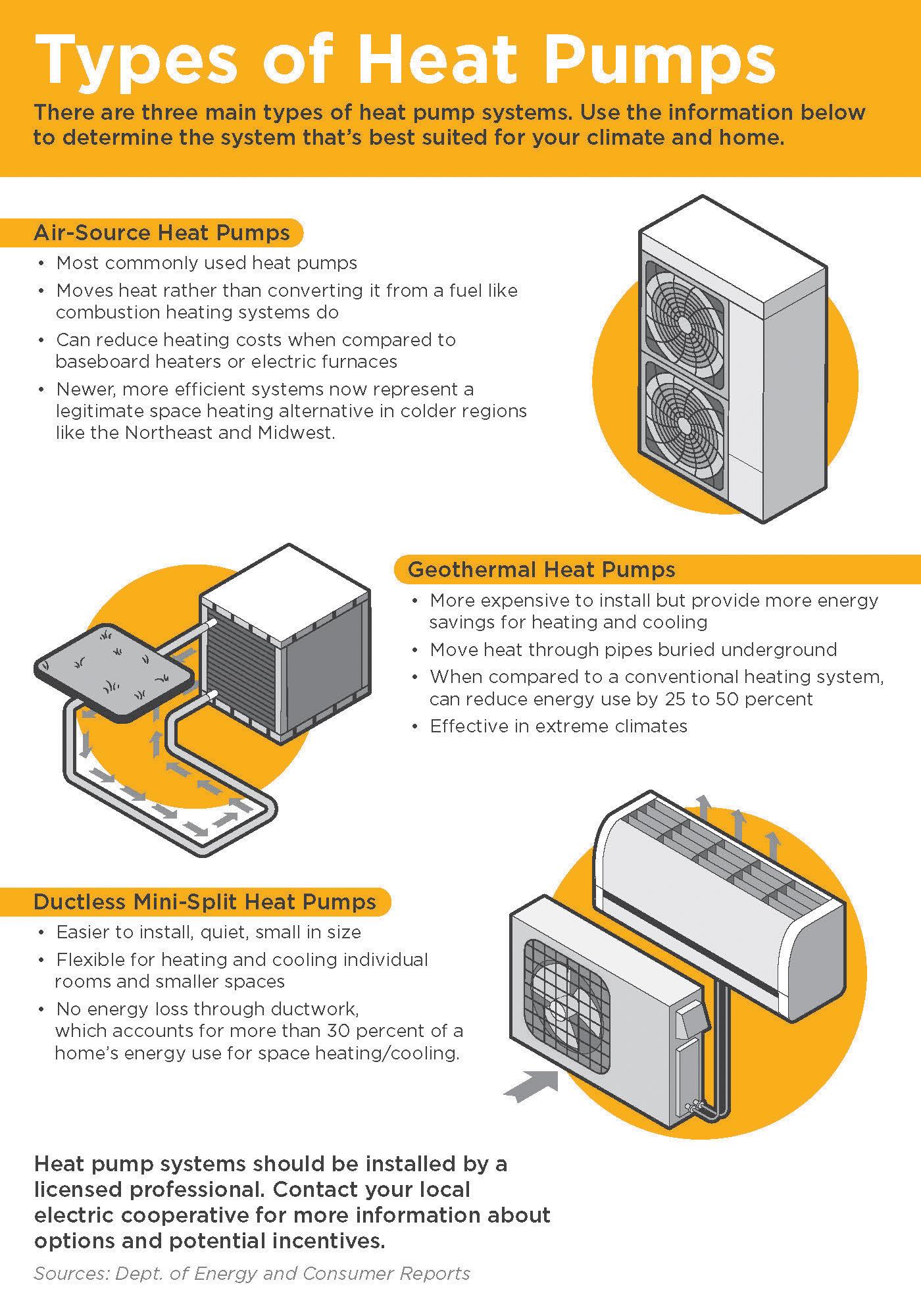
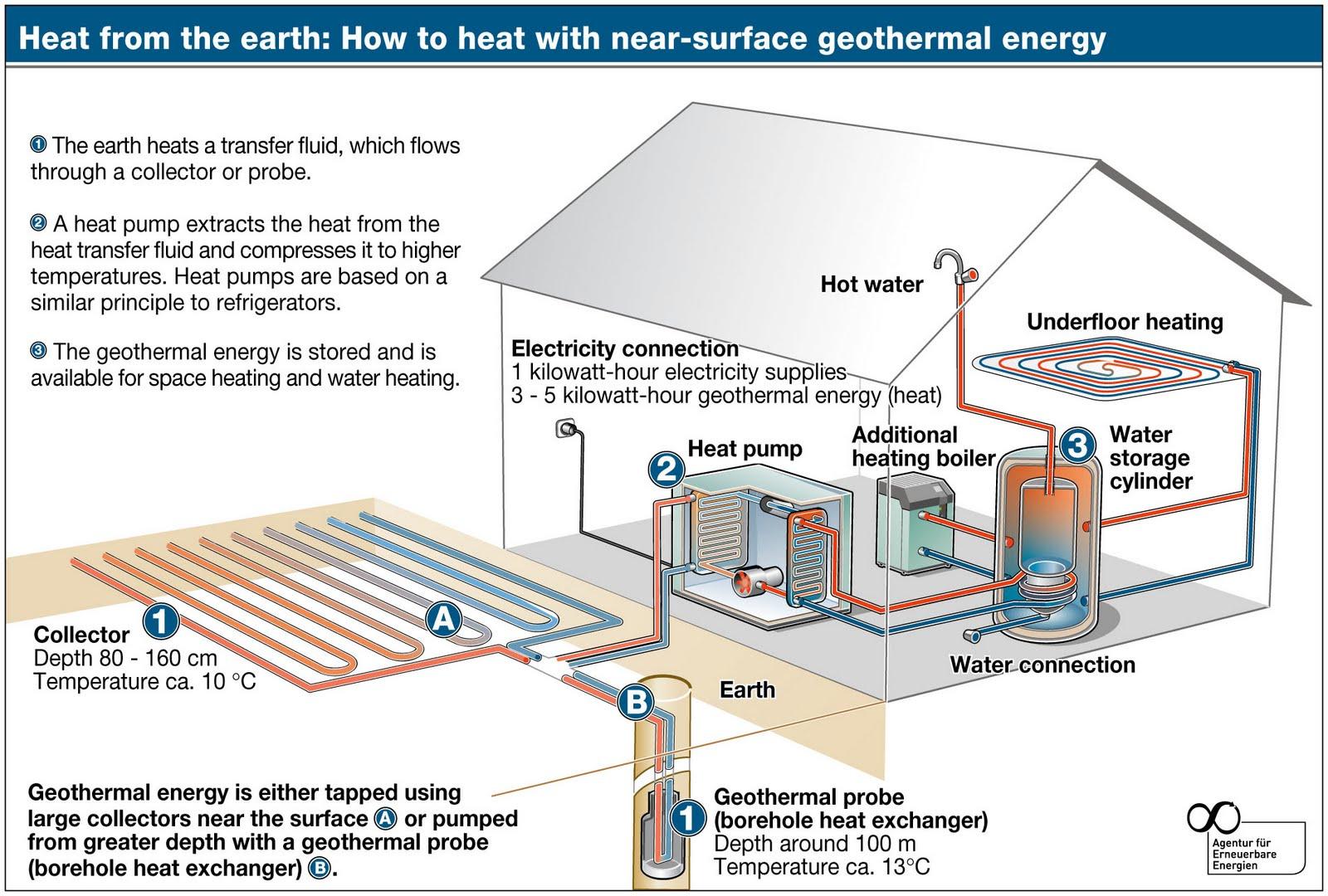
Heat pumps are devices that include air conditioners, refrigerators, freezers, and certain heating systems. Rather than producing their own thermal energy, as occurs in a gas furnace or similar appliance, heat pumps regulate temperature by moving thermal energy into or out of a space. This enables them to be several times more efficient and reduce reliance on fossil fuels.
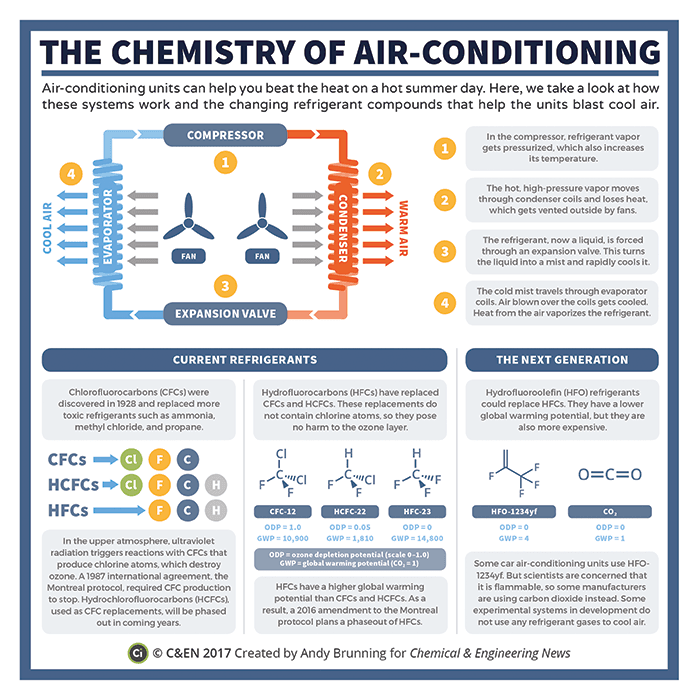
Heat pumps use a closed loop in which a specialized fluid—the refrigerant—evaporates and condenses. They also take advantage of the second law of thermodynamics: thermal energy naturally flows from hotter to colder spaces. This flow is defined as heat.
In cooling mode, the cool refrigerant is first exposed to a warmer environment, such as a living room. Energy flows from the room to the refrigerant, cooling the space and boiling the chemical. The gas is then compressed using electricity, raising its temperature above that of a second environment, such as the outdoors.
Once it is exposed to this second, cooler environment, the refrigerant loses thermal energy to the space. This chills the refrigerant, which condenses back into a liquid. An expansion valve then further lowers the chemical's temperature before the loop restarts. In heating mode, the loop is reversed.
1440 Findings
Hours of research by our editors, distilled into minutes of clarity.









Explore Science & Technology
Dive into the dynamic world of science and technology, where curiosity has brought about extraordinary understandings of the universe and creativity has led to the breakthroughs and innovations that have transformed our world. Explore a wide range of topics, from the natural and physical sciences to cutting-edge technologies and the people who shaped them, each of which is accompanied by carefully curated resources meant to inform, engage, and inspire those eager to uncover the nature of reality.
Featured Topics
- 3D Printing
- Algae
- Algorithms
- Asteroids
- Atoms
- Auroras
- Batteries
- Big Bang
- Bill Nye
- Biofluorescence
- Biological Cells
- Bioluminescence
- Bioremediation
- Biosphere 2
- Black Holes
- Calculators
- Chaos Theory
- Climatology
- Comets
- Computer Viruses
- Coral Reefs
- Critical Minerals
- Crude Oil
- Cryptography
- Dark Energy
- Dark Matter
- Dark Web
- Data Centers
- David Attenborough
- Deep-Sea Mining
- Deepfakes
- Dinosaurs
- DNA
- Earth
- Earth's Atmosphere
- Earthquakes
- Eclipses
- El Niño-Southern Oscillation
- Electric Grids
- Electric Vehicles
- Electricity
- Environmental Protection Agency
- Evolution
- Extremophiles
- Fireworks
- Fracking
- General Relativity
- Generative AI
- Geothermal Power
- Grace Hopper
- Graphics Processing Unit
- Greenhouse Gases
- Helium
- Hubble Space Telescope
- Hurricanes
- International Space Station
- Internet
- Invasive Species
- James Webb Space Telescope
- Jane Goodall
- Jupiter
- Keystone Species
- Large Hadron Collider
- Large Language Models
- Lasers
- Light
- Lightning
- LIGO
- Marie Curie
- Mars
- Memory
- Microchips
- Microplastics
- Mixed Reality
- Molecular Gastronomy
- Nancy Roman
- NASA
- National Science Foundation
- Neptune
- Neutron Stars
- Nikola Tesla
- Nobel Prize
- Nuclear Power
- Oceans
- Particle Accelerators
- Photosynthesis
- Pigments
- Plate Tectonics
- Pollinators
- Pontifical Academy of Sciences
- Quantum Computing
- Quantum Field Theory
- Quantum Mechanics
- Radioactivity
- Rosalind Franklin
- Scientific Theory
- Self-Driving Cars
- Smart Cities
- Solar Power
- Sound
- Space Shuttle
- Space Tourism
- Space Trash
- Special Relativity
- Standard Model
- Stephen Hawking
- Sun
- Tardigrades
- Television
- Tesla
- Time
- Tornadoes
- Tsunamis
- Turbulence
- Viking Project
- Volcanoes
- Voting Machines
- Voyager Mission
- Water
- White Dwarfs
- Wikipedia
- Wind Power