Data Centers
Overview
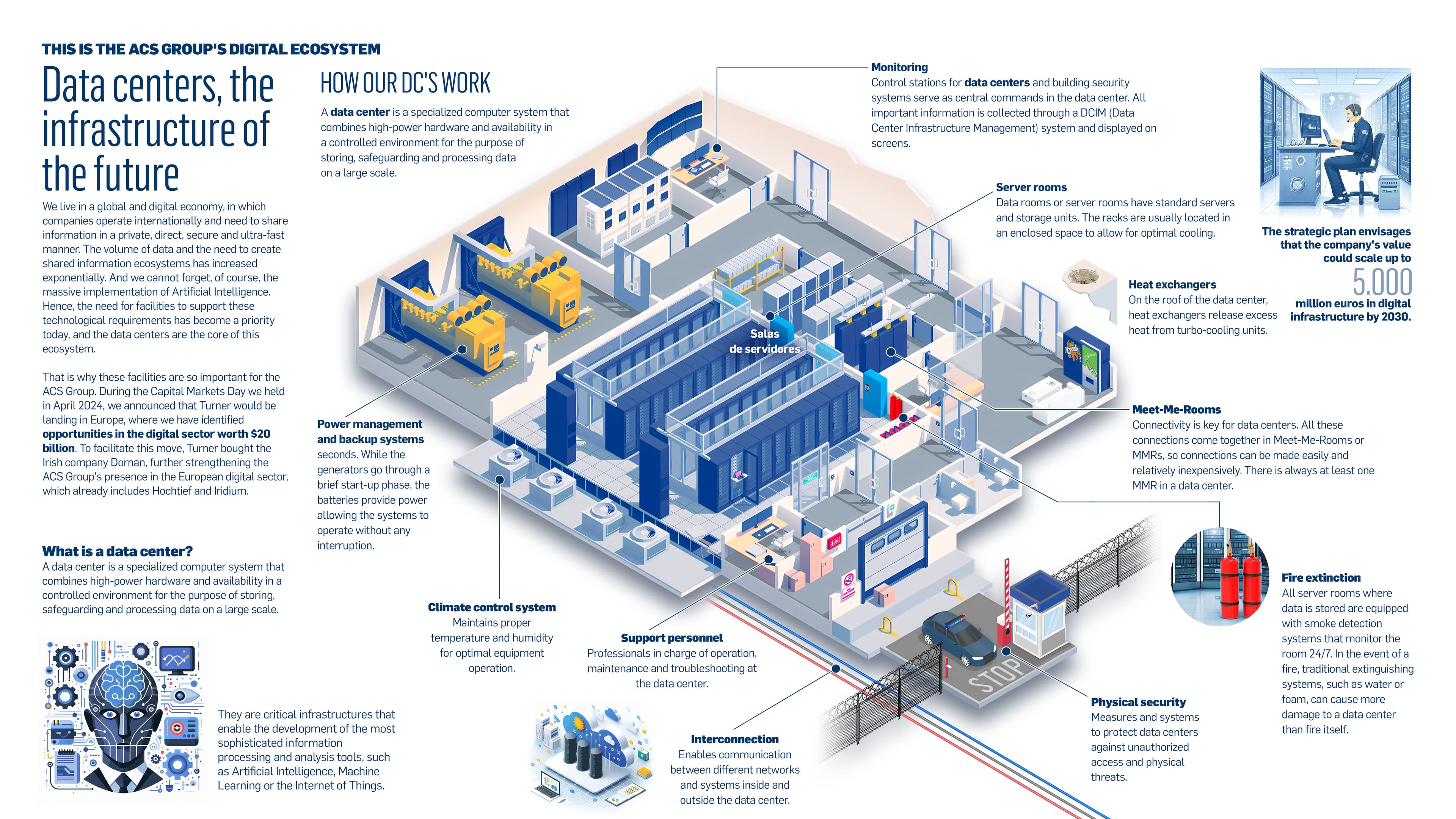
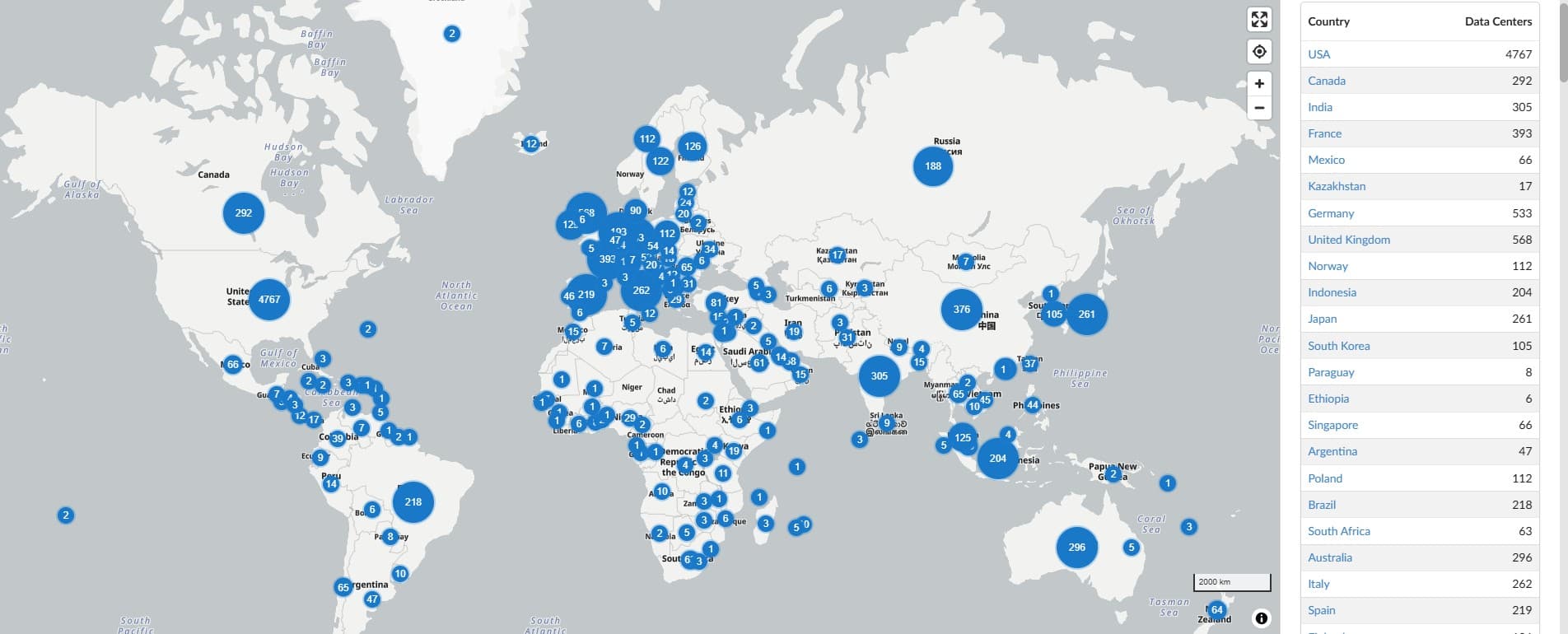
Data centers are facilities that house computing infrastructure, including hardware for data storage and processing, as well as network equipment that connects these components. Serving as the physical backbone of the digital age, data centers provide round-the-clock support for cloud-based applications (e.g., Google Docs), online financial services, streaming platforms, and generative AI systems. As of August 2026, about 39% of the world's 12,259 data centers have been built in the US, with construction largely accelerated by growing AI demands.
The first data centers were room-sized punch-card computers weighing dozens of tons. The development of microchips fueled miniaturization, shrinking these structures to fit in closet-sized server racks for businesses requiring in-house data processing capabilities. The widespread adoption of the internet, mobile devices, and non-localized cloud computing created a need for scalable, high-availability solutions to handle skyrocketing data volume. This led to the creation of hyperscale data centers—facilities managed by cloud service providers—offering upgradable computing resources to industries.
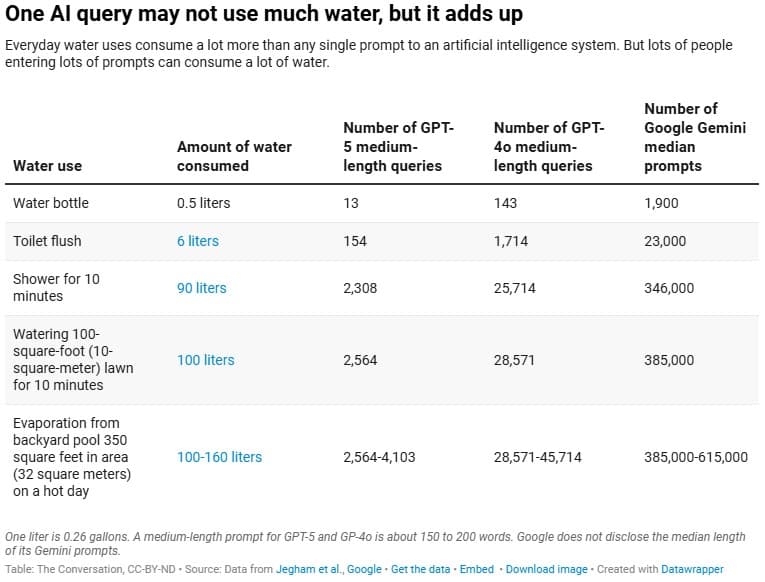
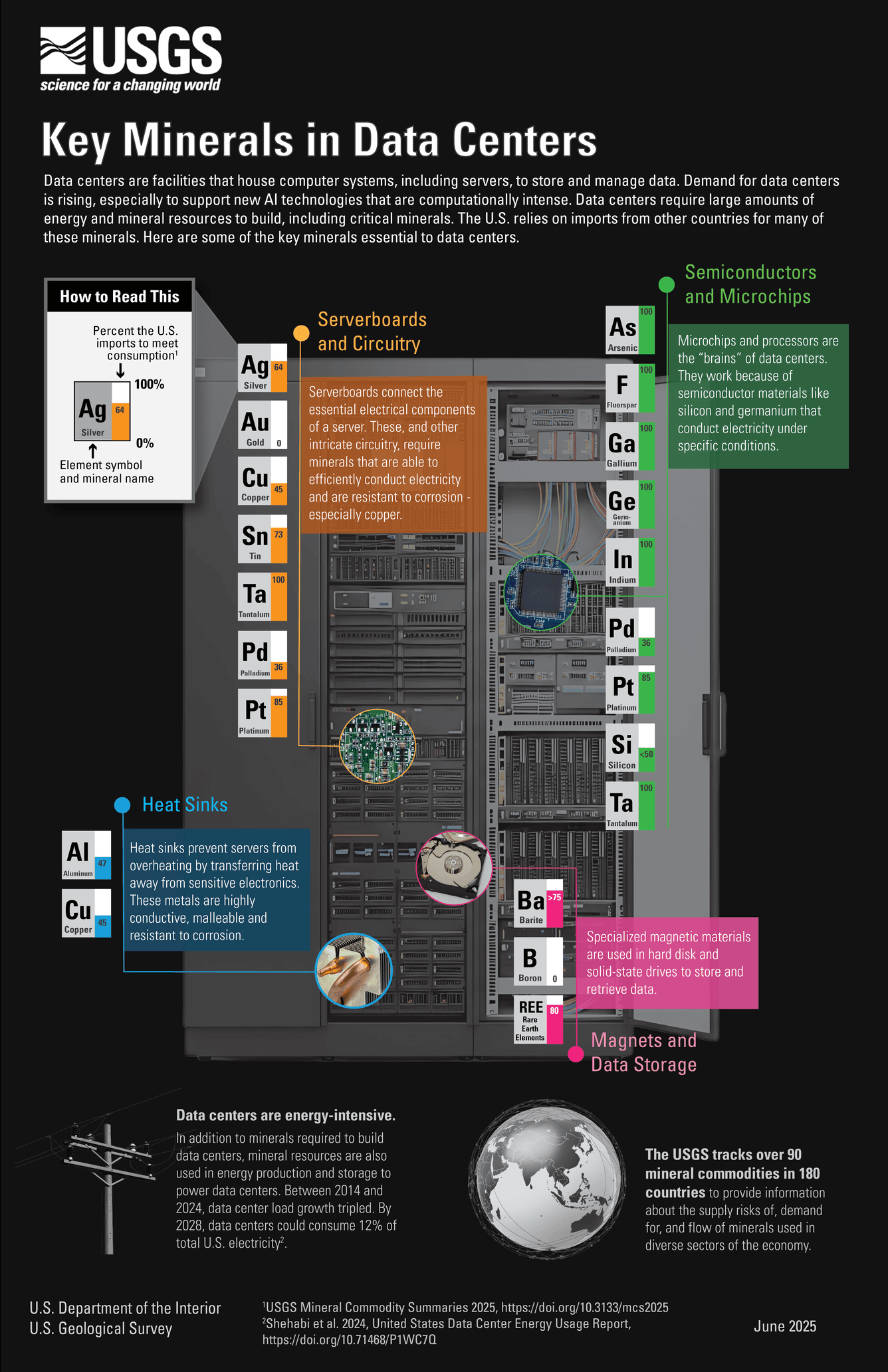
Modern data centers rely on power management, backup structures, climate control, and specialized software to ensure uninterrupted service amid changing user activity. These systems require substantial water, electricity, and critical minerals, which have driven up consumer utility bills and electronics costs and raised environmental concerns.
1440 Findings
Hours of research by our editors, distilled into minutes of clarity.








Explore Science & Technology
Dive into the dynamic world of science and technology, where curiosity has brought about extraordinary understandings of the universe and creativity has led to the breakthroughs and innovations that have transformed our world. Explore a wide range of topics, from the natural and physical sciences to cutting-edge technologies and the people who shaped them, each of which is accompanied by carefully curated resources meant to inform, engage, and inspire those eager to uncover the nature of reality.
Featured Topics
- 3D Printing
- Algae
- Algorithms
- Asteroids
- Atoms
- Auroras
- Batteries
- Big Bang
- Bill Nye
- Biofluorescence
- Biological Cells
- Bioluminescence
- Bioremediation
- Biosphere 2
- Black Holes
- Calculators
- Chaos Theory
- Climatology
- Comets
- Computer Viruses
- Coral Reefs
- Critical Minerals
- Crude Oil
- Cryptography
- Dark Energy
- Dark Matter
- Dark Web
- Data Centers
- David Attenborough
- Deep-Sea Mining
- Deepfakes
- Dinosaurs
- DNA
- Earth
- Earth's Atmosphere
- Earthquakes
- Eclipses
- El Niño-Southern Oscillation
- Electric Grids
- Electric Vehicles
- Electricity
- Environmental Protection Agency
- Evolution
- Extremophiles
- Fireworks
- Fracking
- General Relativity
- Generative AI
- Geothermal Power
- Grace Hopper
- Graphics Processing Unit
- Greenhouse Gases
- Helium
- Hubble Space Telescope
- Hurricanes
- International Space Station
- Internet
- Invasive Species
- James Webb Space Telescope
- Jane Goodall
- Jupiter
- Keystone Species
- Large Hadron Collider
- Large Language Models
- Lasers
- Light
- Lightning
- LIGO
- Marie Curie
- Mars
- Memory
- Microchips
- Microplastics
- Mixed Reality
- Molecular Gastronomy
- Nancy Roman
- NASA
- National Science Foundation
- Neptune
- Neutron Stars
- Nikola Tesla
- Nobel Prize
- Nuclear Power
- Oceans
- Particle Accelerators
- Photosynthesis
- Plate Tectonics
- Pollinators
- Pontifical Academy of Sciences
- Quantum Computing
- Quantum Mechanics
- Radioactivity
- Rosalind Franklin
- Scientific Theory
- Self-Driving Cars
- Smart Cities
- Solar Power
- Sound
- Space Shuttle
- Space Tourism
- Space Trash
- Standard Model
- Stephen Hawking
- Sun
- Tardigrades
- Tesla
- Time
- Tornadoes
- Tsunamis
- Turbulence
- Viking Project
- Volcanoes
- Voyager Mission
- Water
- White Dwarfs
- Wikipedia
- Wind Power