Lightning
Overview
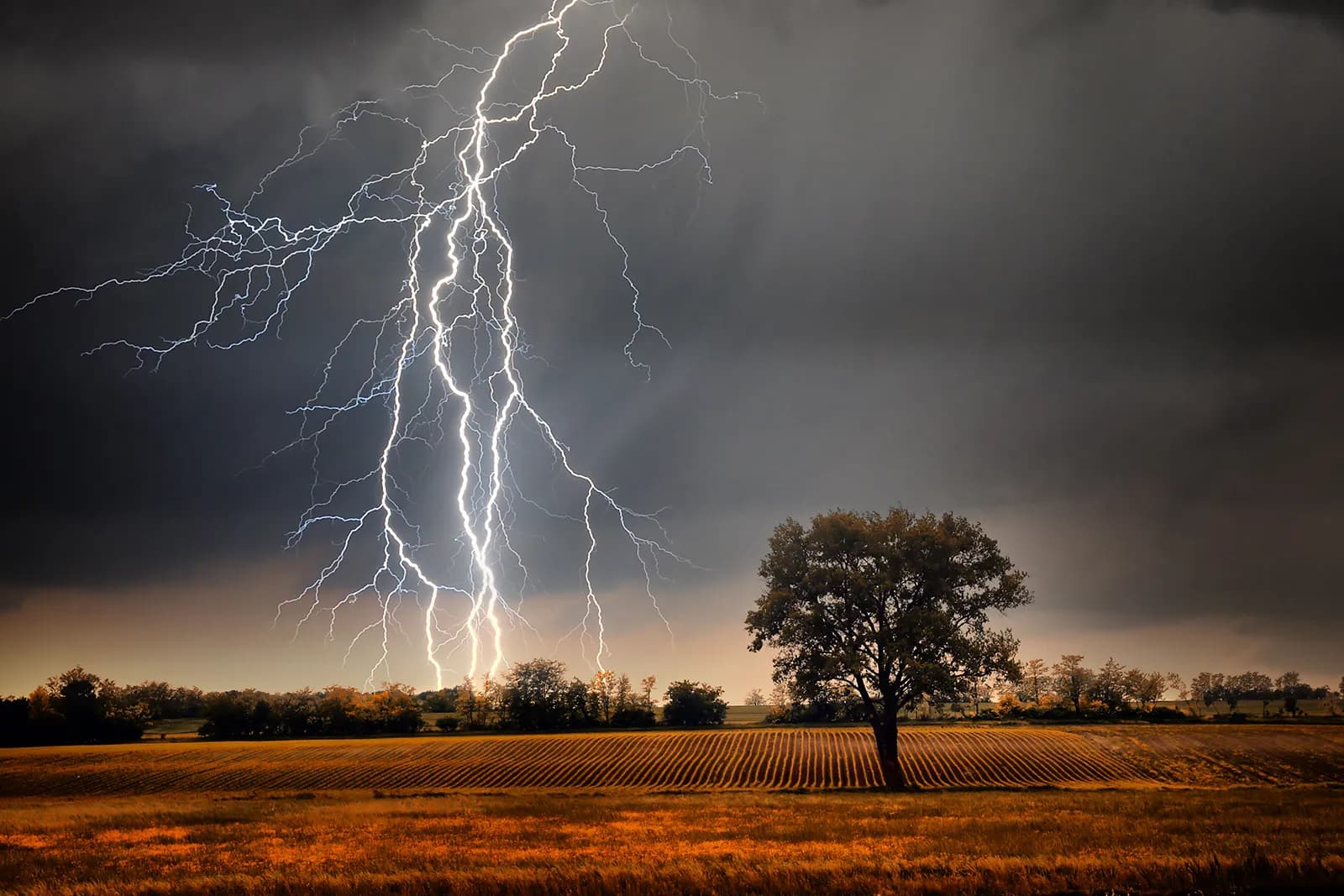
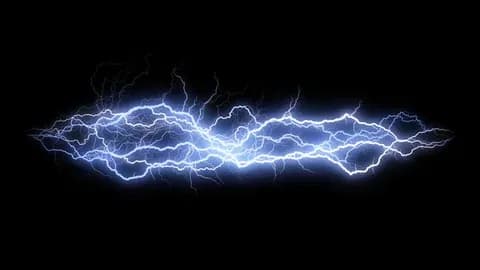
Lightning is the rapid flow of electricity between two oppositely charged regions in the atmosphere. The air surrounding the flow is superheated to up to five times the surface temperature of the sun, producing a bolt of plasma—atoms stripped of their electrons—that flashes intensely. The rapid expansion of this heated air generates a shockwave, which is heard as thunder.
Within storm clouds, collisions between updrafts of water droplets and ice crystals and downdrafts of graupel—soft hail—transfer electrons from rising to descending matter. Positive and negative charge builds at the top and bottom of clouds, respectively, until the electric potential difference overcomes the insulating properties of air. The discharge between the regions produces lightning as electrons rush through the air like a static shock, restoring charge balance.
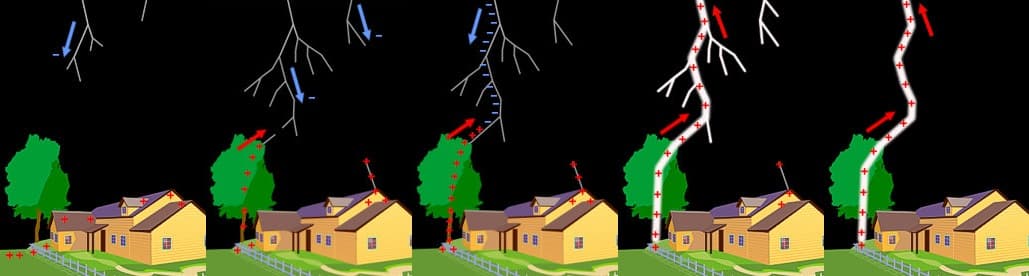
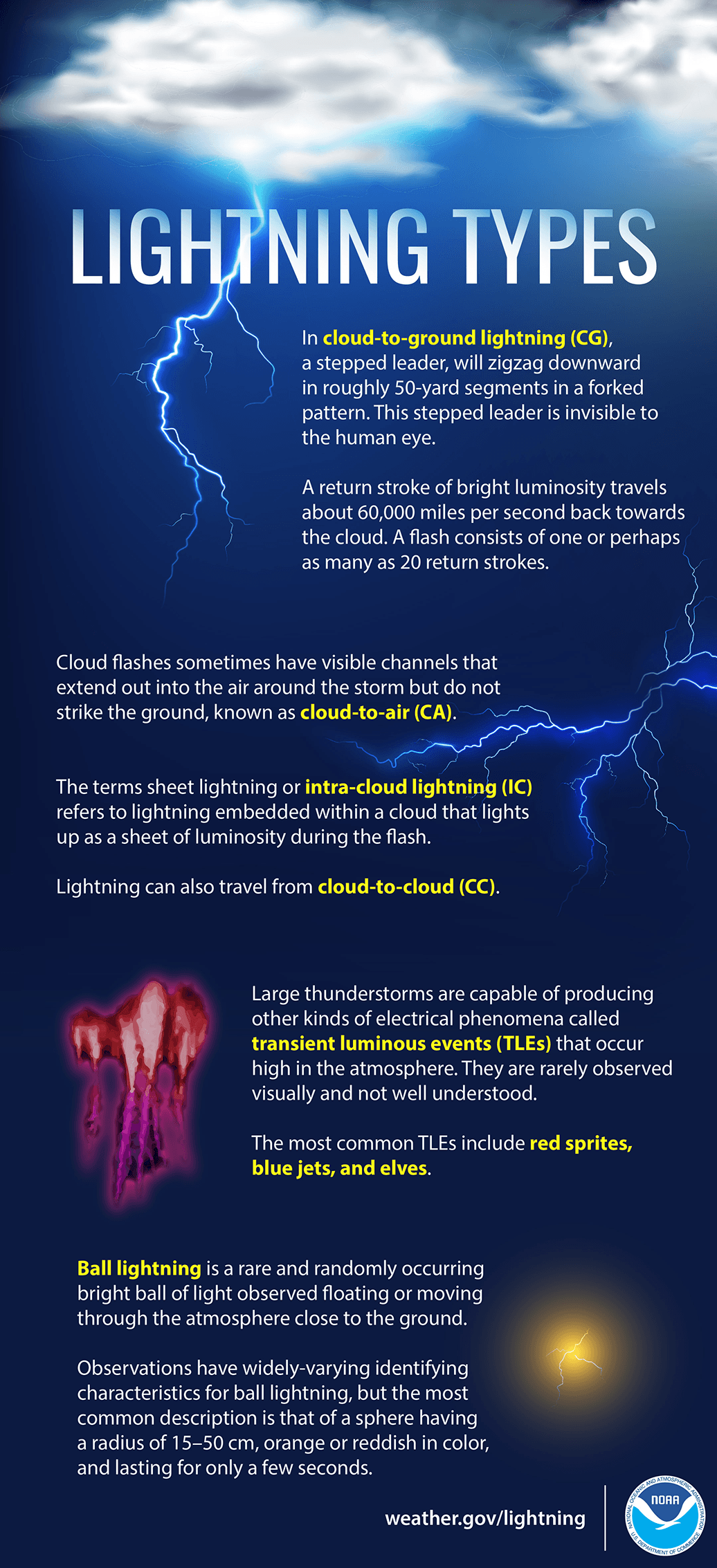
While most lightning occurs within or between clouds, the potential can induce a net positive charge on Earth's surface. If a filament of descending, negatively charged air meets a tendril of positively charged particles rising from the surface, cloud-to-ground lightning is produced. Tall structures facilitate this meeting, making them more prone to lightning strikes.
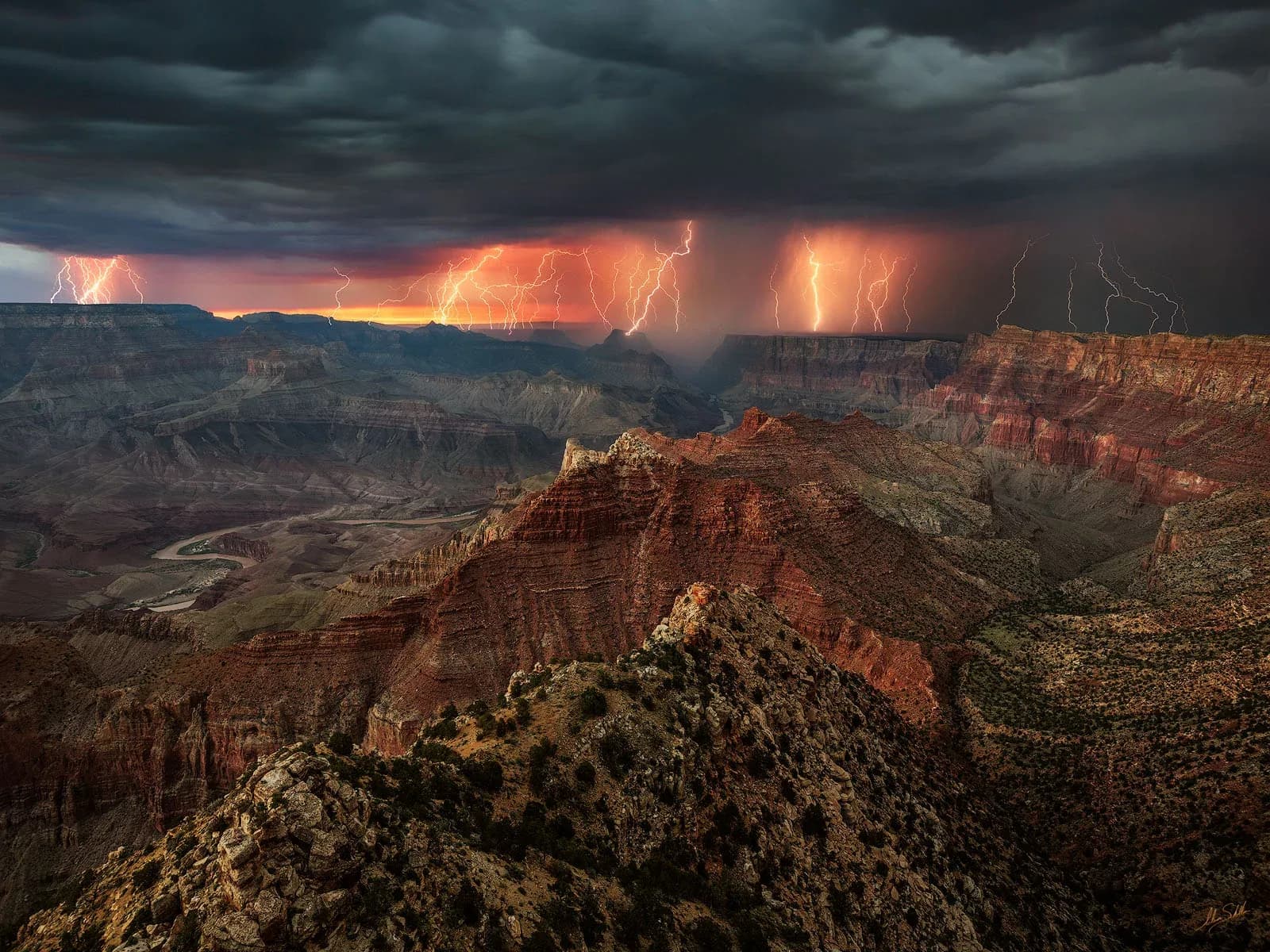
Besides thunderstorms, extreme phenomena such as hurricanes and volcanoes contribute to the 8 million lightning strikes that occur on Earth daily.
1440 Findings
Hours of research by our editors, distilled into minutes of clarity.


Explore Science & Technology
Dive into the dynamic world of science and technology, where curiosity has brought about extraordinary understandings of the universe and creativity has led to the breakthroughs and innovations that have transformed our world. Explore a wide range of topics, from the natural and physical sciences to cutting-edge technologies and the people who shaped them, each of which is accompanied by carefully curated resources meant to inform, engage, and inspire those eager to uncover the nature of reality.
Featured Topics
- 3D Printing
- Algae
- Algorithms
- Asteroids
- Atoms
- Auroras
- Batteries
- Big Bang
- Bill Nye
- Biological Cells
- Bioluminescence
- Bioremediation
- Biosphere 2
- Black Holes
- Calculators
- Chaos Theory
- Climatology
- Comets
- Computer Viruses
- Coral Reefs
- Critical Minerals
- Crude Oil
- Cryptography
- Dark Energy
- Dark Matter
- Dark Web
- Data Centers
- David Attenborough
- Deep-Sea Mining
- Deepfakes
- Dinosaurs
- DNA
- Earth
- Earth's Atmosphere
- Earthquakes
- Eclipses
- El Niño-Southern Oscillation
- Electric Grids
- Electric Vehicles
- Electricity
- Environmental Protection Agency
- Extremophiles
- Fireworks
- Fracking
- General Relativity
- Generative AI
- Geothermal Power
- Grace Hopper
- Graphics Processing Unit
- Greenhouse Gases
- Helium
- Hubble Space Telescope
- Hurricanes
- International Space Station
- Internet
- Invasive Species
- James Webb Space Telescope
- Jupiter
- Keystone Species
- Large Hadron Collider
- Large Language Models
- Lasers
- Light
- Lightning
- LIGO
- Marie Curie
- Mars
- Memory
- Microchips
- Microplastics
- Mixed Reality
- Molecular Gastronomy
- Nancy Roman
- NASA
- National Science Foundation
- Neutron Stars
- Nikola Tesla
- Nobel Prize
- Nuclear Power
- Particle Accelerators
- Photosynthesis
- Plate Tectonics
- Pollinators
- Pontifical Academy of Sciences
- Quantum Computing
- Quantum Mechanics
- Radioactivity
- Rosalind Franklin
- Scientific Theory
- Self-Driving Cars
- Smart Cities
- Solar Power
- Sound
- Space Shuttle
- Space Tourism
- Space Trash
- Standard Model
- Stephen Hawking
- Sun
- Tardigrades
- Tesla
- Time
- Tornadoes
- Tsunamis
- Turbulence
- Viking Project
- Volcanoes
- Voyager Mission
- Water
- Wikipedia
- Wind Power