Viking Project

Overview

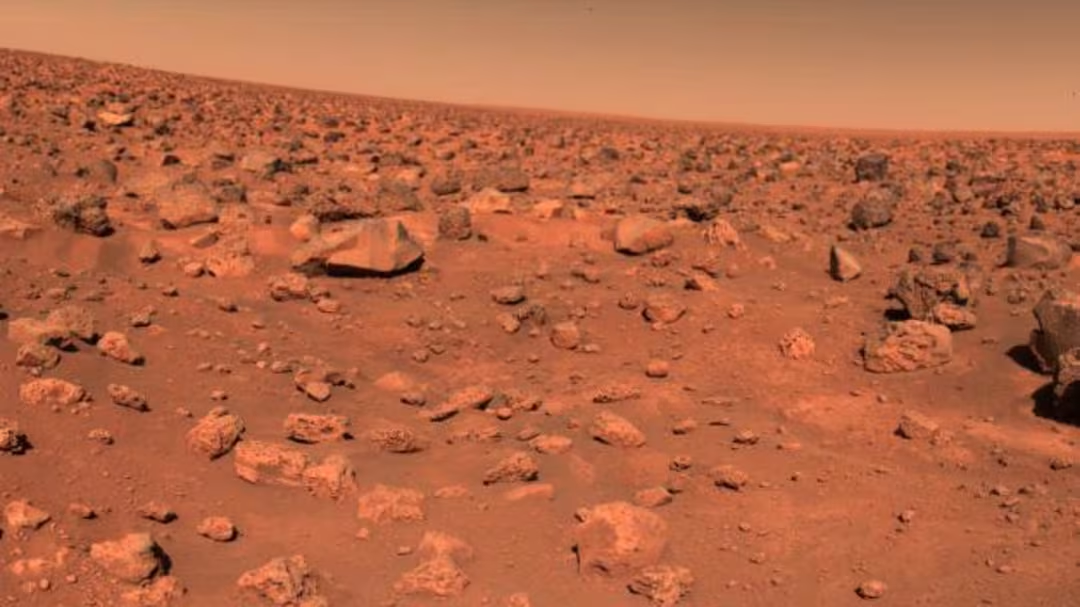
NASA's Viking project was a two-part mission that sent spacecraft to Mars to map its surface, collect atmospheric data, and search for signs of life.

1440 Findings

Hours of research by our editors, distilled into minutes of clarity.

  • Viking established entry, descent, and landing methods for future planetary visits

    The most significant engineering challenge was slowing the Viking lander, which would move through space at nearly 29,000 kilometers per hour before reaching Mars. This required the invention of supersonic parachute technology, which is still used today.

  • NASA uses a specialized plasma wind tunnel to test heat shield technology

    The ArcJet Complex ionizes compressed air that fires onto shields at hypersonic speeds, replicating the conditions of high-speed, planetary reentry. An enhanced facility incorporates lasers to mimic the radiant heating experienced during high-energy atmospheric traversal.

  • Geological features on Mars' surface provide evidence of massive past flooding

    The presence of river valleys, enormous canyons, and other structures carved by water on Earth suggests that water flowed abundantly across Mars' surface. The layering of rocks in the walls of these structures indicates the intensity and volume of these flows.

Explore Science & Technology

Since our ancient human relatives began using stone tools to perform tasks, humans have harnessed scientific knowledge and new technologies to expand the boundaries of our understanding of the natural world. From quantum computing and microplastics to artificial intelligence and memory, explore these topics and more with our concise yet informative overviews and expert-curated resources.

View All Science & Technology