Anxiety
Overview
Ancient Greek and Latin texts recognize anxiety as a distinct medical disorder, yet modern psychiatric classifications only identified anxiety as a clinical malady in the 20th century.
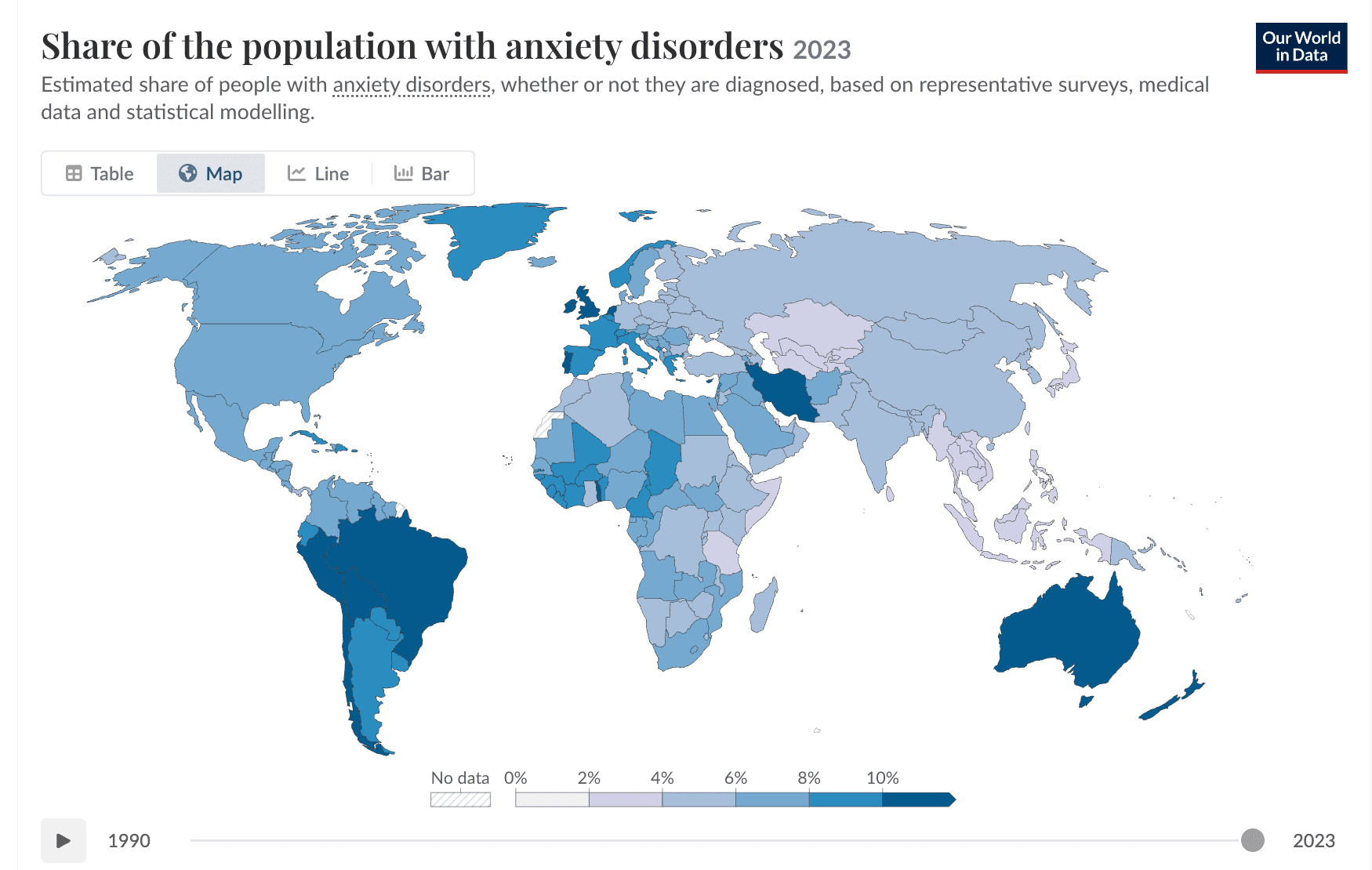
Today, anxiety is the most common mental health disorder, affecting an estimated 359 million people according to the World Health Organization's figures. By some calculations, more than 7% of the US population has anxiety, though not all cases are diagnosed. The condition involves experiencing excessive, persistent fears and worries that impede daily activities. Symptoms include heart racing, muscle tightening, sweating, shaking, trouble thinking, and nausea, and may also include insomnia and panic attacks.
Anxiety is a treatable condition, though its symptoms can last for years. People with anxiety can learn coping strategies through cognitive behavioral therapy and exposure therapy, implement lifestyle changes to help alleviate symptoms, and discuss medication possibilities with their doctors. Researchers are also investigating novel treatment approaches, including new medications and psychotherapies, and transcranial magnetic stimulation, which uses magnetic fields to stimulate nerve cells. There's also interest in using natural supplements such as the herbal shrub ashwagandha and L-theanine, an amino acid found in green tea leaves.
1440 Findings
Hours of research by our editors, distilled into minutes of clarity.







Explore Health & Medicine
Indulge your curiosity, from the inner workings of our bodies and minds to the latest in medical research and treatments, all aimed at enhancing your understanding of health, wellness, and medicine. Our resources are meticulously curated to offer precise and pertinent information to anyone interested in learning more about the medical sciences.