Opioids

Overview

Since the dawn of pain, creatures have long sought ways to mitigate the evolutionary warning signal. One of nature's most effective painkillers is opium, a highly addictive, milky latex extracted from poppy plants.

1440 Findings

Hours of research by our editors, distilled into minutes of clarity.

  • Opioids are a class of drugs including fentanyl, heroin, oxycodone, and more

    Since the dawn of pain, living things have sought ways to mitigate this evolutionary warning signal. One of nature's most effective painkillers is opium, a highly addictive, milky latex extracted from poppy plants. This forms the basis of one of the most prescribed classes of modern drugs.

  • Evidence of opium use dates to as early as 5000 BCE

    Archaeological evidence shows the use of the poppy plant for its pain-killing properties likely originated in the Mediterranean before making its way to the East and West via trade. It has since inspired two eponymous wars, and highly addictive derivatives of the naturally occurring substance have led to an ongoing overdose crisis.

  • Opioids mimic naturally produced endorphins to dull pain

    Once in the body, opioids bind to naturally occurring opioid receptors typically used by endorphins to temper pain. They trigger the release of dopamine, a desire-related hormone, and decrease noradrenaline, a neurotransmitter involved in heart and breathing rate regulation, meaning high doses can slow these processes to dangerous levels.

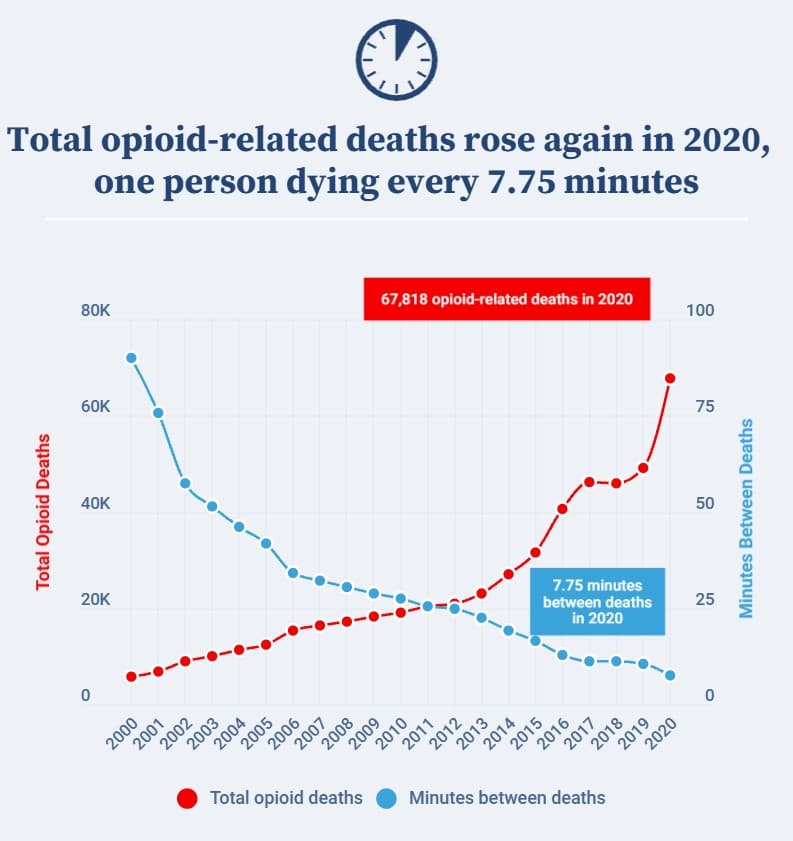
  • One person dies from opioids every 7 to 8 minutes

    This collection of infographics by the National Institute for Health Care Management helps put the crisis into perspective. The opioid epidemic has had three waves. Opioid-related deaths increasingly involve synthetic versions of the drug class, contributing to 83 percent of all opioid-related deaths in 2020. Use these infographics to learn more about the crisis.

  • Narcan is an opioid antagonist that can rapidly reverse overdoses

    Naloxone, also known by the brand name Narcan, is an opioid-overdose reversal medication that typically begins working within a few minutes. An opioid antagonist, the treatment attaches to opioid receptors without activating them, forcing opioid molecules out of their respective receptors and allowing users' breathing rates to normalize.

Explore Health & Medicine

Discover a broad spectrum of topics, from fundamental anatomy to the latest in medical research and treatments, all aimed at enhancing your understanding of health, wellness, and our bodies. Our resources are meticulously curated to offer precise and pertinent information to students, professionals, and anyone interested in learning more about the medical sciences. Dive in to stay informed, make well-informed health decisions, and explore the intriguing world of medicine.

View All Health & Medicine