Taste Buds

Overview

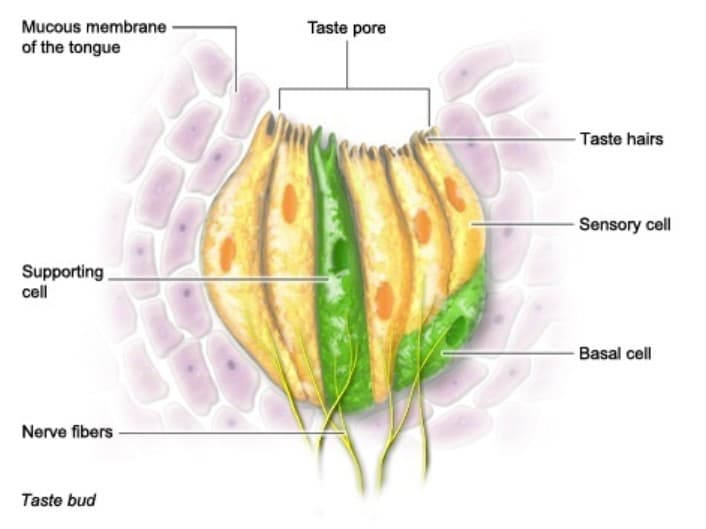
Taste buds do more than let you experience your favorite food. These peripheral organs can sense the chemical makeup, potential toxicity, and fleeting experience of flavor, giving the body a chance to respond to undesirable chemicals or tell the brain that you should reach for another scoop.

1440 Findings

Hours of research by our editors, distilled into minutes of clarity.

  • Taste buds have evolved to fill a wide variety of functions

    Taste buds do more than let you experience your favorite food. These peripheral organs can sense the chemical makeup, potential toxicity, and fleeting experience of flavor, giving the body a chance to respond to undesirable chemicals or tell the brain that you should reach for another scoop.

  • A timeline of the science of taste discoveries

    The tongue is made up of four types of papillae—elevated, nipple-like projections that give the organ its rough texture. In the early 1900s, initial research into the tongue's varying taste sensitivity led to a misleading map of the tongue and its taste regions. Over the decades, researchers fleshed out five distinct tastes (and more recently, a sixth).

  • The research that led to sour

    Scientists are trying to figure out if there are unique receptors that respond to the molecules that make up flavors we associate with calcium, blood, batteries, and other items that often escape dinner menus. Taste researcher Dr. Danielle Reed says the minimum evidence for a taste category typically involves identifying dedicated receptors and then removing them to show the taste vanishes.

  • Cats have a mutation preventing them from tasting sugar

    When certain tastes (sweet, umami, bitter) become irrelevant due to a species' diet or lifestyle, the genes for those tastes degrade. In felines, scientists believe a shift to a protein-heavy diet put evolutionary pressure on the genes responsible for tasting sweetness. (Some users may encounter a paywall.)

  • Octopuses have taste receptors along their tentacles

    Octopus suction cups are filled with modified sensory receptors that can bind with a greater variety of materials and transport a wider array of information, such as flavor, from tactile stimuli. These structures allow the animal to search for food as it crawls the ocean floor.

Explore Health & Medicine

Discover a broad spectrum of topics, from fundamental anatomy to the latest in medical research and treatments, all aimed at enhancing your understanding of health, wellness, and our bodies. Our resources are meticulously curated to offer precise and pertinent information to students, professionals, and anyone interested in learning more about the medical sciences. Dive in to stay informed, make well-informed health decisions, and explore the intriguing world of medicine.

View All Health & Medicine