Sleep
Overview
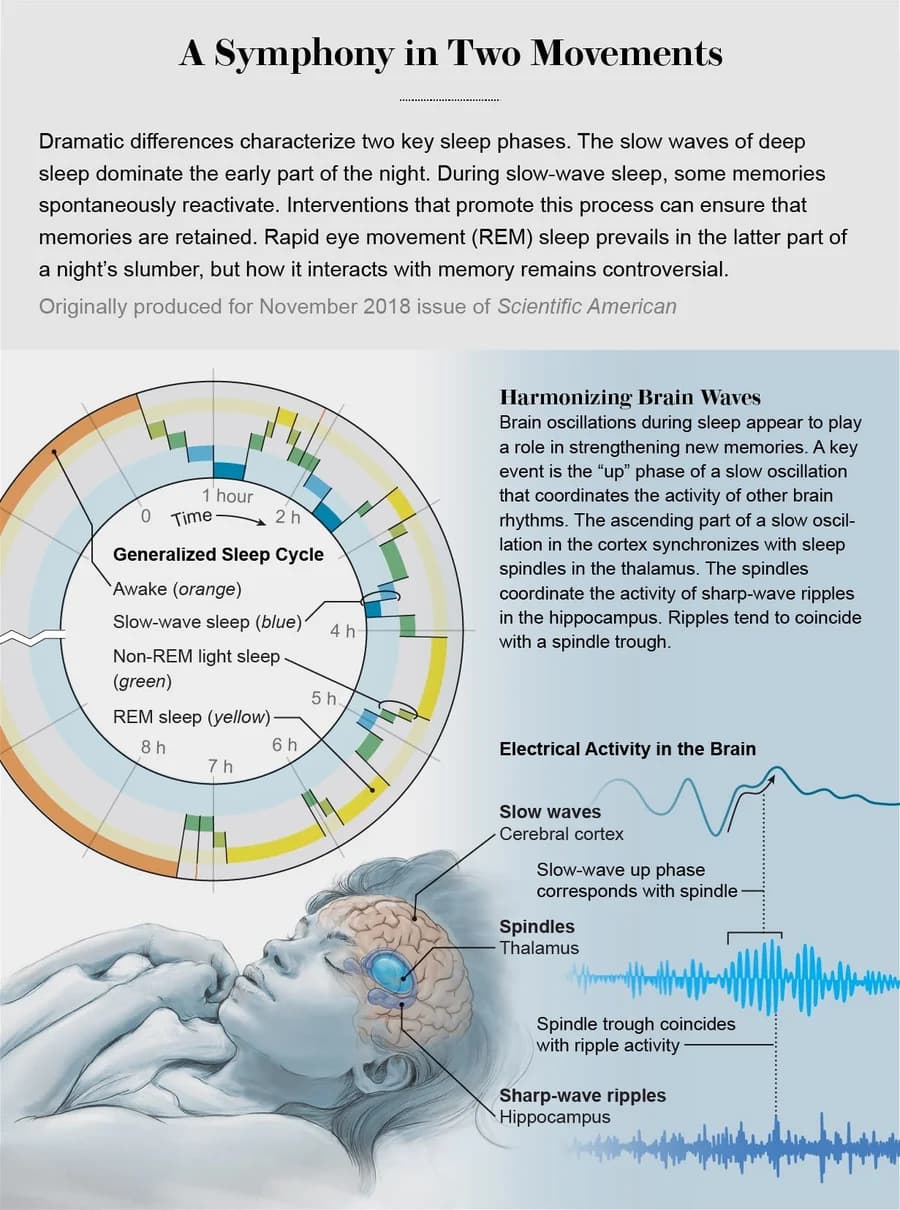
Sleep is far more than just a period of rest—it's a complex, active process during which the brain cycles through distinct stages, each marked by unique patterns of brain activity.
While scientists still debate sleep's true purpose, research has proved it to be essential for survival. Both humans and animals suffer severe consequences without sleep, including cognitive decline, emotional instability, and eventual death. More than a third of adults regularly experience poor sleep, leading to increased risks of heart attack, Alzheimer's disease, and motor vehicle accidents.
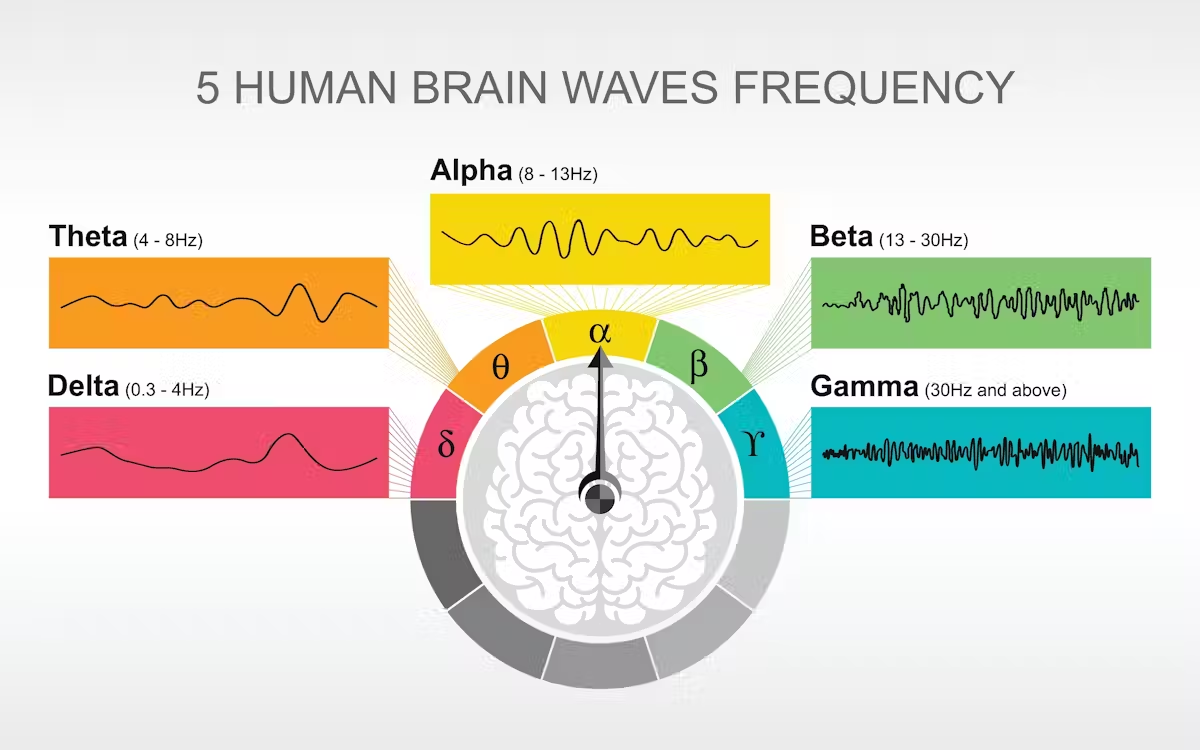
During both wake and sleep states, the brain generates electrical rhythms called brainwaves, which represent oscillating patterns of brain cells (known as neurons) working together. Different brainwaves are associated with specific states of consciousness. For example, high-frequency beta waves dominate during alertness, while sleep features primarily theta and delta waves.
1440 Findings
Hours of research by our editors, distilled into minutes of clarity.





Explore Health & Medicine
Indulge your curiosity, from the inner workings of our bodies and minds to the latest in medical research and treatments, all aimed at enhancing your understanding of health, wellness, and medicine. Our resources are meticulously curated to offer precise and pertinent information to anyone interested in learning more about the medical sciences.