Body Odor
Overview
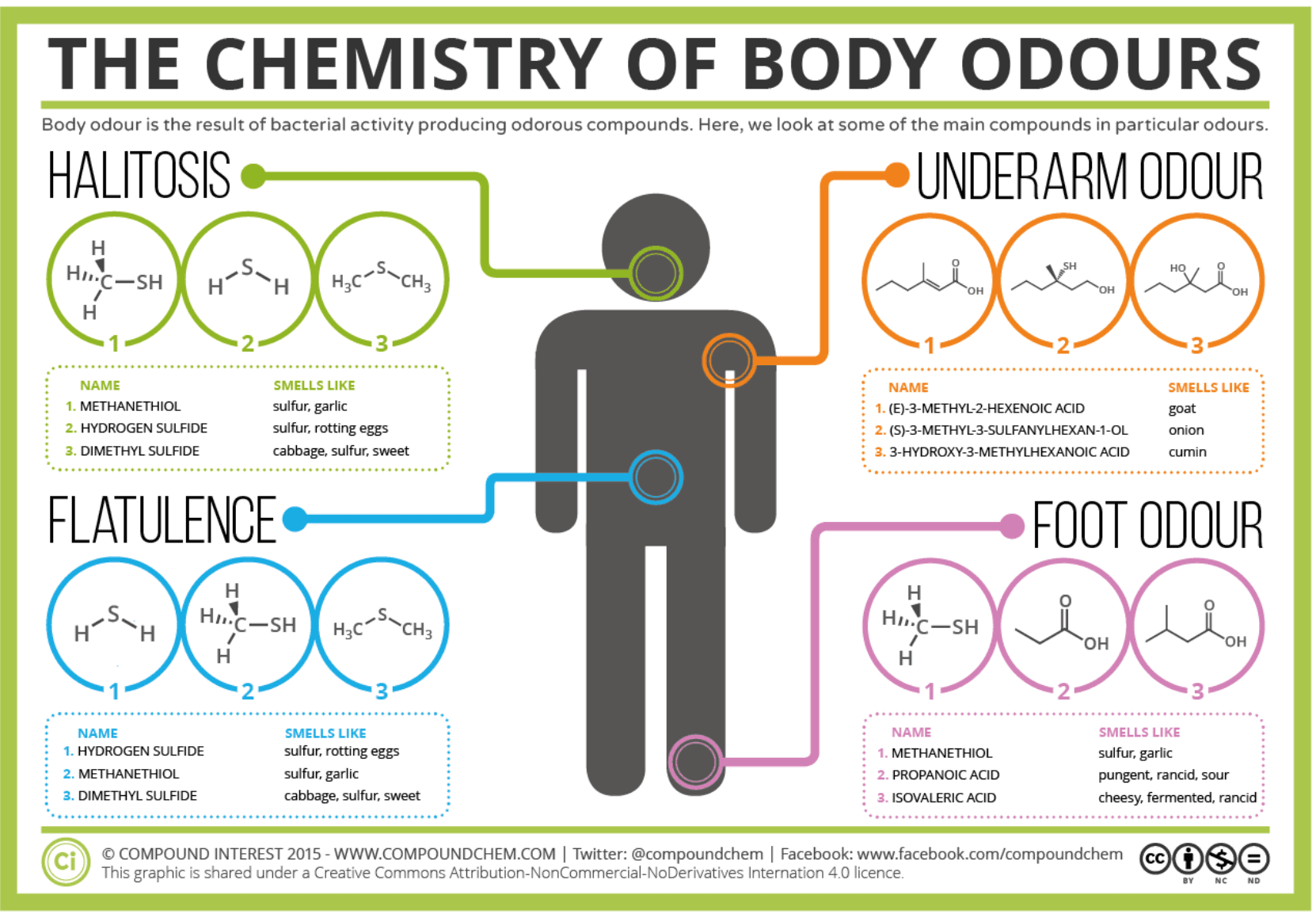
Although human sweat is odorless, bacterial growth and the breakdown of sweat components—including organic acids and carbohydrates—give rise to what we know as body odor. A collection of bacteria contributes to such malodorous scents, but studies suggest Corynebacterium species, in particular, make adults smelly.
Humans have two types of sweat glands, the eccrine and apocrine. The latter, found primarily in our armpits and groin, opens up into hair follicles and contributes to body odor when bacteria naturally found on our skin mix with the sweat. Americans spent more money masking "BO" (an acronym coined by antiperspirant marketers in the early 1900s) than our counterparts in any other country in 2023—more than $6B.
Hormones, medications, food, body hair, and stage of life can all affect our scent. Sickness is also associated with different body odors, and mounting research has revealed that a variety of medical conditions have specific aromas. Some disorders may be detectable by their smell even before symptoms manifest, including Parkinson's disease.
1440 Findings
Hours of research by our editors, distilled into minutes of clarity.


Explore Health & Medicine
Indulge your curiosity, from the inner workings of our bodies and minds to the latest in medical research and treatments, all aimed at enhancing your understanding of health, wellness, and medicine. Our resources are meticulously curated to offer precise and pertinent information to anyone interested in learning more about the medical sciences.