Artificial Sweeteners

Overview

Artificial sweeteners are sugar substitutes added to foods and drinks because they offer a sweet taste without the calorie load or cavity risk—and they generally don't raise blood sugar levels. Since these lab-produced substances are often hundreds of times sweeter than table sugar, they can be swapped in at low levels to achieve the same flavor. The six approved artificial sweeteners in the US include aspartame (NutraSweet and Equal), neotame (Newtame), sucralose (Splenda), saccharin (Sweet'N Low), advantame, and acesulfame potassium (Sweet One and Sunett).

1440 Findings

Hours of research by our editors, distilled into minutes of clarity.

  • Artificial sweeteners are considered safe for most people

    These sugar substitutes are generally preferred because they are sweeter than sugar and can be used in smaller amounts while still getting a sugary taste. Though generally regarded as safe, sugar substitutes can cause flare-ups for individuals with bowel disease, and researchers are investigating how these substances affect gut microbiome health. Aspartame can also cause health issues for individuals with a rare genetic disease called phenylketonuria.

  • Artificial sweeteners may disrupt gut health

    Some research suggests that certain sweeteners can throw off the balance of beneficial bacteria in the gut and shift the composition of the microbiome. Such changes, depending on an individual's specific gut flora and levels of sweetener consumption, could potentially affect metabolism and glucose tolerance or lead to bloating and diarrhea.

  • See how sugar stacks up against the sweetness of sugar alternatives

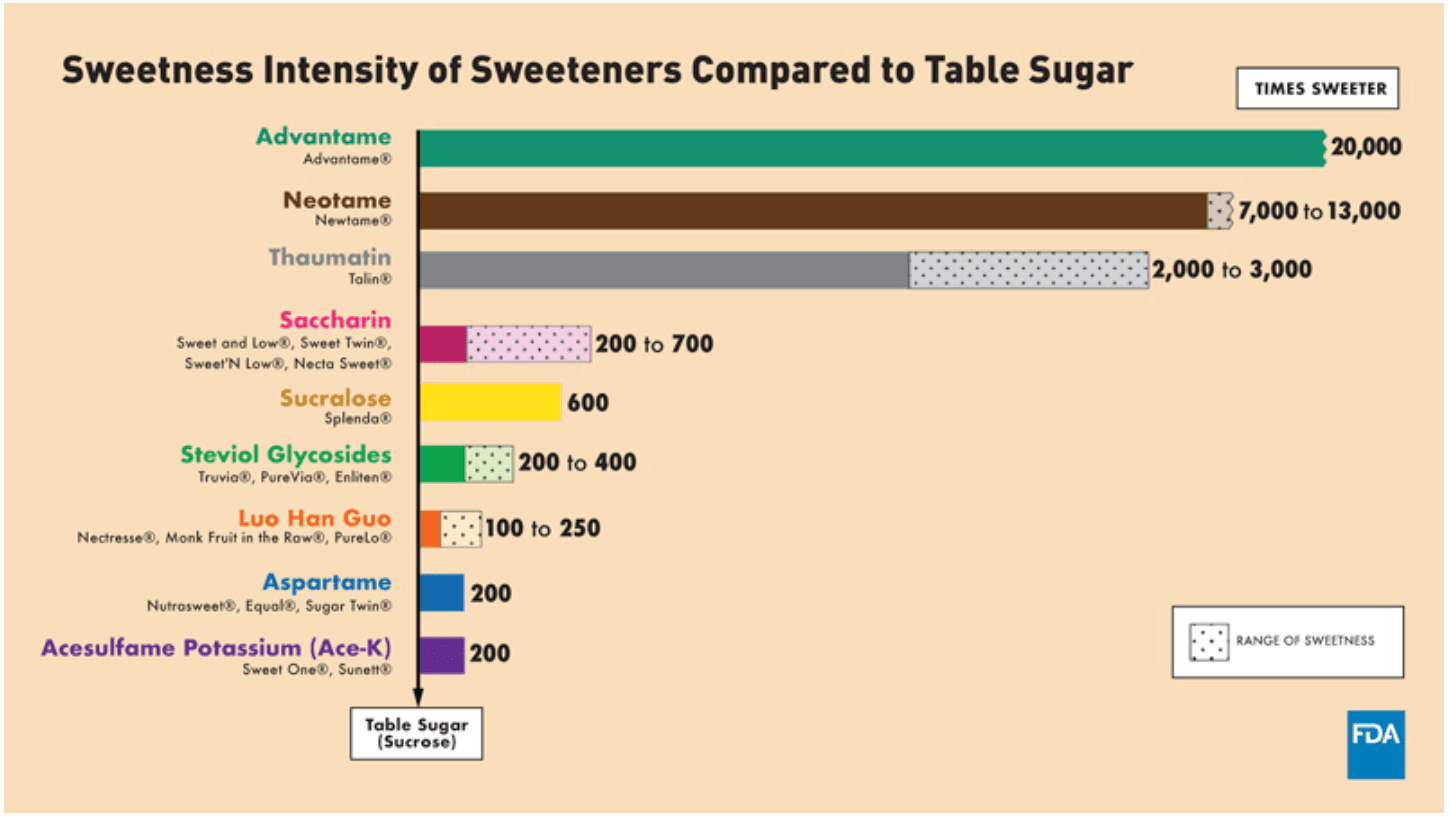
    This US Food and Drug Administration graphic compares different approved sugar alternatives to give the public a sense of just how intensely sweet these sweeteners are compared to table sugar. Aspartame (NutraSweet and Equal), for example, is 200 times sweeter, Sucralose (Splenda) is 600 times sweeter, and Saccharin (Sweet'N Low) is between 200 and 700 times sweeter.

  • Saccharin was banned in Canada in the 1970s, but regulators may allow its use once again

    The product, commonly known as Sweet'N Low, was banned in Canada in the late 1970s due to research indicating that the sweetener could cause cancer in lab rats. Subsequent studies have found that the rodent findings didn't hold true for humans, and so Canadian regulators state that they are considering updating their stance to allow the product to be added to certain foods (the product is currently allowed in the US).

  • Artificial sweeteners aren't very helpful for weight loss

    Research published in 2014 from a randomized controlled study found that, on average, people only lost about two pounds if they switched to consuming artificial sweeteners instead of sugar. Some individuals using artificial sweeteners also have gained weight. Scientists theorize one potential explanation for this is that the sweeteners alter gut microbiomes in ways that reduce beneficial flora that would help promote digestion.

  • The WHO labeled aspartame as 'possibly carcinogenic' but US regulators consider it safe

    The International Agency for Research on Cancer, an arm of the World Health Organization, labeled aspartame—the artificial sweetener in Diet Coke—as one of several hundred possible cancer-causing substances in 2023. The determination was based on animal and human studies and "limited" evidence linking it to liver cancer. The WHO and US Food and Drug Administration both say the substance is safe at moderate levels. The FDA says a person weighing about 132 pounds would need to have 75 packets daily to reach an unsafe level.

  • This 2022 study is one of the findings that prompted WHO to label aspartame as 'possibly carcinogenic'

    This French study analyzed online periodic self-reported food journals from more than 100,000 people for a median of almost eight years and linked aspartame consumption to a roughly 15% increased cancer risk. It found that the people who consumed higher levels of aspartame had elevated cancer numbers—particularly breast and obesity-related cancers.

Explore Health & Medicine

Discover a broad spectrum of topics, from fundamental anatomy to the latest in medical research and treatments, all aimed at enhancing your understanding of health, wellness, and our bodies. Our resources are meticulously curated to offer precise and pertinent information to students, professionals, and anyone interested in learning more about the medical sciences. Dive in to stay informed, make well-informed health decisions, and explore the intriguing world of medicine.

View All Health & Medicine