Supplements
Overview
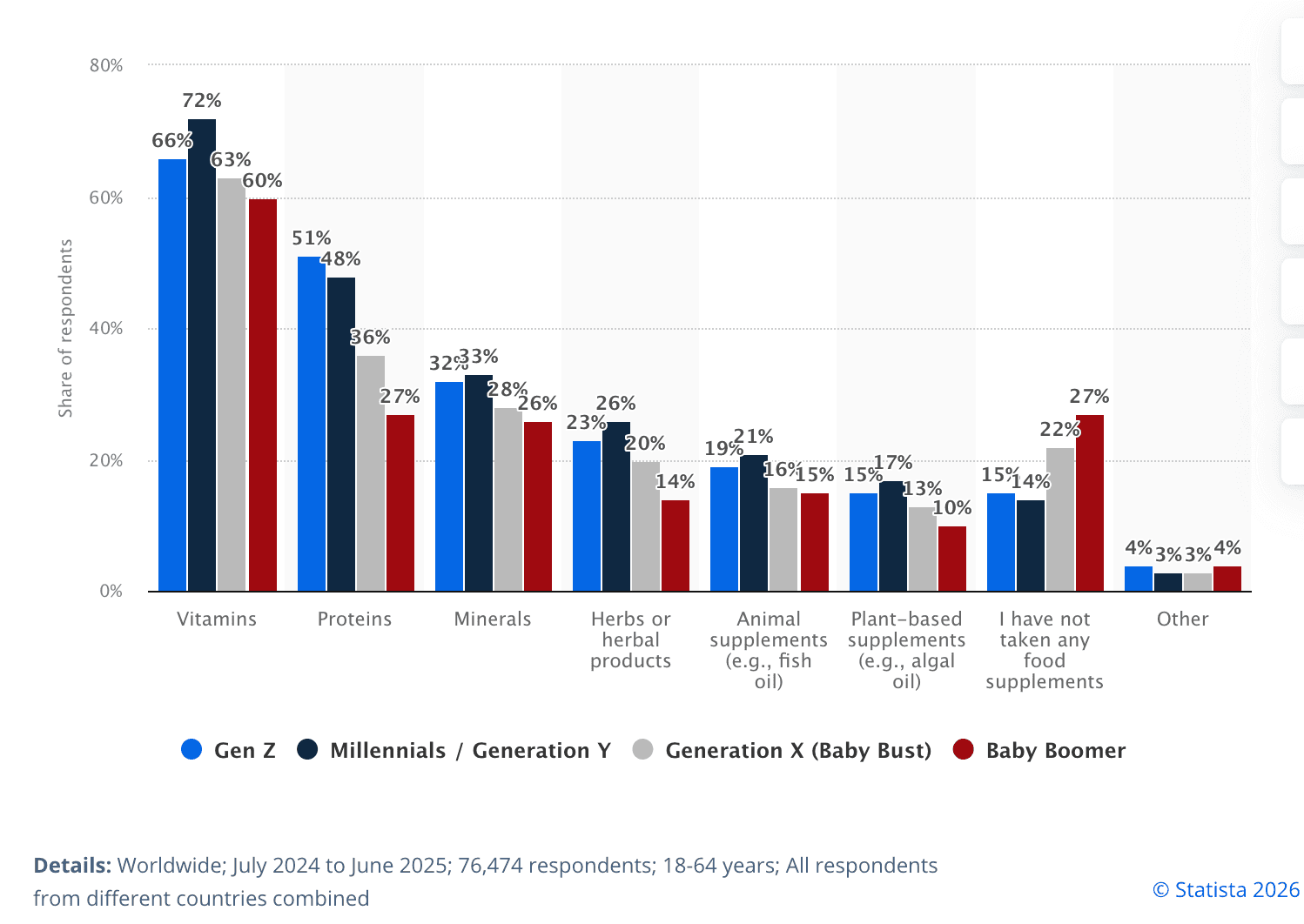
Dietary supplements, which are used by roughly 75% of Americans, are products that are marketed as adding nutrients to your diet or boosting health. This industry, worth more than $60B annually, includes vitamins, minerals, probiotics, and herbal mixes.
Doctors may recommend supplements for specific populations with documented deficiencies in key nutrients, such as iron, calcium, or B12, but their usefulness for the general population is contested. Though some supplement claims are backed by solid research, others have outpaced the science.
Legally, dietary supplements are under the umbrella of food, so they aren't regulated by the US Food and Drug Administration before they get to market. Unlike items classified as drugs, there are no inspectors checking whether these products are adulterated, misbranded, or perform their advertised functions before they're sold online or in stores. If consumers buy supplements and become ill or have manufacturing concerns, they can file complaints with the FDA, and the agency can then take actions—including pulling any problematic products off the market.
Several consumer groups independently purchase and test supplements and publish their findings about specific products and brands, including the nonprofit Consumer Reports, the nonprofit US Pharmacopeia (which provides the USP certifications on vitamins), and the private company ConsumerLab.
1440 Findings
Hours of research by our editors, distilled into minutes of clarity.


Explore Health & Medicine
Indulge your curiosity, from the inner workings of our bodies and minds to the latest in medical research and treatments, all aimed at enhancing your understanding of health, wellness, and medicine. Our resources are meticulously curated to offer precise and pertinent information to anyone interested in learning more about the medical sciences.