Pregnancy

Overview

Pregnancy is the roughly 280-day journey from conception to birth that powers the continuation of the human species. After sperm meets egg, and the resulting blastocyst embeds in the uterine lining, the human body undergoes significant physiological changes to support the growth and development of this cluster of cells, enabling it to become an embryo and then a fetus.

1440 Findings

Hours of research by our editors, distilled into minutes of clarity.

  • How women grow tiny humans inside of them

    Pregnancy is a complex biological journey, lasting about 40 weeks. When a sperm fertilizes an egg, that event triggers intricate cellular and hormonal processes, driven by hardwired cellular instructions, which lead to cell division, differentiation, and development—ultimately culminating in the birth of a baby.

  • Due date is calculated from the first day of last menstrual period—not when sex occurred

    The standard counting system considers a woman pregnant from the first day of her last menstrual period (LMP), which means someone may technically—for the purposes of measurement—have become pregnant even before she had sex. This standard starting point is used because it reliably marks when the body began preparing for pregnancy—even though it's typically two weeks before conception. On average, most women are pregnant for 280 days from the LMP.

  • Explore how the placenta acts as lungs, kidneys, and more in the womb

    This temporary organ, formed from maternal and embryonic tissue, ultimately attaches to a fetus via the umbilical cord. It transports nutrients, oxygen, antibodies, and more from the mother to the developing fetus. It also carries carbon dioxide and waste away from the fetus. The placenta—which only forms during pregnancy—is expelled during childbirth or it needs to be removed to prevent toxic maternal infections and extreme blood loss.

  • Every organ in a mother's body changes during pregnancy

    There's limited real estate inside a mother's body, so as the uterus grows both up and out it shifts other organs to make space. A pregnant woman's body produces hormones to loosen muscles to allow for this expansion. Pregnancy also triggers other changes, including faster breathing to compensate for decreased diaphragm range.

  • Pregnant brains shed gray matter, perhaps explaining 'baby brain'

    The brain areas involved in processing information and emotions decrease by an average of almost 5% during pregnancy. Researchers discovered in a 2025 study that this mostly temporary change—the brain hadn't fully returned to its normal size six months after pregnancy—seems to be associated with self-reported improved bonding and less hostility toward the child postpartum.

  • Your feet can expand—permanently—due to pregnancy

    A hormone called relaxin loosens tissues in the body to allow them to expand during pregnancy, affecting muscles and body parts including the feet. The structural changes that occur in the foot as it expands are sometimes permanent. This article states that researchers have found as many as 61% of new moms did not have their foot sizes return to their pre-pregnant state.

  • Ancient Egyptians developed the first pregnancy test—and scientists tested it in the 1960s

    A papyrus from about 1350 BCE discusses a test in which a woman would urinate on wheat and barley seeds over the course of several days and if the barley grows she's having a male child, if the wheat grows it's a female child, and if nothing grows she's not pregnant. Scientists went on to test this theory in 1963 and found that about 70% of the time, the urine of pregnant women did promote growth whereas the urine of non-pregnant women didn't—perhaps due to estrogen levels in the urine.

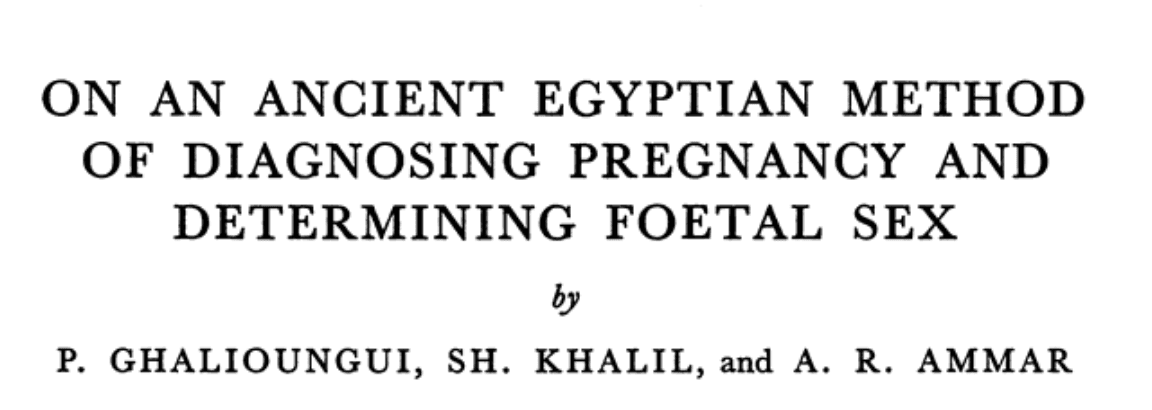
  • Read the 1963 study testing out an ancient Egyptian pregnancy pee test

    The study sought to test out the ancient Egyptian approach of having a woman urinate on barley and wheat seeds to ascertain pregnancy status. Surprisingly, the research concluded that a pregnant women's urine did promote growth of cereal grains the majority of the time and non-pregnant women's growth did not. Unfortunately, the sex of the child could not be accurately predicted based on which crop grew.

  • Modern pregnancy tests detect a specific hormone in a woman's urine or blood

    They pick up human chorionic gonadotropin, either in blood or urine. The hormone is produced by a woman's reproductive tissues during pregnancy.

Explore Health & Medicine

Discover a broad spectrum of topics, from fundamental anatomy to the latest in medical research and treatments, all aimed at enhancing your understanding of health, wellness, and our bodies. Our resources are meticulously curated to offer precise and pertinent information to students, professionals, and anyone interested in learning more about the medical sciences. Dive in to stay informed, make well-informed health decisions, and explore the intriguing world of medicine.

View All Health & Medicine