Leprosy
Overview
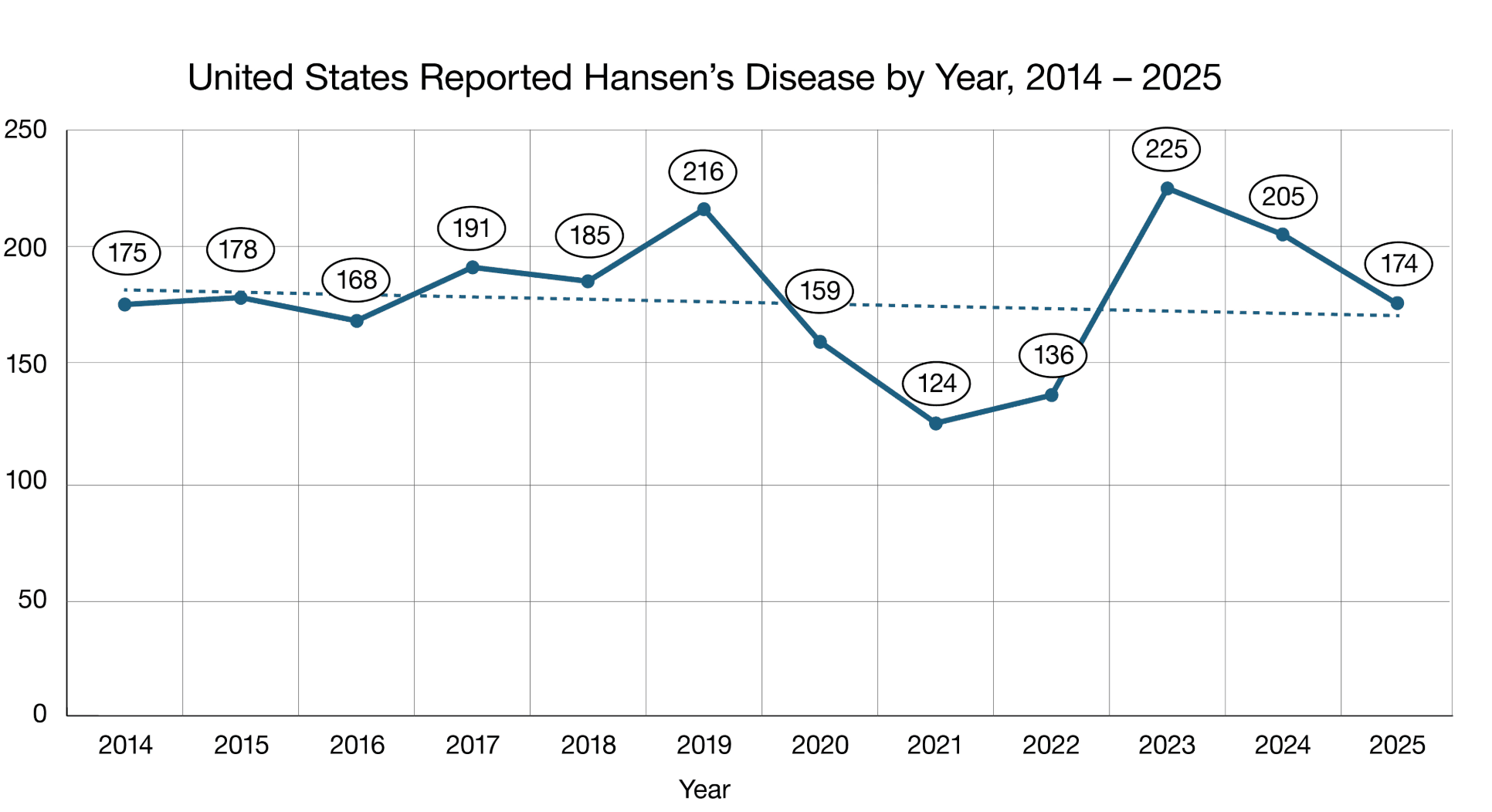
Leprosy is a highly stigmatized but curable infectious disease affecting the skin, eyes, respiratory system, and peripheral nerves. While roughly 200,000 patients are diagnosed with the condition annually, including about 200 in the US, most people have natural immunity. Infected individuals may lose feeling in their extremities and not notice cuts or burns, leading to severe infections and potential loss of affected areas.
It's also known as Hansen's disease for the Norwegian scientist Gerhard-Henrik Armauer Hansen, who discovered that leprosy is caused by the bacterium Mycobacterium leprae. (More rarely, a second bacterium causes leprosy.) Early leprosy symptoms, such as skin discoloration, may take 20 years to manifest, complicating tracking of disease transmission.
Public health authorities state the disease spreads through prolonged close contact and cannot be spread by touching or sharing a meal, but its exact mode of transmission remains unclear. Humans may also contract leprosy from armadillos. The disease has additionally been detected in wild chimpanzees and red squirrels.
1440 Findings
Hours of research by our editors, distilled into minutes of clarity.




Explore Health & Medicine
Indulge your curiosity, from the inner workings of our bodies and minds to the latest in medical research and treatments, all aimed at enhancing your understanding of health, wellness, and medicine. Our resources are meticulously curated to offer precise and pertinent information to anyone interested in learning more about the medical sciences.