Goose Bumps
Overview
Goose bumps are small raised bumps that dot the skin in response to cold, fear, or sudden emotional triggers like music or art. They resemble poultry skin after the feathers have been plucked.
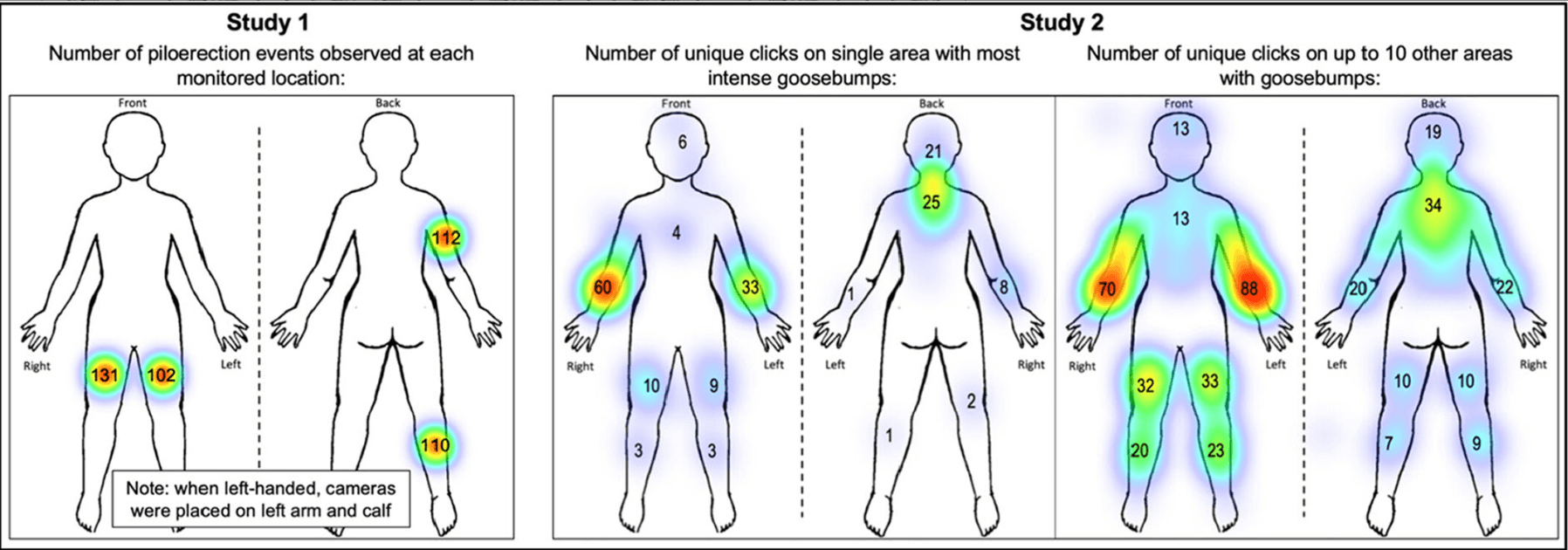
Formally referred to as piloerection—a nod to the muscles responsible for the hair-raising phenomenon—goose bumps occur when arrector pili muscles at the base of hair follicles contract and pull hairs erect, creating the characteristic bumps. This reflexive action in animals and birds causes their fur or feathers to stand on end. This makes them appear larger and scares off predators. It also traps a pocket of air close to the body, serving as insulation. Since humans no longer have thick hair and we wear clothes to stay warm, many scientists believe our goose bumps are an evolutionary remnant from our ancestors, like our tailbones.
In medicine, the Latin-derived term for goose bumps is cutis anserina—since "cutis" is skin and "anser" is goose. Worldwide, different cultures and languages have additional terms for these bumps, some of which reference chickens, ducks, and even snails.
1440 Findings
Hours of research by our editors, distilled into minutes of clarity.




Explore Health & Medicine
Indulge your curiosity, from the inner workings of our bodies and minds to the latest in medical research and treatments, all aimed at enhancing your understanding of health, wellness, and medicine. Our resources are meticulously curated to offer precise and pertinent information to anyone interested in learning more about the medical sciences.