Food Deserts
Overview
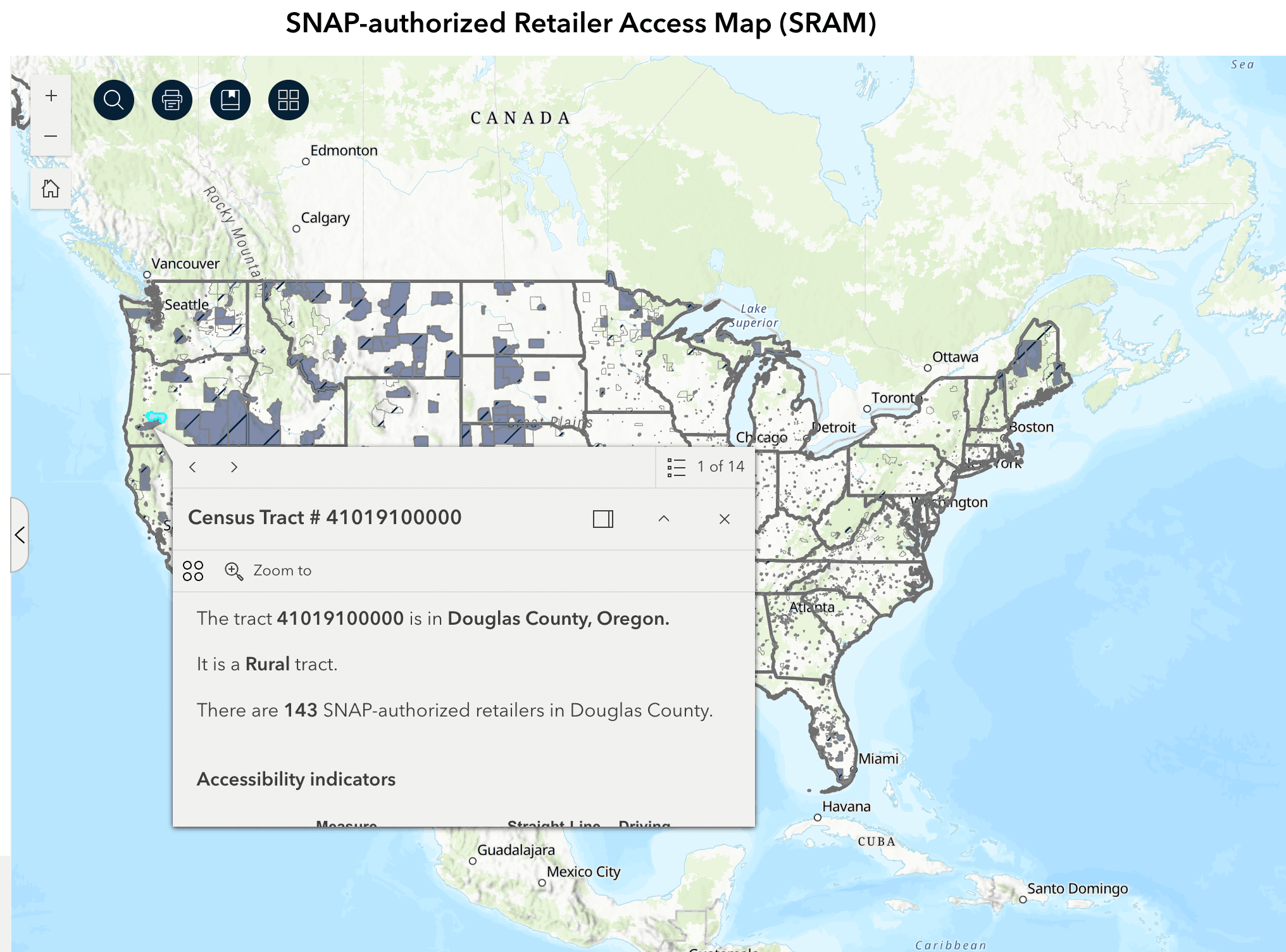
Food deserts are urban and rural locations with limited access to affordable, healthy food. The US Department of Agriculture officially defines them as low-income areas where the nearest grocery store is more than 1 mile away in cities or more than 10 miles away in rural areas. Nearly 5 million Americans lived in food deserts between 2003 and 2023.
The term was first coined in the UK in the 1990s to describe communities lacking access to nutritious food options. In the US, food desertification has largely been driven by changes in grocery antitrust enforcement. Under the Reagan administration, officials stopped enforcing a 1930s law that prohibited large chains from wielding their purchasing power to secure special deals. As a result of both that policy shift and broader consolidation in the grocery industry, smaller independent retailers often could no longer compete: Whereas more than half of all US grocery stores were independent grocers in 1982, that figure has since fallen to roughly 22%. By some estimates, roughly 70 cents of every grocery dollar now goes to just four grocery conglomerates.
Recent research shows that opening grocery stores in low-income areas will not fully close nutrition gaps, as many residents already travel to supermarkets. Improving food equity requires additional steps, such as enhancing nutrition education and ensuring stores sell culturally appropriate foods.
1440 Findings
Hours of research by our editors, distilled into minutes of clarity.


Explore Health & Medicine
Indulge your curiosity, from the inner workings of our bodies and minds to the latest in medical research and treatments, all aimed at enhancing your understanding of health, wellness, and medicine. Our resources are meticulously curated to offer precise and pertinent information to anyone interested in learning more about the medical sciences.