Circadian Rhythms
Overview
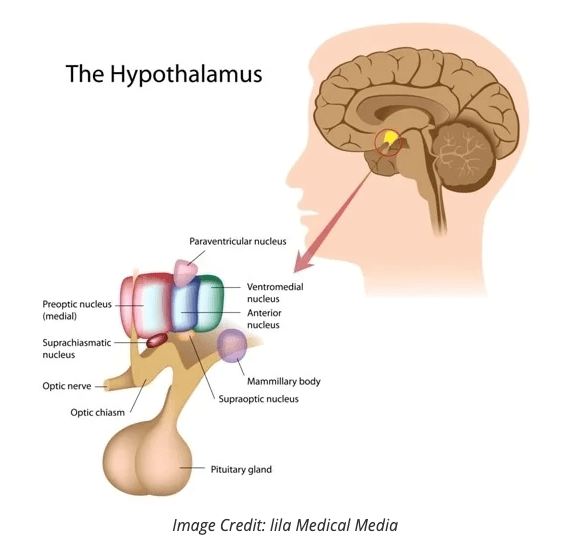
Circadian rhythms are internal biological clocks that function on roughly 24-hour cycles, prompting daily processes and behaviors on a cellular level. Circadian rhythms play a role in everything from our wound healing and digestion to how we sleep and metabolize drugs. Directed by a master circadian clock called the suprachiasmatic nucleus located in the hypothalamus, this central timekeeper coordinates the many peripheral molecular clocks located throughout the body. The clocks' actions are driven by cues—formally called "zeitgebers"—that include light, food, temperature, medication, and exercise.
Circadian, derived from the Latin for "about a day," refers to the light-dark timing cycles that were first studied by a French astronomer in the 1700s, who observed how a plant behaved in a dark room. Subsequent research has shown that circadian rhythms influence the actions of plants, animals, and even single-cell organisms.
Disruptions to our circadian rhythms from artificial light, erratic sleep and eating schedules, and other factors can cause many health issues. Circadian disruptions are linked to cardiovascular, gastrointestinal, sleep, and mental health disorders. Ongoing research seeks to better understand these relationships and unravel how to nudge our clocks back into sync.
1440 Findings
Hours of research by our editors, distilled into minutes of clarity.





Explore Health & Medicine
Indulge your curiosity, from the inner workings of our bodies and minds to the latest in medical research and treatments, all aimed at enhancing your understanding of health, wellness, and medicine. Our resources are meticulously curated to offer precise and pertinent information to anyone interested in learning more about the medical sciences.