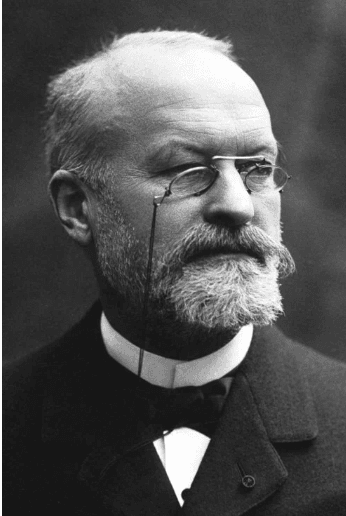
Posted by Teddy BurkhardtMar 16The first identification of Alzheimer's was made in 1906.Show 3 more findings ZoomThe world’s first Alzheimer’s patientBBChttps://www.bbc.com/news/av/magazine-35279750
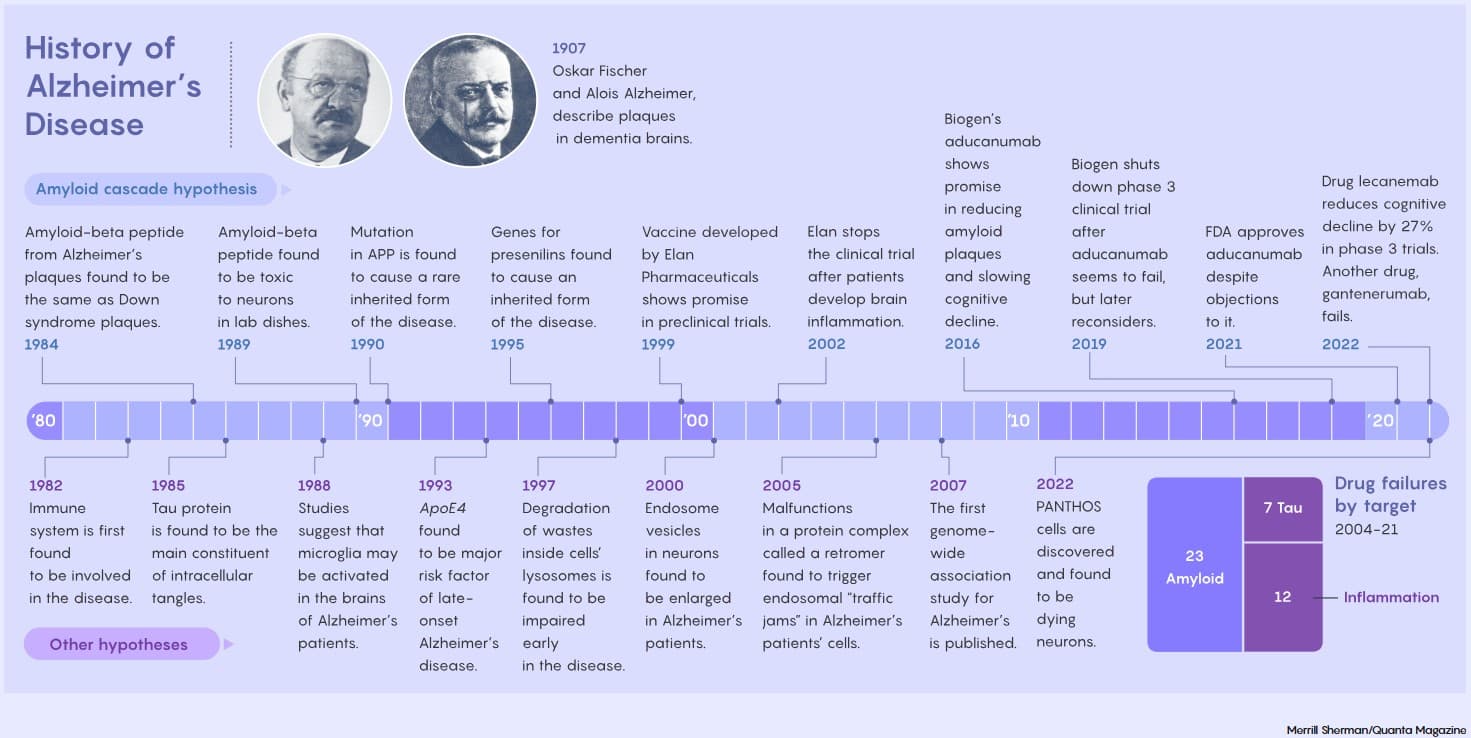
Posted by Teddy BurkhardtMar 16Read the original 1907 paper on the first known Alzheimer's patientAlzheimer's disease was first identified by Dr. Alois Alzheimer in 1901, following a postmortem brain examination of a patient experiencing memory loss and other symptoms. Alzheimer's original paper was largely lost until 1995, when an English translation was published in a medical journal. ZoomAn english translation of alzheimer's 1907 paper, “über eine eigenartige erkankung der hirnrinde”https://onlinelibrary.wiley.com/doi/10.1002/ca.980080612
Posted by Teddy BurkhardtJul 7, 2023Five to ten percent of Alzheimer's cases are early-onset Early-onset Alzheimer’s typically emerges around 40 to 50 years of age, with devastating effects. This video follows Brian, diagnosed with the disease at age 54, as he travels the country as an advocate for research and discusses the progressive mental fog of Alzheimer’s. 11:33Into the Fog: Living with Early-Onset Alzheimer’s | WebMDWebMDhttps://www.youtube.com/watch?v=UxSznEIOUXA
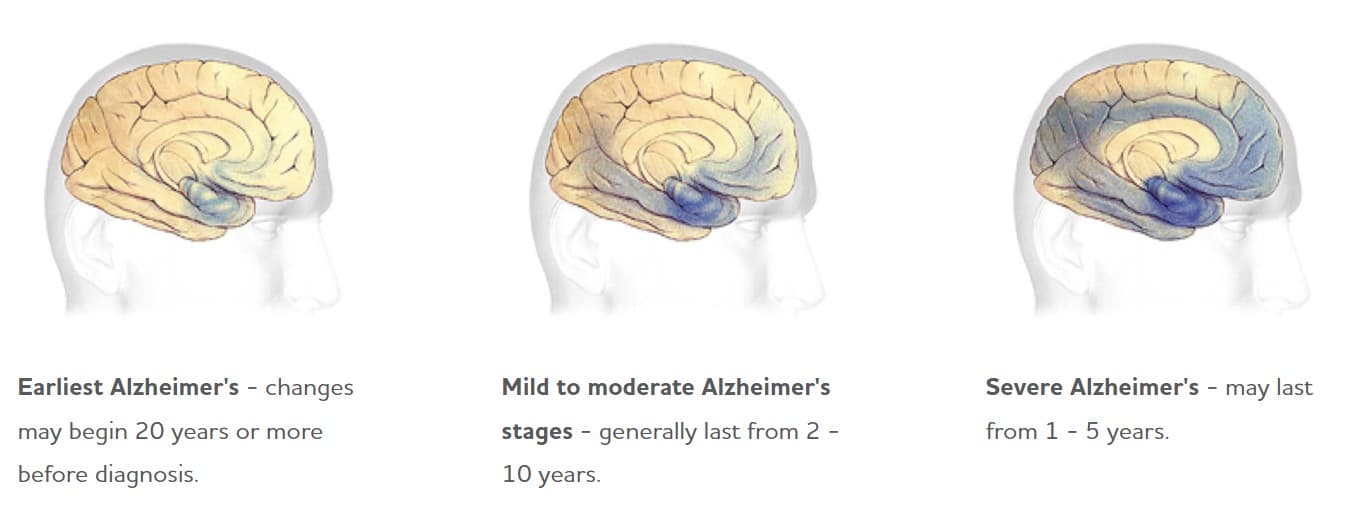
Posted by Dina Fine MaronApr 3Alzheimer's brain changes may begin years before symptoms appear.Show 2 more findings 5:51TED-Edhttps://www.youtube.com/watch?v=oT5pDvdMzhk
Posted by Dina Fine MaronNov 10, 2023Early-onset Alzheimer's can appear as early as age 30Drugs recently approved to slow the progression of Alzheimer's appear to work best when administered as early as possible. Early stages are marked by a low buildup of tau, a protein experts believe clumps into misfolded, neuron-disrupting tangles once clusters of another protein—amyloid beta—have already started causing damage. ZoomWhy Diagnosing Alzheimer’s Early Is So ImportantTIMEhttps://time.com/6328482/alzheimers-lecanemab-early-diagnosis/
Posted by Dina Fine MaronMar 161440: Everything you need to know about Alzheimer'sWhat is Alzheimer's, and is it different from dementia? In short, yes—Alzheimer's is a specific brain disease that falls under the umbrella of dementia. However it is the most prevalent form of the condition, accounting for 60 to 80% of reported dementia cases. 3:10Alzheimer's Explained1440 Originalshttps://www.youtube.com/watch?v=lCnSrW1d3fs
Posted by Teddy BurkhardtJun 30"Plaques" and "tangles" are top potential causes of Alzheimer's—but questions remainThe exact causes of Alzheimer's—and how to treat it—continue to be the subject of intense research. Two leading factors are amyloid beta plaques and tau protein tangles, which effectively pile up in the brain and interfere with neurons and cause cell death, which manifests as memory loss and other symptoms. 4:20Inside Alzheimer’s diseaseNaturehttps://www.youtube.com/watch?v=zTd0-A5yDZI
Posted by Dina Fine MaronMar 16Alzheimer's disease is the leading cause of dementia and risks rise after age 65Read this primer about Alzheimer's disease and learn what factors increase the risk of this form of dementia, including genetics, being a woman, and health conditions, including high blood pressure. ZoomAlzheimer’s Disease - Harvard HealthHarvard Universityhttps://www.health.harvard.edu/topics/alzheimers-disease
Posted by Marco Daniel MachadoJun 27, 2025Memory disorders disrupt the brain's ability to make, store, or recall memoriesThese disorders stem from reversible issues like vitamin deficiencies or irreversible causes such as stroke or dementia. Only one type of dementia—familial Alzheimer’s disease—is directly inherited and accounts for about 20% of Alzheimer’s cases. ZoomUnderstanding Memory DisordersHealthlinehttps://www.healthline.com/health/memory-disorders
Posted by Dina Fine MaronMar 16Visualize the difference between a healthy brain and one with Alzheimer's.The brain has three main parts—the cerebrum, brain stem, and cerebellum—each combining to control the entirety of the body's operations. Alzheimer's progressively deteriorates the circuitry in these structures, resulting in what we see as the symptoms of the disease. Show 3 more findings ZoomBrain Tourhttps://alz.org/alzheimers-dementia/what-is-alzheimers/brain_tour
Posted by Dina Fine MaronJul 14Alzheimer's can cause significant brain shrinkage in the affected brain regions, including the hippocampus.Show 2 more findings 4:00How Alzheimer’s Changes the BrainNational Institute on Aginghttps://www.youtube.com/watch?v=hEw1Yq_4PaA
Posted by Dina Fine MaronJun 10Recent evidence raises the question of whether conventional wisdom about amyloid plaques and their connection to Alzheimer's is wrong.Show 2 more findingsWhere has Alzheimer’s research gone wrong? with Karl Herrup (Ep. 132)Big Brainshttps://open.spotify.com/episode/1ki5uc2GzDvnzYQxBjZzuV
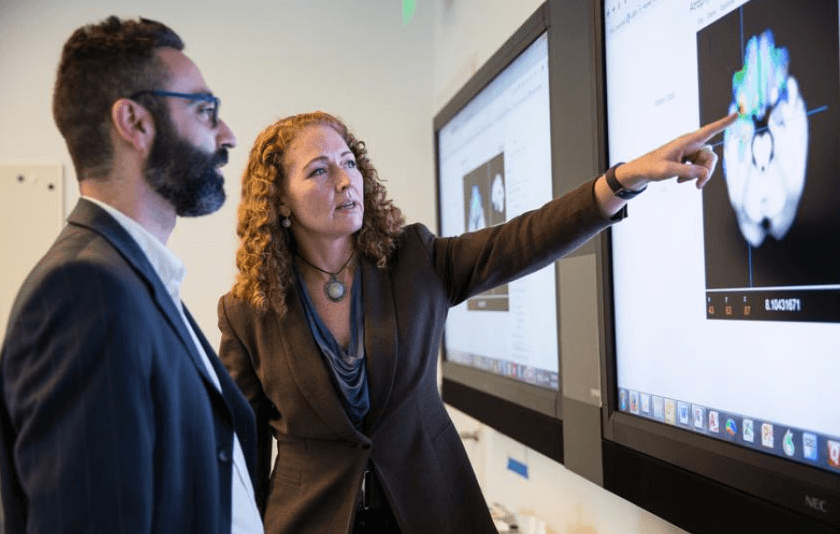
Posted by Dina Fine MaronMar 31Genetic blood test offers an estimated clock on when Alzheimer's symptoms may appearThe 2026 research finding from researchers at Washington University School of Medicine in St. Louis—if validated in broader populations—suggests that an already available blood test could estimate when Alzheimer's symptoms may begin within a margin of several years. The test detects a protein called p-tau217 found in blood plasma and the researchers incorporated the findings from that blood test into a statistical model to come up with the symptom timeline predictions.New blood test 'clocks' could predict Alzheimer’s symptom onset years in advancehttps://www.medicalnewstoday.com/articles/blood-test-could-predict-onset-alzheimers-symptoms
Posted by Dina Fine MaronApr 23There are two FDA-approved blood tests that may detect early Alzheimer's diseaseYet the tests are only recommended for those who have symptoms of dementia, and are not definitive on their own. False positives are a concern with these new tests, which detect biomarkers that may indicate the presence of brain proteins linked to the disease. This podcast explores the state of research on the disease and concerns about regulators taking jobs at pharmaceutical and biotech companies, which may influence their approach to approvals. It also dives into an investigation about the data underpinning one experimental Alzheimer's drug. Freakonomicshttps://open.spotify.com/episode/1Xd0o0pR3LEjphmRgk7Q5I
Posted by Teddy BurkhardtSep 3How Alzheimer's disease becomes fatalDespite more than 100,000 people with Alzheimer's dying each year, the specific cause of death is not the disease itself. Often, secondary diseases arise from complications with the disease, including pneumonia, severe falls, malnutrition, or infection. Read more about the range of complications caused by Alzheimer's here. ZoomIs Alzheimer’s Disease Fatal, and How Does It Lead to Death?Limited AccessDiscover Magazinehttps://www.discovermagazine.com/mind/how-does-alzheimers-disease-lead-to-death
Posted by Dina Fine MaronMar 16Scientists are reevaluating the causes of Alzheimer's beyond the amyloid hypothesis after numerous experimental drugs designed to target that theory have failed.Show 1 more finding ZoomWhat Causes Alzheimer’s? Scientists Are Rethinking the Answer. | Quanta MagazineQuanta Magazinehttps://www.quantamagazine.org/what-causes-alzheimers-scientists-are-rethinking-the-answer-20221208/
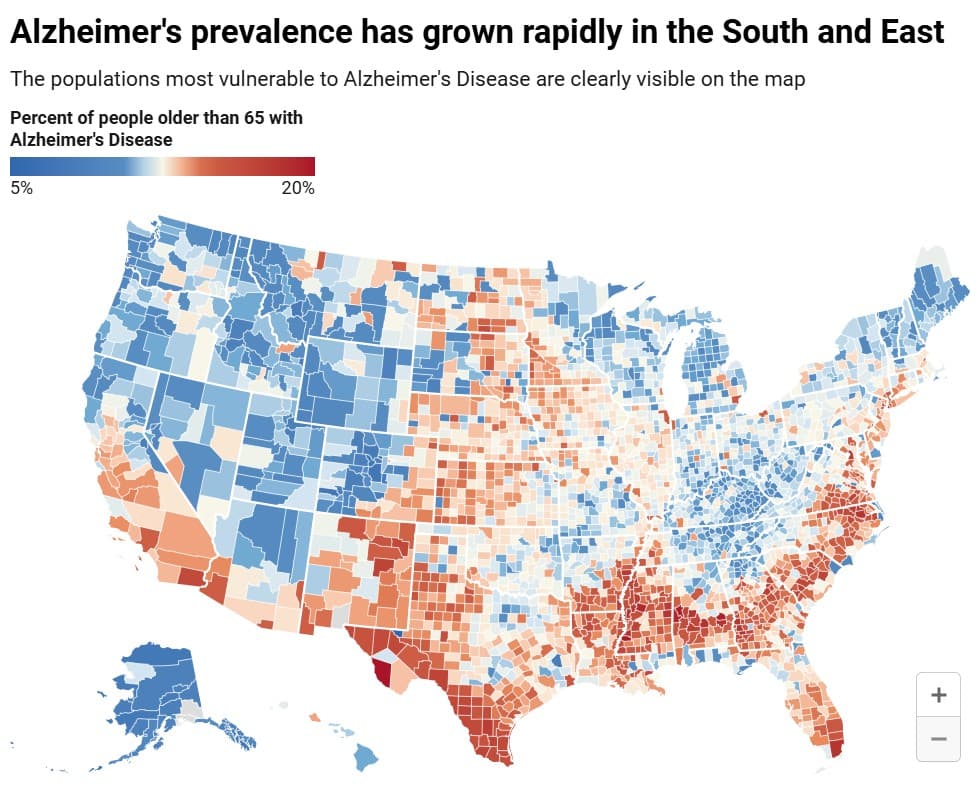
Posted by Dina Fine MaronJun 30Alzheimer's in the United States is most prevalent in the South and the East.Show 2 more findings ZoomWhere You Live Shapes How Alzheimer’s Affects YouTIMEhttps://time.com/6301936/alzheimers-united-states-inequality/
Posted by Meher QazilbashNov 26, 2024Does our fear of Alzheimer's create stigma around its treatment?Surveys suggest our fear of Alzheimer's as a disease outranks that of heart disease and cancer. This piece argues our fear of aging and the slipping away of our mental capacities make it more difficult to treat Alzheimer's compassionately. ZoomAn Ageist Disease: On Living in Fear of Alzheimer’sLiterary Hubhttps://lithub.com/an-ageist-disease-on-living-in-fear-of-alzheimers/
Posted by Dina Fine MaronMar 24Smell is a robust memory cue for individuals with Alzheimer's diseaseOdor is more effective than both visual and verbal cues for triggering autobiographical recall in Alzheimer's disease, according to 2021 research.Psychology Todayhttps://www.psychologytoday.com/us/blog/the-superhuman-mind/202106/how-the-sense-smell-triggers-old-and-long-forgotten-memories
Posted by Marco Daniel MachadoMay 30, 2025Alkaptonuria was the first identified genetic disorderIn 1902, a rare recessive mutation was determined to cause alkaptonuria—a disease that induces dark pigmentation of connective tissue. The responsible gene was not isolated until the 1990s.1902: Orderly Inheritance of Disease ObservedNational Institutes of Healthhttps://www.genome.gov/25520240/online-education-kit-1902-orderly-inheritance-of-disease-observed
Posted by Dina Fine MaronMar 16Some dementia cases may be linked to treatable microorganism infections in the brain.Show 3 more findings ZoomThe brain microbiome: could understanding it help prevent dementia?The Guardianhttps://www.theguardian.com/lifeandstyle/2024/dec/01/the-brain-microbiome-could-understanding-it-help-prevent-dementia?utm_source=join1440&utm_medium=email
Posted by Teddy BurkhardtMar 16More than 200 drug trials for Alzheimer's have failed or been abandoned since 2010The complexity of Alzheimer's disease, coupled with decades of underfunded research efforts, has left patients with little in the way of effective treatments. In recent years, scientists have synthesized several drugs that studies show can slow the progression of Alzheimer's—though the disease itself remains incurable. ZoomWhy don’t we have a cure for Alzheimer’s disease?National Library of Medicinehttps://pmc.ncbi.nlm.nih.gov/articles/PMC6966425/#B4-biomedicines-07-00097
Posted by Dina Fine MaronMar 16An analysis of ancient texts found that dementia was rare in ancient Greece.Show 1 more finding 0:56Analysis finds dementia was rare in ancient Greece1440 Originalshttps://www.youtube.com/watch?v=pALnEd-36Fk
Posted by Dina Fine MaronJun 30An Alzheimer's patient discusses her condition with childrenAlzheimer's is a deadly disease that profoundly changes a person's abilities and personality, which makes it difficult to explain to kids. Responding to potentially uncomfortable questions with honesty (and relatable imagery) about the costs and nature of the disease goes a long way in fostering understanding. 5:15Kids Meet a Woman with Alzheimer’s | Cuthttps://www.youtube.com/watch?v=b9PhQ9yMu8Y
Posted by Dina Fine MaronMar 16A top Alzheimer's researcher was accused of faking resultsIn 2021, an investigation revealed photo manipulation in images from a seminal 2006 paper by researcher Sylvain Lesné on the role of amyloid plaques in progressive Alzheimer's disease. The revelation rocked the field, leaving many wondering whether they had tried to build on fabricated results. (Some users may experience a paywall.) ZoomPotential fabrication in research images threatens key theory of Alzheimer’s diseaseSciencehttps://www.science.org/content/article/potential-fabrication-research-images-threatens-key-theory-alzheimers-disease
Posted by Dina Fine MaronJun 30Alzheimer's as a family disease: When children become "parents"Kitty Eisele's 81-year-old dad went missing while on a snowy, four-hour drive from Minneapolis to Iowa City. It was the first emergency that spelled out the danger of her dad's dementia diagnosis—and captures how Alzheimer's impacts entire families, with the influx of responsibility that comes with caregiving.E1: Road Triphttps://open.spotify.com/episode/1aNyD1H0jWsMkU49C7EdTt
Posted by Dina Fine MaronMar 16A first-person account of receiving an Alzheimer's diagnosisHaving Alzheimer's is a bit like having a part of your brain sliced away each day, according to author Greg O'Brien. This 34-minute podcast episode introduces O'Brien and his co-host, author David Shenk, as the two embark on a multi-season conversation on Alzheimer's disease and O'Brien's diagnosis.The Forgetting: Inside the Mind of Alzheimer’s: Introductions on Apple Podcastshttps://podcasts.apple.com/us/podcast/introductions/id1450948701?i=1000429886498
Posted by Dina Fine MaronMar 16Multiple genes are associated with Alzheimer's risk, but one particularly well-known disease-associated gene is apolipoprotein E (APOE), which typically encodes a protein that helps carry cholesterol and other fats in the bloodstream. Show 1 more findingHow One Gene Affects Alzheimer’s RiskScience Fridayhttps://www.sciencefriday.com/segments/alzheimers-gene/?utm_source=join1440&utm_medium=email&utm_placement=newsletter&user_id=66c4bde45d78644b3a9e49ec
Posted by Dina Fine MaronApr 10Dementia describes progressive memory issues that impact daily activitiesAlthough Alzheimer's disease is sometimes thought of synonymously with dementia, there are multiple types of dementia, which manifest in memory loss and other symptoms that make it challenging to perform daily tasks. These types include Lewy Body dementia, vascular dementia, and frontotemporal dementia. Parkinson's disease is not a form of dementia, but this movement disorder can sometimes develop into issues with memory and a formal diagnosis of dementia. 1:12https://www.youtube.com/watch?v=wKzIY-7UQpQ
Posted by Dina Fine MaronMay 15Researchers are exploring neural links between Alzheimer's and autismRecent DNA sequencing and molecular biology studies suggest that similarities in genes, neural circuitry and patterns of disease warrant further exploration to potentially better understand both conditions and how to treat them. (Some users may encounter a paywall.)The Washington Posthttps://www.washingtonpost.com/health/2026/04/02/autism-alzheimers-link-research-treatment/?pwapi_token=eyJ0eXAiOiJKV1QiLCJhbGciOiJIUzI1NiJ9.eyJyZWFzb24iOiJnaWZ0IiwibmJmIjoxNzc1MzYxNjAwLCJpc3MiOiJzdWJzY3JpcHRpb25zIiwiZXhwIjoxNzc2NzQzOTk5LCJpYXQiOjE3NzUzNjE2MDAsImp0aSI6IjFhYzliMjEwLTBkNjgtNGNiYS05NThmLWZiM2RkMmVlNjJlYyIsInVybCI6Imh0dHBzOi8vd3d3Lndhc2hpbmd0b25wb3N0LmNvbS9oZWFsdGgvMjAyNi8wNC8wMi9hdXRpc20tYWx6aGVpbWVycy1saW5rLXJlc2VhcmNoLXRyZWF0bWVudC8ifQ.AwUJ1FhN2QoG0Jn3Eo0eqPrBuW2Sb-u9Wkf5y7pvy_M&user_id=66c4bde45d78644b3a9e49ec&utm_medium=email&utm_placement=newsletter&utm_source=join1440
Posted by Dina Fine MaronApr 10Learn the differences between mild cognitive impairment and age-associated memory lossMild cognitive impairment is a condition in which people experience more thinking and memory problems than expected for their age. It's often associated with depression and anxiety. Daily routines, writing things down, and healthy lifestyle choices can help cope with the condition, but there's no cure. The condition elevates the risk of developing dementia and Alzheimer's. 3:17https://youtu.be/5ziltqjp3Zs?si=p_KY1nSBC-rcJdbo
Posted by Dina Fine MaronFeb 16The virus was officially described for the first time in 1789Michael Underwood, an English physician and surgeon, was the first to describe the disorder, noting it caused disability in the lower extremities in children. Large-scale outbreaks of the disease were not observed until the late 19th century.US Centers for Disease Control and Preventionhttps://www.cdc.gov/pinkbook/hcp/table-of-contents/chapter-18-poliomyelitis.html
Posted by Marco Daniel MachadoJun 27, 2025Patient H.M. revealed that the hippocampus was responsible for memory formationHenry Molaison became a landmark case in psychology after surgery removed large portions of his hippocampus, leaving him unable to form new memories. Upon his death, Molaison's brain was sliced into 2,401 sections and digitized for research. ZoomPatient H.M. Case Study In Psychology: Henry Gustav Molaisonhttps://www.simplypsychology.org/henry-molaison-patient-hm.html
Posted by Dina Fine MaronDec 6, 2023Poor sleep increases the risk of developing Alzheimer'sBrain imaging studies reveal poor sleep leads to production of amyloid beta proteins—molecules linked to Alzheimer’s—which are cleaned from the brain during high-quality sleep. These findings suggest conditions like sleep apnea and insomnia increase the risk of developing the disease. 3:08Matt Walker: What’s the connection between sleep and Alzheimer’s disease?TED-Edhttps://www.youtube.com/watch?v=6G3UIrqiFLw
Posted by Dina Fine MaronApr 10How Alzheimer's disease affected one family as symptoms progressedNews program 60 Minutes interviewed a couple navigating aging and Alzheimer's over a 10-year period to illustrate the effects of the disease on their lives. 1:19:5960 Minuteshttps://www.youtube.com/watch?v=1oLQz1vMmvk