Ancient Greece
Overview
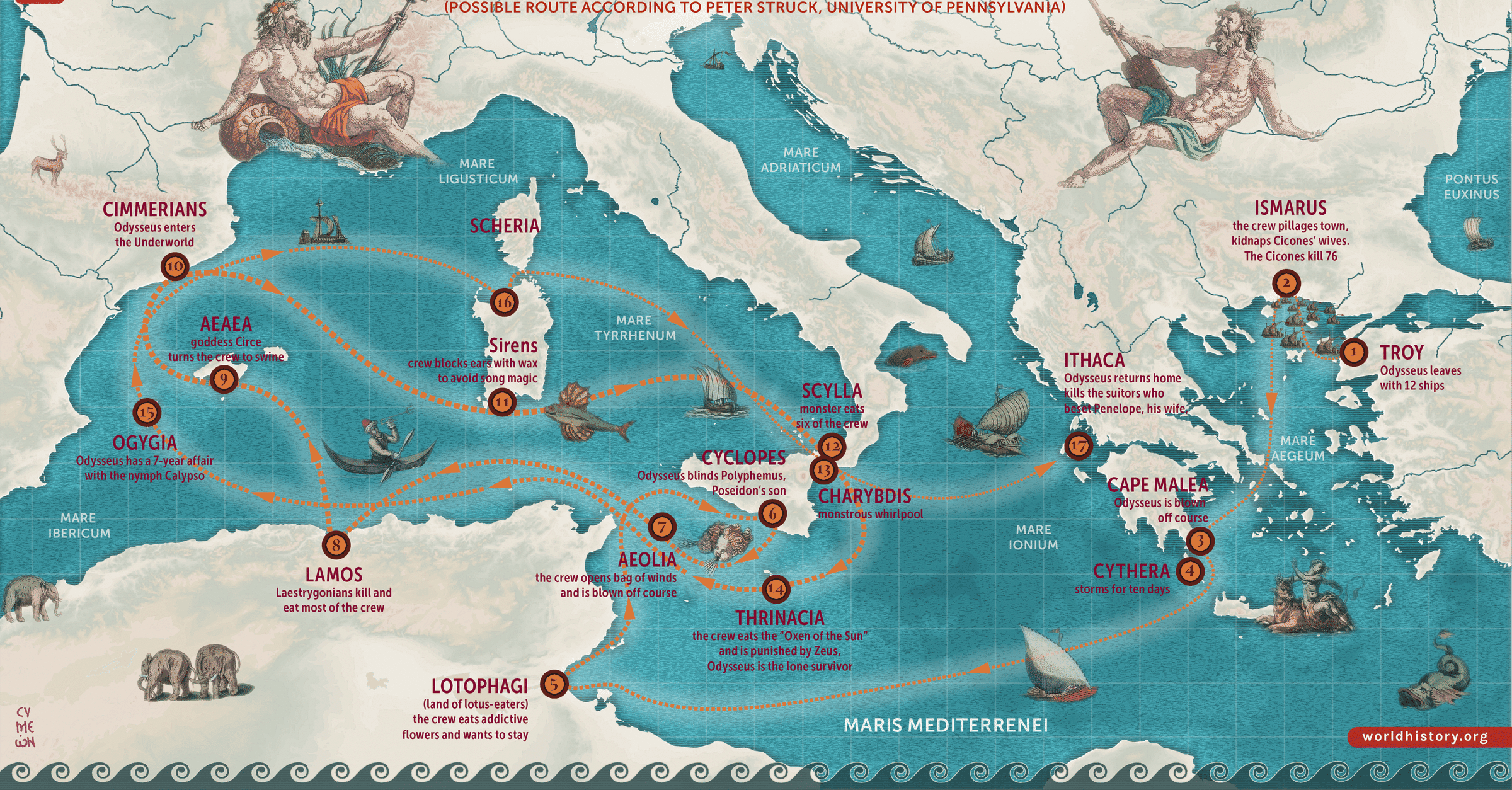
From 1,200 to 600 BCE, hundreds of Greek tribes in the eastern Mediterranean rose out of a dark age ushered in by the collapse of an earlier warrior culture, the Mycenaeans (the inspiration for Homer's tales of the Trojan War). By 600 BCE, the classical era of ancient Greece began, marked by the ascendance of Athens and Sparta. Under Athenian dominance, the Greeks saw a flourishing of the arts and a high point in ancient philosophy in Socrates, Plato, and Aristotle.
Greek culture spread beyond the eastern Mediterranean under the northern Macedonians, Philip and his son Alexander the Great—whose armies conquered Egypt, Mesopotamia, and Persia in the mid-fourth century BCE.
When the Romans conquered much of Greece in the mid-second century BCE, they adopted many Greek ways, including its architecture, literature, and pantheon. The United States' founding generation drew core ideas from Greek democracy and Roman republicanism to form the basis of American governance in the Constitution.
1440 Findings
Hours of research by our editors, distilled into minutes of clarity.



Explore World History
Weave together the many narratives of world history with our highly curated and expanding selection of diverse, fascinating resources designed to showcase the breadth and richness of Earth's story, from the earliest traces of human civilization to the dramatic developments of contemporary cultures.