Gladiators

Overview

Gladiators, the men and women who fought in public arenas, fascinated the ancient Roman world. Their images appeared in both dive bars and opulent villas. Philosophers moralized about them; children sketched them on walls. For good luck, brides parted their hair with a spear pulled from a gladiator’s corpse.

1440 Findings

Hours of research by our editors, distilled into minutes of clarity.

  • The gladiators who fought animals

    Not all who fought in the Colosseum were gladiators. Some faced wild animals instead—and they had a different name. This explainer unpacks the role of the bestiarii, from trained fighters to condemned prisoners, and how their brutal battles became one of ancient Rome’s most feared and deadly forms of entertainment.

    Video 1440 Original

    The gladiators who fought animals

  • Exploring the Hippodrome of Constantinople

    The Hippodrome had room for about 80,000 spectators (more than the Colosseum, but less than Rome’s Circus Maximus). It was simultaneously Constantinople’s premier entertainment venue and its greatest political theater: the emperor routinely watched the games, and sometimes communicated with the crowd through a herald. The worst riot in Byzantine history, the Nika Revolt, began when the factions of the Hippodrome united in opposition to Justinian.

  • How gladiators were trained

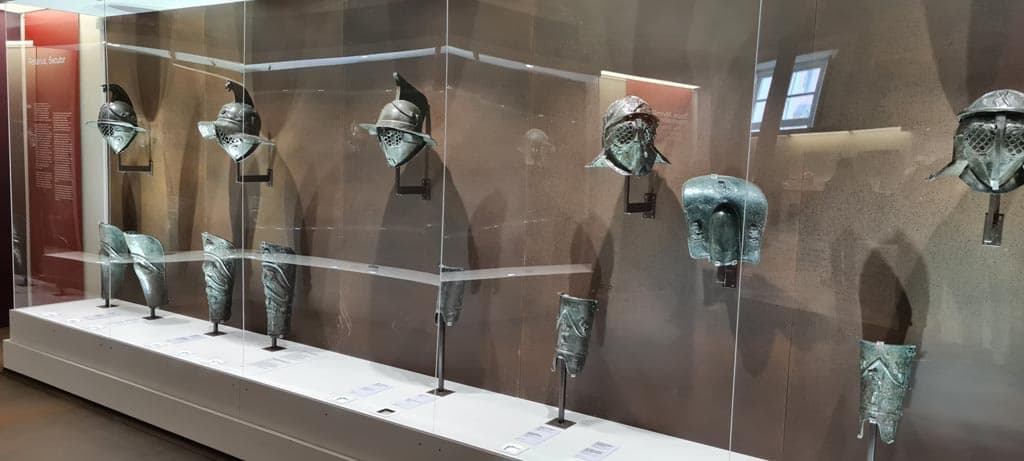
    No literary source tells us much about how gladiators were trained. For that, we have to rely largely on artistic evidence, and this detailed essay, illustrated with artifacts from the collection of the Metropolitan Museum of Art, is an excellent point of entry. Note, especially the oil lamp from Cyprus, which shows a gladiator practicing swordplay against a stake. Roman soldiers trained in much the same way.

  • Female gladiators in the Roman arena

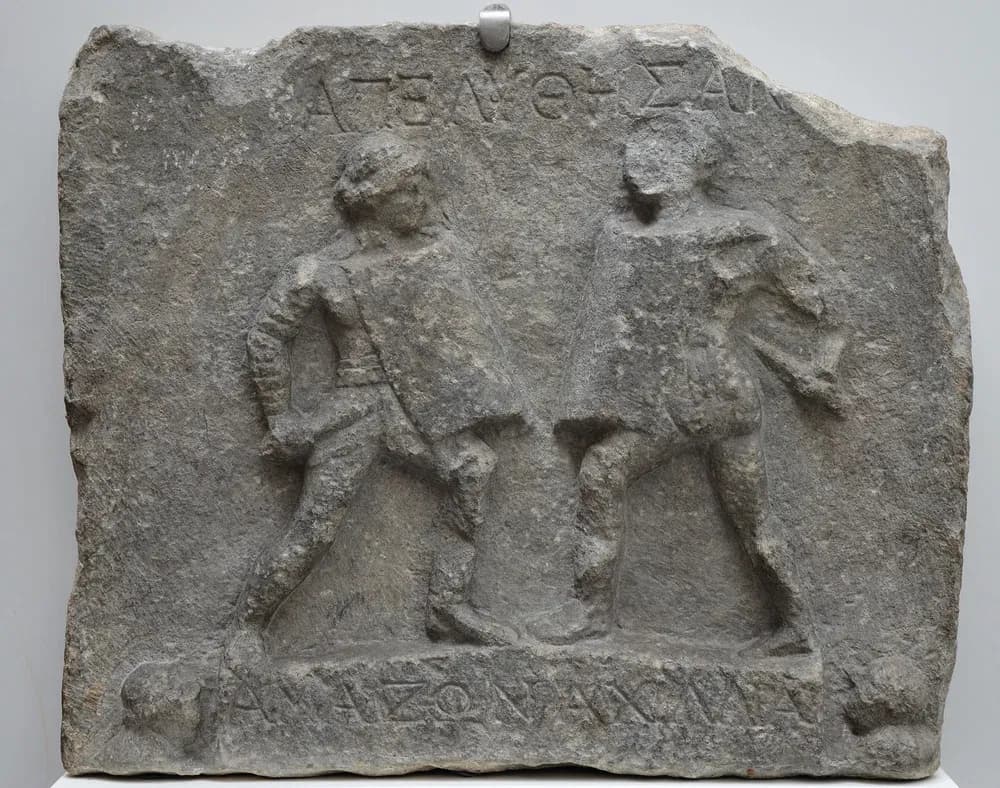
    Although the vast majority of gladiators were male, a few—as this article explains—were female. Female gladiators fascinated and unsettled Roman spectators because they shared the “masculine” courage displayed by their male counterparts. Their stage names likened them to the Amazons and heroines of Greek myth.

  • Thumbs up or thumbs down for the gladiators

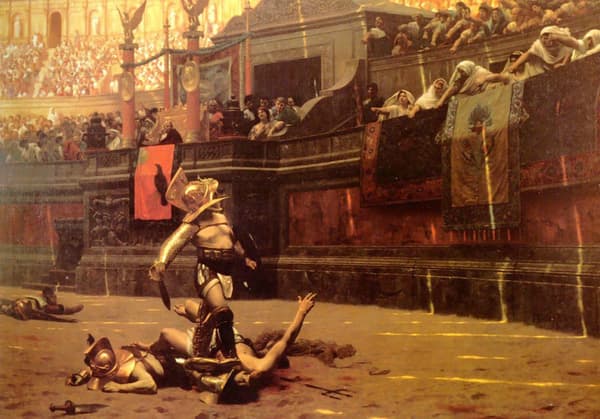
    This page explores what we know about gestures made by the crowd during gladiatorial matches. Spectators used a pollice verso (turned thumb) to signify a gladiator should be killed. It is unclear, however, which way that thumb was turned. Up is more likely than down. Alternatively, the thumb may have been jabbed toward the throat.

  • What did it take to eat like a gladiator?

    If you think gladiators were all rippling muscle, think again. Evidence suggests fighters weren't as cut as we've been led to believe. This article dives into the diets of ancient Roman gladiators, who may have eaten mostly vegetarian. Archaeological evidence gathered from the skeletons of 68 gladiators found in a 2,000-year-old Turkish grave suggests the fighters' diets mainly relied on barley and legumes, with little animal protein.

  • Spartacus: Enslaved ancient Roman gladiator turned revolt leader

    Sold into slavery and forced to be a gladiator, Spartacus ultimately took the fight outside the arena and revolted against the Romans. This article dives into the history of the rebel leader. Spartacus was originally from Thrace, a part of ancient Europe that included parts of modern-day Bulgaria, Turkey, and Greece. Exactly what led to his enslavement is unclear, but it likely involved ancient Rome's attempt to subjugate Thrace.

  • The gladiator code of conduct

    Here's a wide-ranging interview with Professor Michael Carter, a leading scholar on gladiators. Among other subjects, the interview explores how the games were paid for and advertised, the existence of gladiator “merch,” whether matches were ever fixed, the rules by which fights were judged, and the remarkable code of conduct that encouraged gladiators to spare their opponents whenever possible.

    Video

    The gladiator code of conduct

  • Who was Spartacus, the revolutionary gladiator?

    An article on the career of Spartacus, the gladiator responsible for the biggest slave revolt in Roman history. After breaking out of a school at Capua, Spartacus led an army of slaves that grew to 70,000 and defeated a Roman army sent against him. It took the combined efforts of Crassus and Pompey to subdue him. Ever since the Enlightenment, Spartacus has been regarded as an icon of resistance to slavery and oppression. The Romans, naturally, saw him in a less sympathetic light.

  • What did gladiators do after they retired?

    The odds of surviving to retirement were not good, and even after they were freed, many gladiators returned to fight dangerous—but lucrative—“exhibition matches.” Many more stayed in the orbit of the arena by becoming trainers or referees. Others went on to more surprising careers, including politics.

    Video

    What did gladiators do after they retired?

Explore World History

Weave together the many narratives of world history with our highly curated and expanding selection of diverse, fascinating resources designed to showcase the breadth and richness of Earth's story, from the earliest traces of human civilization to the dramatic developments of contemporary cultures.

View All World History