Society & Culture

Art, music, sports, entertainment, movies, and many other subjects—these elements define who we are as a society and how we express ourselves as a culture. Take a deep dive into the topics shaping our shared norms, values, institutions, and more.

1440 Findings

Hours of research by our editors, distilled into minutes of clarity.

  • Quiz Shows

    Claims about 'Twenty-One' weren't taken seriously until other quiz shows were exposed

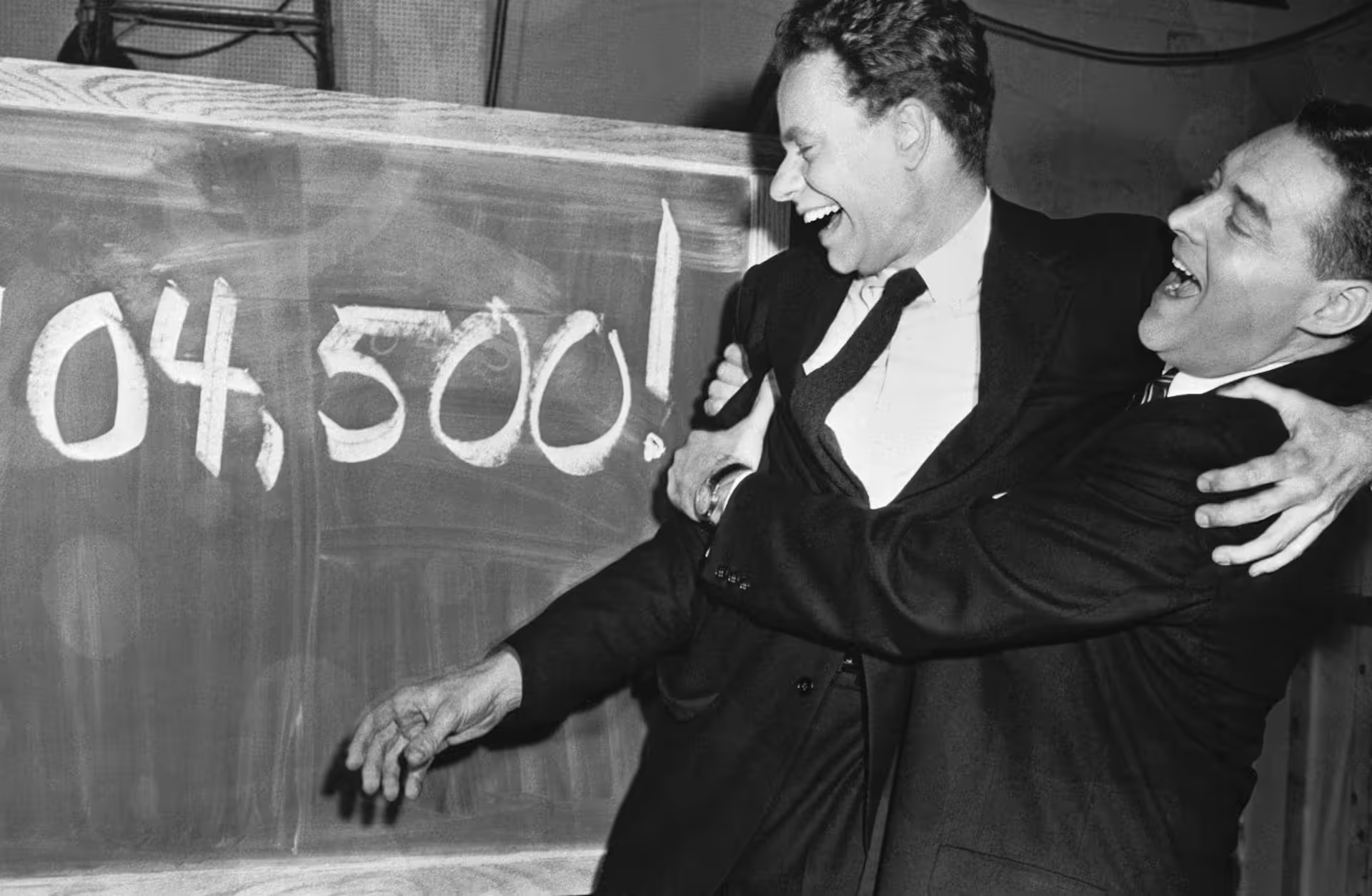
    Contestant Herb Stempel alleged that “Twenty-One” was fixed after his loss to Charles Van Doren, saying that everything on the show was “carefully choreographed,” though his claims were dismissed as mere bitterness. In truth, Stempel had been promised a network job if he went along with the con and became outspoken when it didn’t materialize. Van Doren, meanwhile, became a celebrity, donning the cover of Time magazine.
  • Quiz Shows

    'Twenty-One' producers presented fabricated narratives as reality

    Producers of “Twenty-One,” which featured two contestants competing from separate isolation booths, knew the quiz show format could use storytelling in the same way that any fictional program could. They found a perfect narrative in the matchup between Charles Van Doren, an all-American Columbia University instructor, and Herb Stempel, an arrogant Queens native. Stempel intentionally lost the game, pretending not to know the answer to a question about his favorite movie, “Marty.”

  • Quiz Shows

    Revelations about quiz show ‘Dotto’ led to a larger scandal across the industry

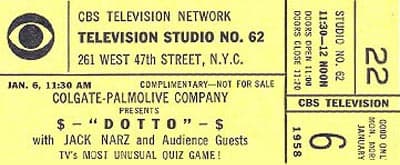
    The show, which aired on both CBS and NBC in slightly different iterations in 1958, followed a fairly standard question-and-answer format, with correct answers slowly revealing an image that contestants needed to solve. Despite its popularity, the show was canceled after it was revealed that one contestant had been provided with answers to the questions. That revelation led to similar scandals with four more shows over the next few months.

  • Quiz Shows

    'The $64,000 Question' took the quiz show formula to new levels

    Creator Louis G. Cowan upped the potential winnings and had his team scour through contestant applications in search of everyday people with exceptional knowledge in a particular area. When the show premiered in 1955, they made the game appear high-tech by using cutting-edge IBM technology to deliver questions. The gambit worked: At one point, 55 million Americans tuned in.

  • Quiz Shows

    'Truth or Consequences' was the first TV quiz show

    The game—which forced contestants who answered questions incorrectly to face “consequences” in the form of wacky stunts—debuted in 1941 with a one-off experimental broadcast on WNBT, then reappeared on NBC in 1950. In 1956, a fresh-faced Bob Barker made his television debut as the show’s new host.

  • Quiz Shows

    Radio quiz shows took off in the ‘40s

    The concept took hold during the Great Depression, with 50 shows on the air by 1940, because they allowed families to imagine a financial windfall was just a few questions away. Although the genre had a slight downturn during World War II, it experienced a resurgence by the end of the decade, with 200 shows on the air.

  • Quiz Shows

    'Vox Pop' gave ordinary contestants the chance to win quick cash

    The radio show began in 1932 with man-on-the-street interviews in Houston, but soon began traveling to different locations around the country. The show became known for its quiz feature, which offered $1 for each question randomly picked people answered correctly. The show was a hit, not only because audiences could imagine themselves in the contestants’ shoes, but also because it was relatively inexpensive for the network to produce.

Next page