National Parks
Overview
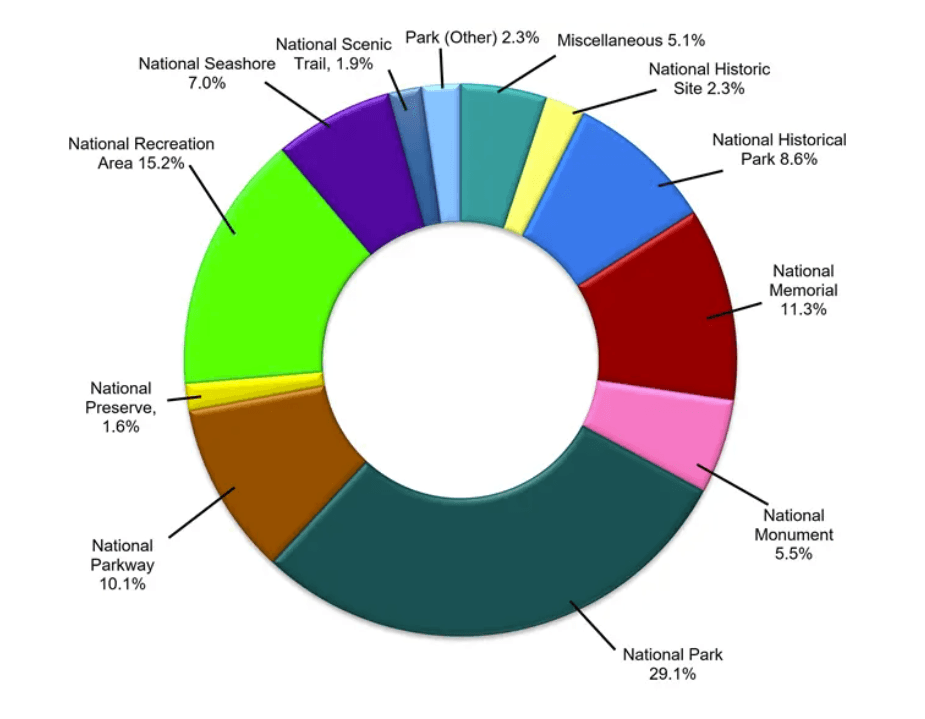
America's National Park System includes roughly 85 million acres of US territory, equal to the size of Germany, which are set aside by federal law for preservation. There are 63 areas officially designated as national parks—including the Grand Canyon, the Great Smoky Mountains, and Acadia—and more than 400 additional smaller units, including monuments, rivers, trails, battlefields, and more.
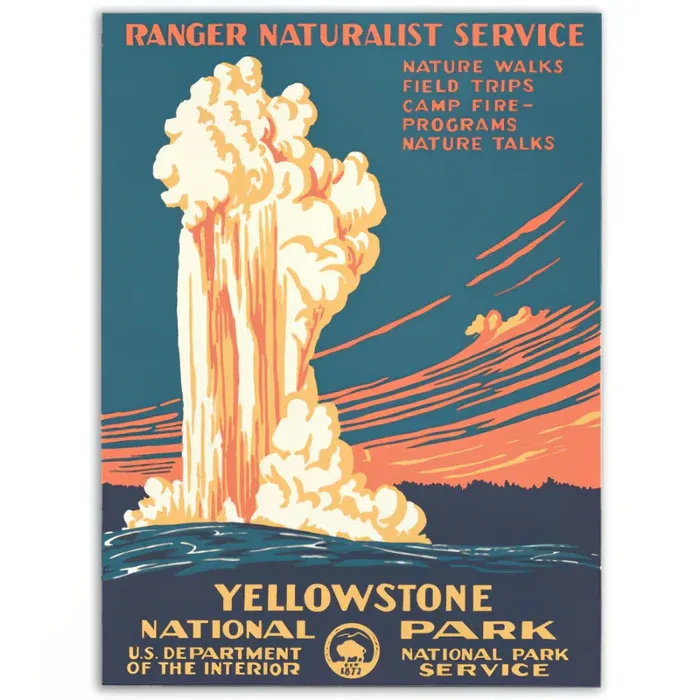
In 1872, Yellowstone was established as the first national park dedicated to public enjoyment and recreation, though its foundation also displaced several Native American tribes. By 1916, the growing system required the creation of the National Park Service to preserve its lands for future generations. Eventually, hunting and logging were banned in the parks, though regulated extractive activity is still permitted in national preserves.
In 2025, roughly 323 million people visited America's national parks, a decrease of roughly 3% from 2024—a dip attributed in part to a 43-day partial government shutdown, the longest in US history. Those visits generate an estimated $29B in local economic activity per year. Federal cost-cutting efforts in recent years have prompted debate over whether the agency can sustain its current operations.
1440 Findings
Hours of research by our editors, distilled into minutes of clarity.





Explore Society & Culture
Take a deep dive into the topics shaping our shared norms, values, and institutions. Art, music, and sports. Literature, architecture, and TV. Film, food, and philosophy. If it defines who we are as a society or how we express ourselves as a culture, then we're exploring it here.
Featured Topics
- Barbecue
- Beat Generation
- Bob Dylan
- Broadway
- Bruce Springsteen
- Burning Man
- The Burrito
- Country Music
- Dystopian Literature
- Flannery O’Connor
- Frank Lloyd Wright
- Girl Groups
- Hip-Hop
- James Beard Awards
- Memes
- National Football League
- National Parks
- Netflix
- Opera
- Rock 'N' Roll
- Salvador Dalí
- 'Saturday Night Live'
- Shakespeare
- 'The Star-Spangled Banner'
- Steven Spielberg
- Title IX
- True Crime
- Vacationing
- Walt Whitman