Xenotransplantation
Overview
Xenotransplantation, from the Greek "xénos" (foreigner, guest, stranger), is the transplantation of an organ, tissue, or cell from one species into another. Humans have attempted such procedures for more than 300 years with various animals' blood, tissue, and organs.
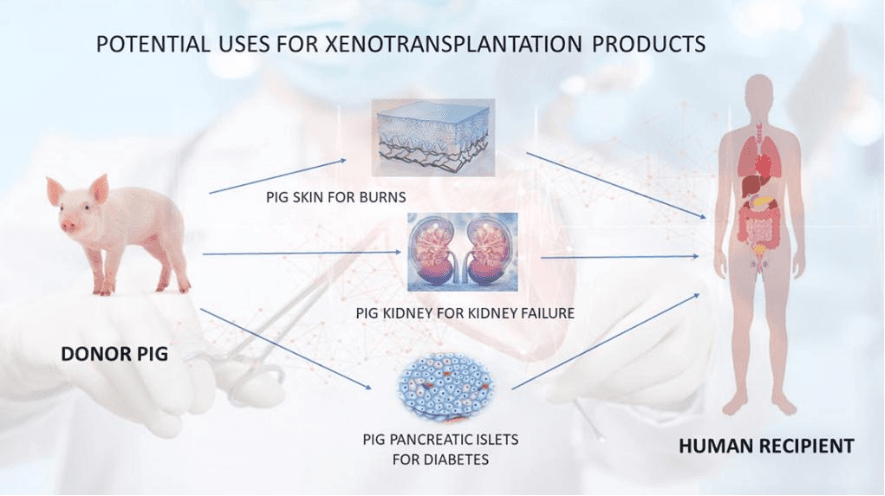
Pigs are the main focus of modern xenotransplantation research, which seeks to replace failing human organs with animal parts. The animals are easy to raise and breed, produce large litters, and are similar in size to humans. Simpler forms of xenotransplantation—such as using pig heart valves or corneas—have been a part of clinical practice for decades, but the human immune system typically has rejected whole animal organs within hours of transplant surgery. Whole organ transplants have remained a major medical goal because of massive demand: More than 100,000 patients are typically on America's transplant waitlist.
Recent gene-editing breakthroughs have enabled scientists to modify the DNA of pig organs, so they appear less foreign to the human immune system. Since 2022, several patients have functioned with gene-edited pig kidneys and hearts for months before the organs needed to be removed or the patient died.
1440 Findings
Hours of research by our editors, distilled into minutes of clarity.



Explore Health & Medicine
Indulge your curiosity, from the inner workings of our bodies and minds to the latest in medical research and treatments, all aimed at enhancing your understanding of health, wellness, and medicine. Our resources are meticulously curated to offer precise and pertinent information to anyone interested in learning more about the medical sciences.