Unemployment
Overview
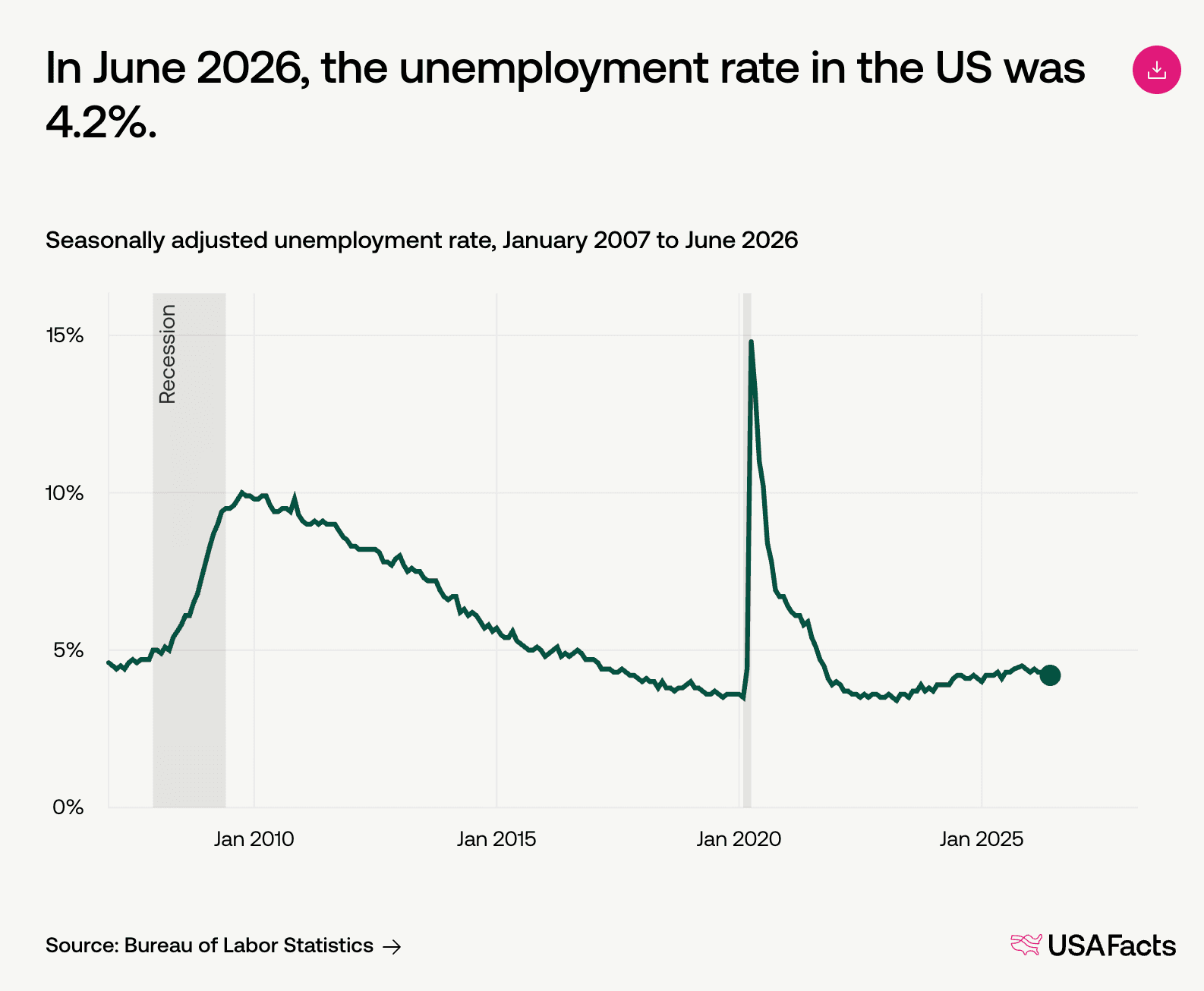
For millions of Americans, the prospect of becoming unemployed is a persistent source of financial anxiety. The US unemployment rate, or the percentage of people in the labor force who are actively looking for work but aren't currently employed, has long been considered an economic bellwether, with many economists agreeing that a rate between 4% and 5% is considered healthy. As of June 2026, the US unemployment rate was 4.2%.
Americans who are unemployed for up to 26 weeks while actively looking for work can apply for unemployment benefits. These weekly payments, facilitated by the government, are calculated based on one's previous wages and funded by employer payroll taxes. Also known as unemployment insurance, the program was introduced as part of the Social Security Act that Congress passed during the Great Depression in 1935 after unemployment hit a record high of about 25% in 1933.
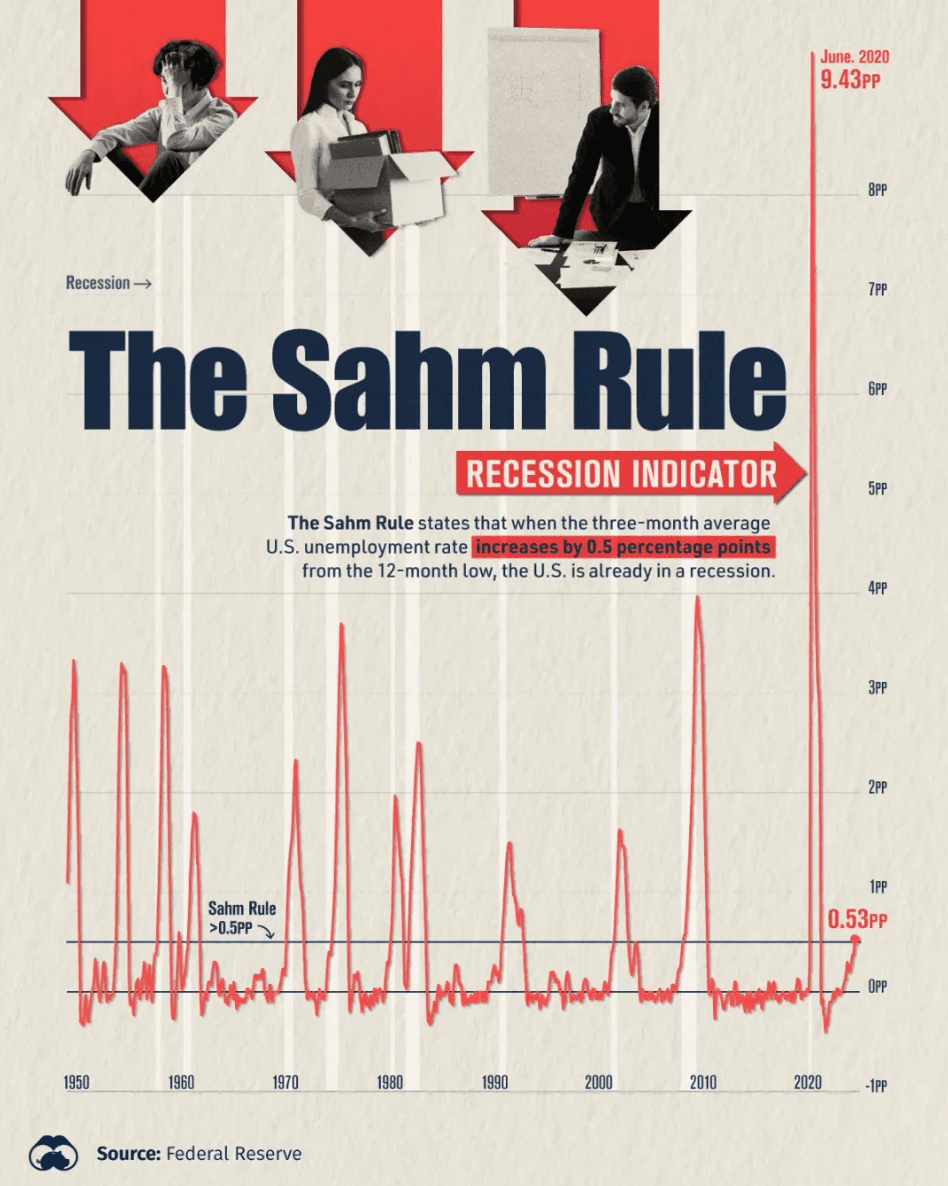
Economic downturns are the primary cause of unemployment in the US, with a slowdown in economic activity leading to a decreased demand for goods and services, resulting in layoffs and business closures.
1440 Findings
Hours of research by our editors, distilled into minutes of clarity.






Explore Business & Finance
The United States is home to more than 33 million businesses, the vast majority of which are small businesses, with millions being created (and others closing shop) every year. These businesses often rely on loans, provide the goods and services that keep the economy flowing, and sometimes even grow large enough to enter public markets or provide private investment opportunities. Explore key topics central to business and finance, from the role of the Federal Reserve to how initial public offerings work, how millions of American students finance higher education, and more.
Featured Topics
- 401(k)
- Amazon
- Bankruptcy
- Bitcoin
- Bonds
- Capital Gains
- College Tuition
- Consulting
- Creator Economy
- Credit Unions
- Federal Reserve
- Gig Economy
- Individual retirement accounts
- Inflation
- Initial Public Offerings
- Investment Banking
- Labor Unions
- Life Insurance
- Macy’s
- Minimum Wage
- Mutual Funds
- OpenAI
- Startups
- Stock Market
- Student Debt
- US Currency
- Venture Capital
- Wall Street
- Warren Buffett
- Y Combinator