Labor Unions
Overview
Although they're most famous for bringing us the weekend, labor unions, broadly speaking, help workers organize their efforts so they can negotiate as a single entity rather than as individuals (see video overview). Workers in a particular industry, trade, or company form labor unions to improve aspects of their working conditions, such as pay or benefits.
The first US union was created in 1794, when cobblers in Philadelphia formed the Federal Society of Journeymen Cordwainers. Anti-union actions from the US government continued for decades until the Great Depression, when the National Labor Relations Act granted workers the right to form unions and strike.
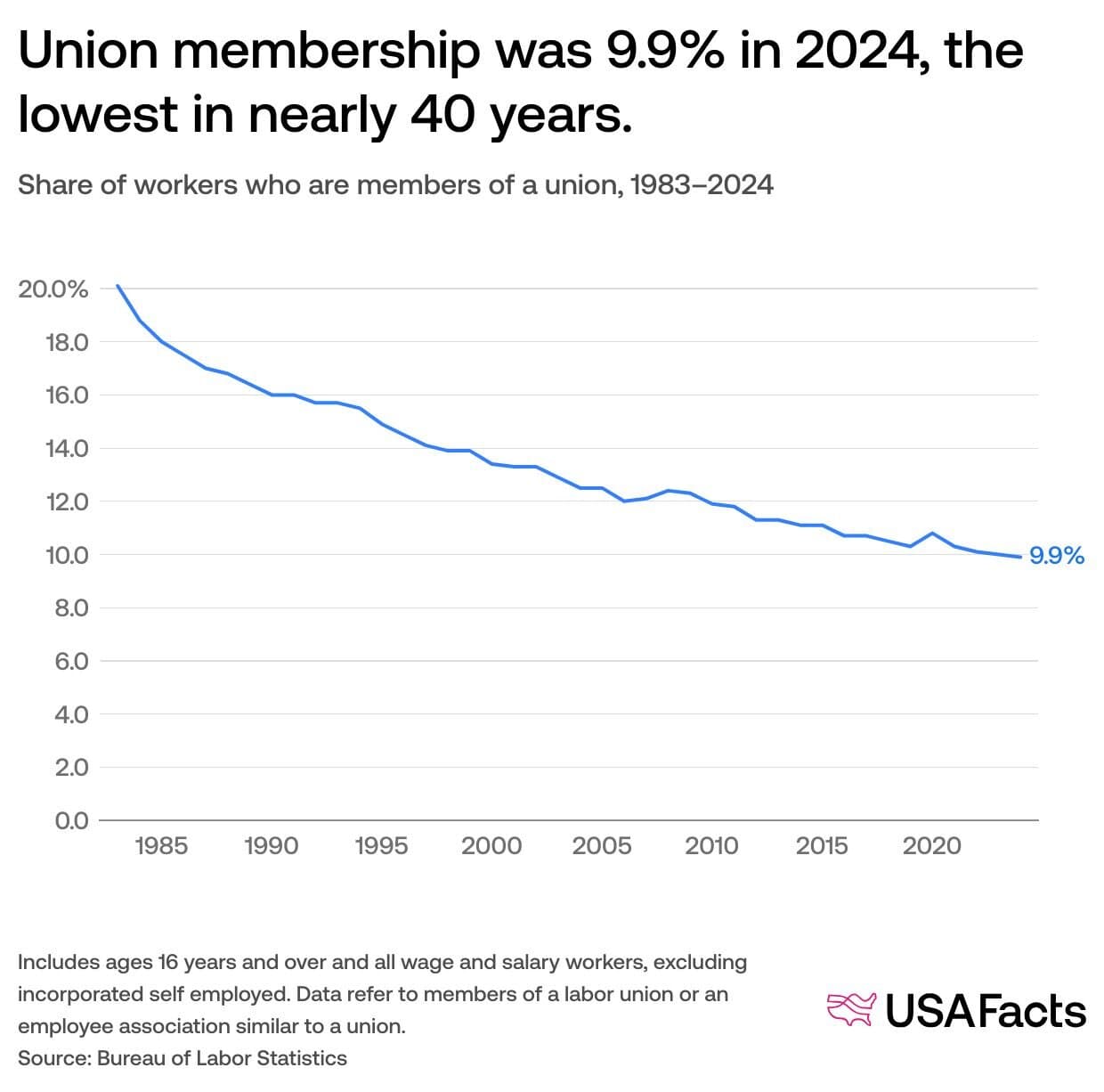
As of 2023, roughly 10% of US wage and salary workers were union members, down from roughly 20% in 1983. Critics of labor unions argue that unions not only make it more difficult to discipline low performers but also drive up labor costs. Union advocates, however, believe unions are an important tool for increasing workers' pay and benefits.
1440 Findings
Hours of research by our editors, distilled into minutes of clarity.





Explore Business & Finance
The United States is home to more than 33 million businesses, the vast majority of which are small businesses, with millions being created (and others closing shop) every year. These businesses often rely on loans, provide the goods and services that keep the economy flowing, and sometimes even grow large enough to enter public markets or provide private investment opportunities. Explore key topics central to business and finance, from the role of the Federal Reserve to how initial public offerings work, how millions of American students finance higher education, and more.
Featured Topics
- 401(k)
- Amazon
- Bankruptcy
- Bitcoin
- Bonds
- Capital Gains
- College Tuition
- Consulting
- Creator Economy
- Credit Unions
- Federal Reserve
- Gig Economy
- Individual retirement accounts
- Inflation
- Initial Public Offerings
- Investment Banking
- Labor Unions
- Life Insurance
- Macy’s
- Minimum Wage
- Mutual Funds
- OpenAI
- Startups
- Stock Market
- Student Debt
- US Currency
- Venture Capital
- Wall Street
- Warren Buffett
- Y Combinator