Minimum Wage
Overview
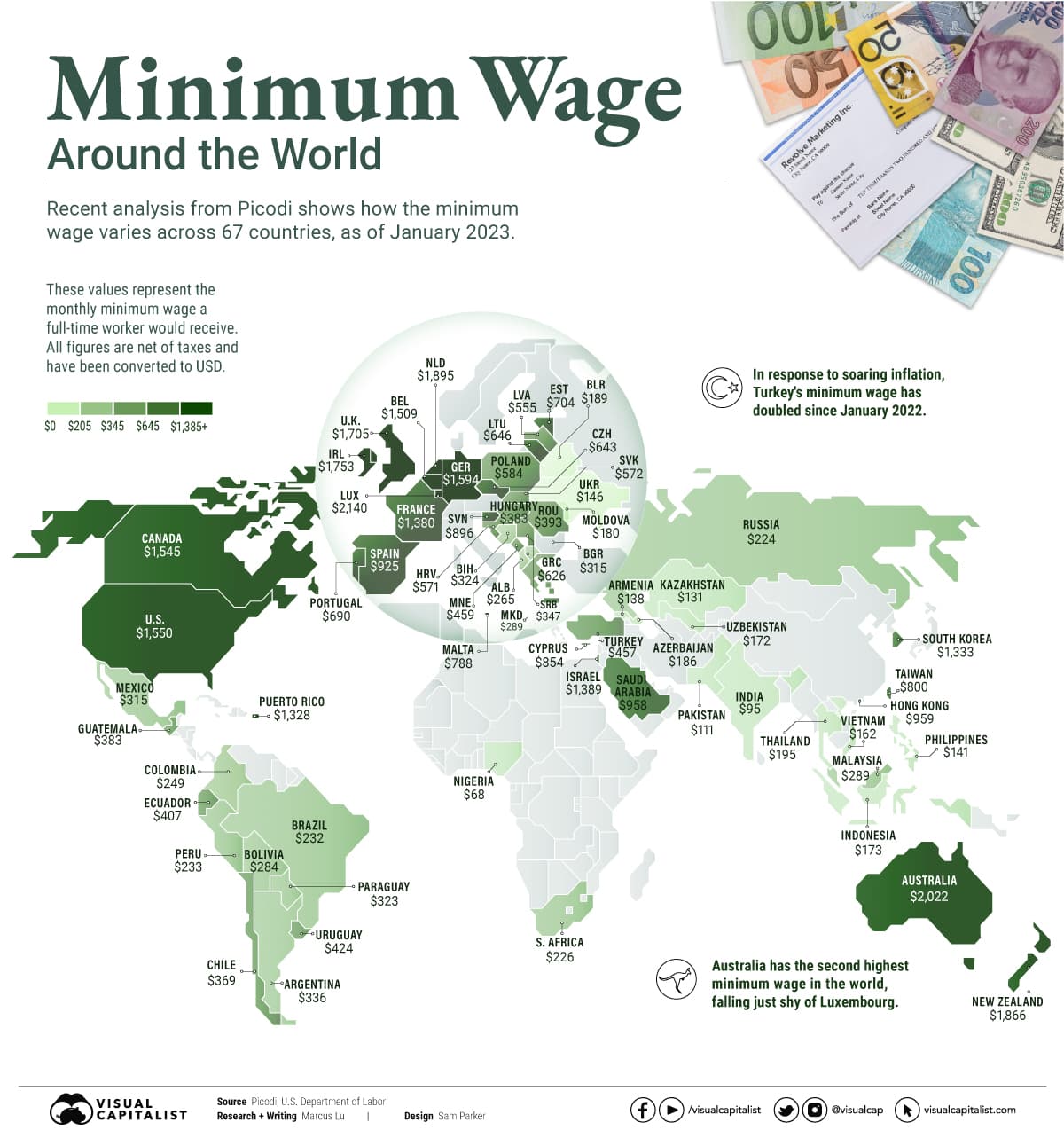
Grocery store cashier, lifeguard, shampooer—these jobs might seem different on paper, but there’s one thing they all have in common: They often pay minimum wage.
In the US, the “minimum wage” is the smallest amount a business can pay an employee per hour by federal law. Currently, it’s $7.25—but that's just the federal mandate. States can set their own minimum wage laws, too (more on that later).
As of 2021, nearly 1.6 million Americans made the federal minimum wage of $7.25 per hour. Proponents of raising the minimum wage argue that doing so would lower the poverty rate, whereas opponents worry it could lead to inflation and job cuts.
1440 Findings
Hours of research by our editors, distilled into minutes of clarity.




Explore Business & Finance
The United States is home to more than 33 million businesses, the vast majority of which are small businesses, with millions being created (and others closing shop) every year. These businesses often rely on loans, provide the goods and services that keep the economy flowing, and sometimes even grow large enough to enter public markets or provide private investment opportunities. Explore key topics central to business and finance, from the role of the Federal Reserve to how initial public offerings work, how millions of American students finance higher education, and more.
Featured Topics
- 401(k)
- Amazon
- Bankruptcy
- Bitcoin
- Bonds
- Capital Gains
- College Tuition
- Consulting
- Creator Economy
- Credit Unions
- Federal Reserve
- Gig Economy
- Individual retirement accounts
- Inflation
- Initial Public Offerings
- Investment Banking
- Labor Unions
- Life Insurance
- Macy’s
- Minimum Wage
- Mutual Funds
- OpenAI
- Startups
- Stock Market
- Student Debt
- US Currency
- Venture Capital
- Wall Street
- Warren Buffett
- Y Combinator