Medieval History

Overview

Between classical antiquity and modern times lies the Middle Ages. The dawn and dusk of this medieval era span several hundred years, with exact dates shifting between different areas. The medieval world spanned several continents and stretched from about the 3rd to 17th centuries. Use these resources to learn more about medieval history and the people who wrote it.

1440 Findings

Hours of research by our editors, distilled into minutes of clarity.

  • A thousand medieval dog names

    In the Middle Ages, hunting was more than a sport—it was a vocation. Hounds were a crucial element of hunting, and wealthy landowners owned hundreds of them. A scribe in the late 15th century recorded more than 1,000 authentic names given to dogs, prompting a historian to speculate this showed just how well dog-handlers knew their animals. See the names here.
  • Adult coloring books are older than you think

    The recent wave of adult coloring books may have been the cresting of a medieval creative tide. This article dives into the history of adult coloring books, from etches and blocks to purposeful paper prints. Before the advent of the printing press in 1436, artists, readers, booksellers, and the like filled in the black-and-white images of wooden and engraved prints as they pleased. Once manuscripts and engravings could be printed, coloring continued, appearing in institutional illuminated books and people's private collections. Read more history here.

  • When were the Middle Ages?

    Historians used to cite the collapse of the Roman Empire in 476 CE as the beginning of the Medieval Era, but scholars have come to see that date as inherently Eurocentric. The more accurate answer is: it depends. The Middle Ages in the Middle East, India, and China are believed to have started in 622, 543, and 220 CE, respectively. The end of the Middle Ages also differs by location, with the era’s sunset ranging from the mid-1400s to the mid-1600s.

  • Where were the Middle Ages?

    Many have equated the Middle Ages to European culture and an era beyond the reach of science and art. This false equivalency minimizes, if not erases, the culture and scholarship that flourished worldwide during this time. Medieval history exists in and across many countries, including China, India, Iran, Sudan, and Ethiopia. In this article, a classical archaeologist details evidence of medieval life around the world.

  • Maps of murder across medieval England

    These interactive maps show the sites of murders across York, Oxford, and London during the 14th Century. Explore the data by clicking site pins or experimenting with map filters, including crime scene type and murder weapon. Each pin includes a blurb on what researchers concluded about the attack, such as how a fight between the London fishmonger and skinner guilds during August 1340 ultimately left one man dead.

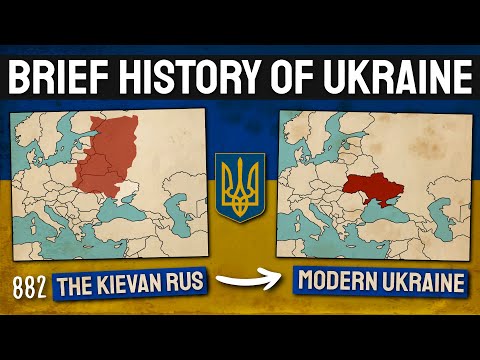
  • Prehistoric to present day Ukraine

    Recognizing the abundance of information available on the current war between Ukraine and Russia, this video focuses on the history of the region. Encapsulating Ukraine's background, the viewer will gain a better grasp of how the modern state arose from a quilt of different ethnicities, noteworthy conflicts between various groups, and more.

    Video

    Prehistoric to present day Ukraine

  • The true power of being a medieval fool

    The stereotypical image of a court jester – their jagged, jingling tunics, donkey-eared hoods, and exaggerated expressions – belies their influence and power in medieval European courts. Jesters mocked their masters and communities through performances that could include witty ripostes, musical instruments, dance, juggling, and more. This gallery offers commentary on the fool’s role and power during the Middle Ages.

  • The lost history of Fredegund and Brunhild

    In the Middle Ages, there were many powerful queens who ruled their kingdoms with strength and determination, two of the most notable examples of which were Fredegund of Neustria and Brunhild of Austrasia. Unafraid to use murder and intrigue to maintain their power, they played a significant role in shaping the political landscape of their time—but have largely been lost to history.

  • The Elizabethan pirate hired to find the Northwest Passage

    This resource by the Canadian Museum of Natural History explores the life and adventures of Martin Frobisher, an Elizabethan pirate hired to find the then-fabled Northwest Passage, a path across the Arctic Sea that would've allowed for quicker trade between Asia and Eastern Europe. He ventured into arctic waters at least three times, returning to England each time with either fool's gold, captive natives, or fool's gold and captive natives.

Next page

Explore World History

Weave together the many narratives of world history with our highly curated and expanding selection of diverse, fascinating resources designed to showcase the breadth and richness of Earth's story, from the earliest traces of human civilization to the dramatic developments of contemporary cultures.

View All World History