Measles
Overview
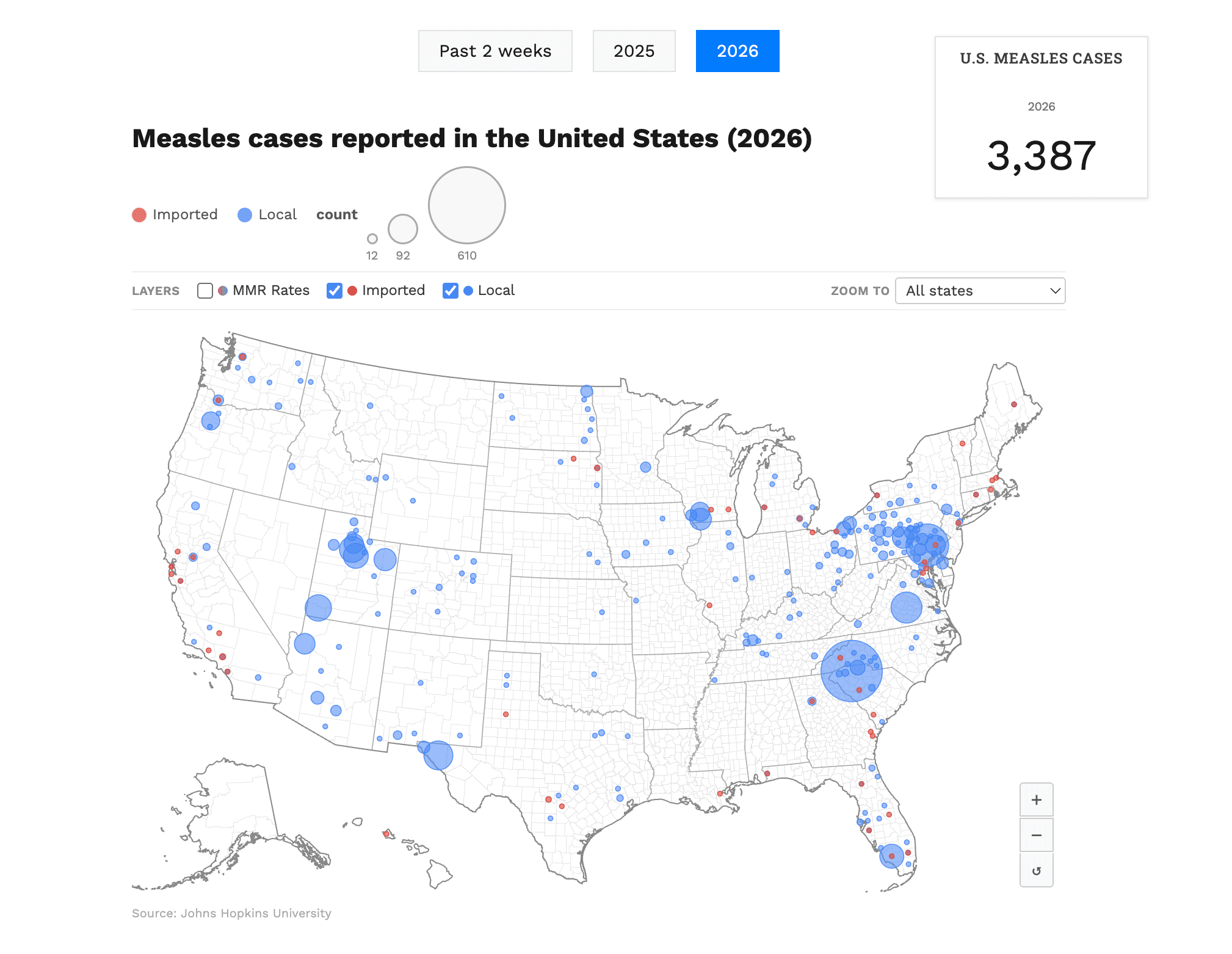
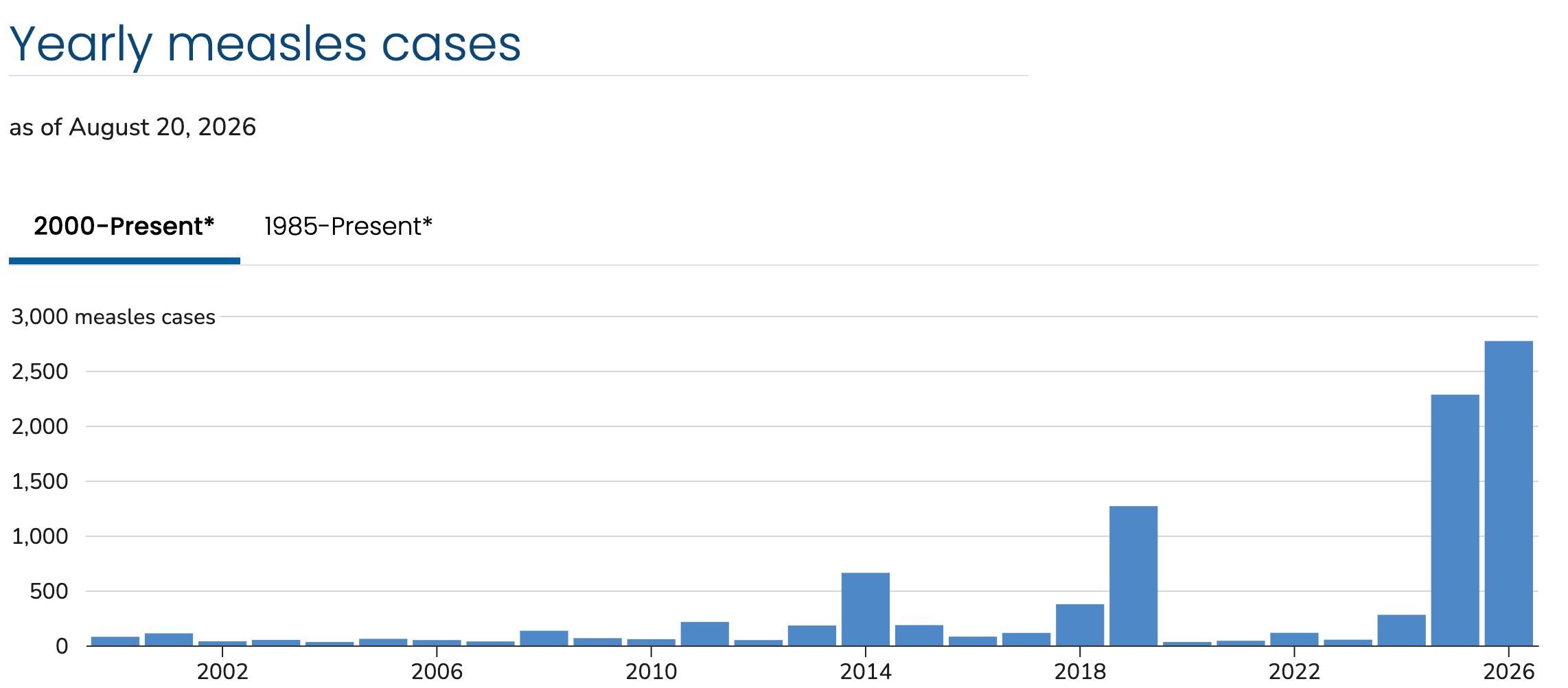
Measles is one of the most contagious infectious diseases known to science. It was responsible for almost 100K deaths worldwide in 2024. Most of those deaths occurred among unvaccinated children under the age of five. In the United States, there were three confirmed measles-related deaths in 2025, and in 2026, there was a surge of measles cases in the country driven by declining vaccination rates. The virus attacks the human immune system, leaving patients vulnerable to secondary complications. Measles was described in medical texts as early as the 9th century.
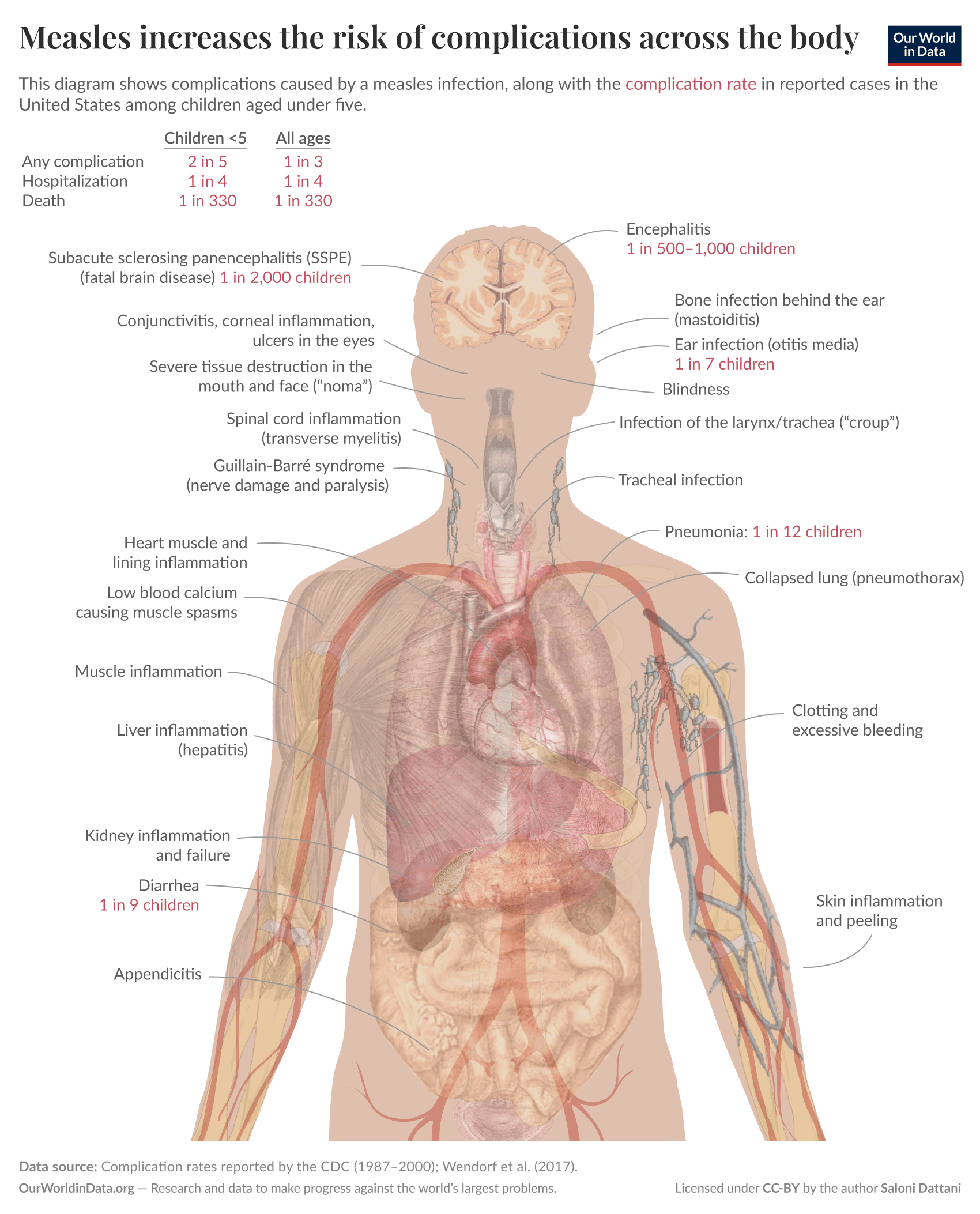
On average, just one infected person can spread the disease to up to 18 others in a population that's not fully vaccinated, and the virus can remain airborne for up to two hours. Vaccination coverage of at least 95% prevents measles outbreaks. While direct deaths from measles are less common, around three in 1,000 young children who contract the virus will die—typically from pneumonia or encephalitis.
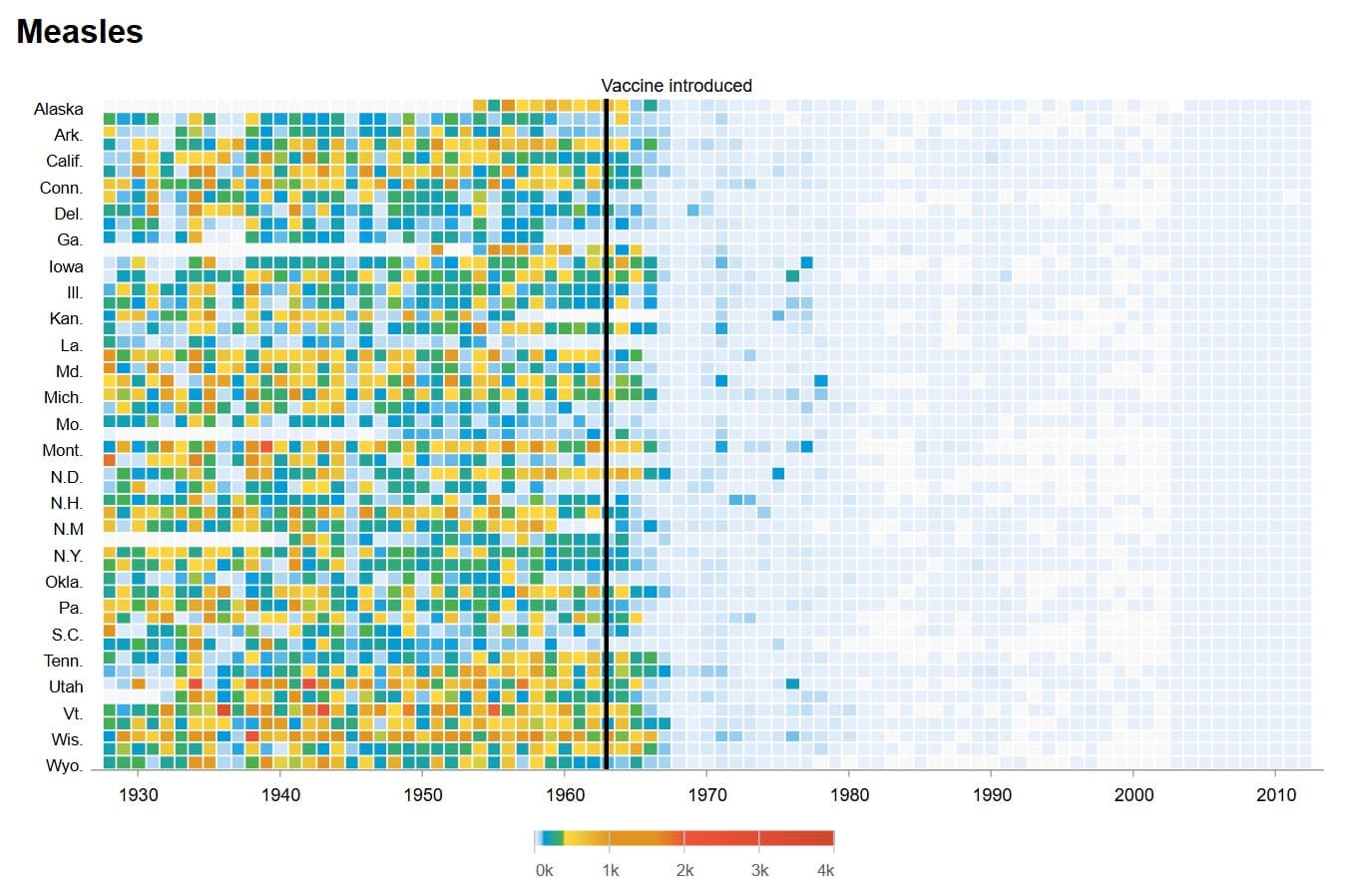
Prior to the mid-20th-century development of a measles vaccine, nearly every child had contracted the disease by the age of 15. The first measles vaccine became available in the US in 1963, and vaccination has saved an estimated 94 million lives globally since the mid-1970s.
1440 Findings
Hours of research by our editors, distilled into minutes of clarity.





Explore Health & Medicine
Indulge your curiosity, from the inner workings of our bodies and minds to the latest in medical research and treatments, all aimed at enhancing your understanding of health, wellness, and medicine. Our resources are meticulously curated to offer precise and pertinent information to anyone interested in learning more about the medical sciences.