Macular Degeneration
Overview
Macular degeneration is a common eye disease that affects central vision. It usually doesn't affect peripheral vision, but advanced forms of the disease can lead to legal blindness.
There are two forms of the condition. "Dry" macular degeneration occurs when a part of the retina called the macula becomes thinner and stops working well. Tiny deposits of protein and lipids, called drusen, accumulate beneath the macula. "Wet" macular degeneration, which affects 10 to 15% of those with macular degeneration, occurs when abnormal blood vessels form and leak blood into the eye, affecting central vision.
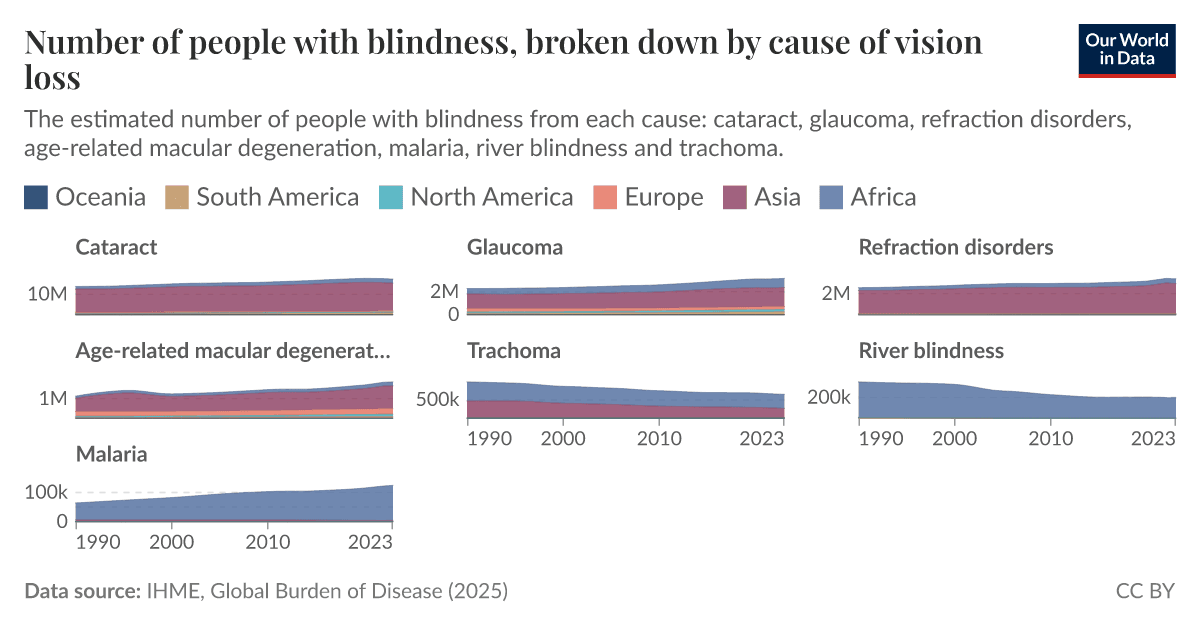
Age is the greatest risk factor, and there are almost 20 million people living with age-related macular degeneration in America. It's the leading cause of vision loss and blindness among older Americans. Smoking, family history of the disease, and European ancestry are risk factors for developing the disease (it's more common in white people, particularly those with lighter-colored eyes).
There's no cure, but treatments including vitamin regimens are available to slow its progression. In 2025, an eye prosthesis clinical trial enabled advanced macular degeneration patients to regain some sight for the first time. Eye prostheses and gene therapy to regenerate retinal cells (still currently in animal studies) are areas of active research for this disease.
1440 Findings
Hours of research by our editors, distilled into minutes of clarity.



Explore Health & Medicine
Indulge your curiosity, from the inner workings of our bodies and minds to the latest in medical research and treatments, all aimed at enhancing your understanding of health, wellness, and medicine. Our resources are meticulously curated to offer precise and pertinent information to anyone interested in learning more about the medical sciences.