Overview

Grunge is a subgenre of rock 'n' roll that emerged in the American Pacific Northwest in the 1980s and became a cultural phenomenon in the early 1990s. The music blended punk rock, heavy metal, and pop to create a sludgy but melodic sound, evident in early records from Soundgarden, Mudhoney, Pearl Jam, and more.

1440 Findings

Hours of research by our editors, distilled into minutes of clarity.

  • The best grunge albums of the 1990s

    The best way to understand the music is to immerse yourself in it. This list compiles the definitive albums from the subgenre's peak period, featuring records from the big names associated with the scene (such as Nirvana, Pearl Jam, and Soundgarden) alongside less obvious picks that released grunge-adjacent classics (including Sonic Youth, Smashing Pumpkins, and PJ Harvey).

  • Exploring Wipers, the band Kurt Cobain said invented grunge

    Wipers began in Portland, Oregon, in 1977, playing a form of punk rock that sounded darker and heavier than their contemporaries in New York, California, and England. The band remained an underground secret for years, influencing countless artists, including Nirvana's Kurt Cobain. "What more can I say about them?" he said in an interview. "They started Seattle grunge rock in Portland 1977."

  • Long before grunge, Hüsker Dü blended pop's melodies and punk's speed

    The Minneapolis trio began as a lightning-fast hardcore band, but they slowly became more melodic than many of their early '80s peers without sacrificing their punk edge. That combination would eventually be called a mess of names: college rock, alternative, indie, and, eventually, grunge.

  • 'Grunge' was initially used as an insult

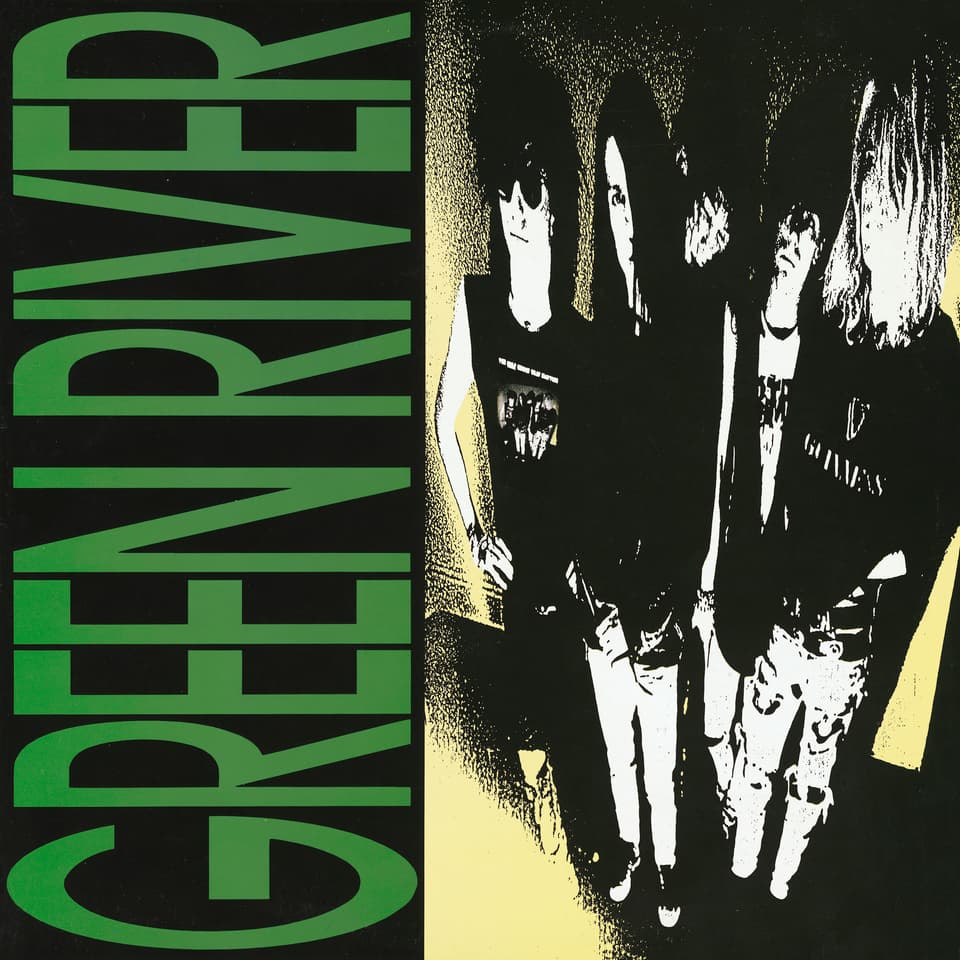
    The first known use of "grunge" to describe music is believed to be by Mark Arm, a Seattle scenester, who mocked his own band by writing, "Pure grunge! Pure noise! Pure shit!" By 1987, it'd caught on as a more earnest descriptor for a sludgy mix of punk and metal: Sub Pop Records cofounder Bruce Pavitt described the band Green River as "ultra-loose grunge that destroyed the morals of a generation."

  • Listen to the 'Deep Six' compilation, one of the first collections of grunge

    In the '80s, "grunge" was still not a widely used term, though there was a distinct sound coming from Seattle, one that blended punk and metal. C/Z Records decided to document the emerging sound in 1985 by releasing a compilation with six of the city's cutting-edge bands, including Green River, Melvins, and Soundgarden.

  • The news feature that broke grunge

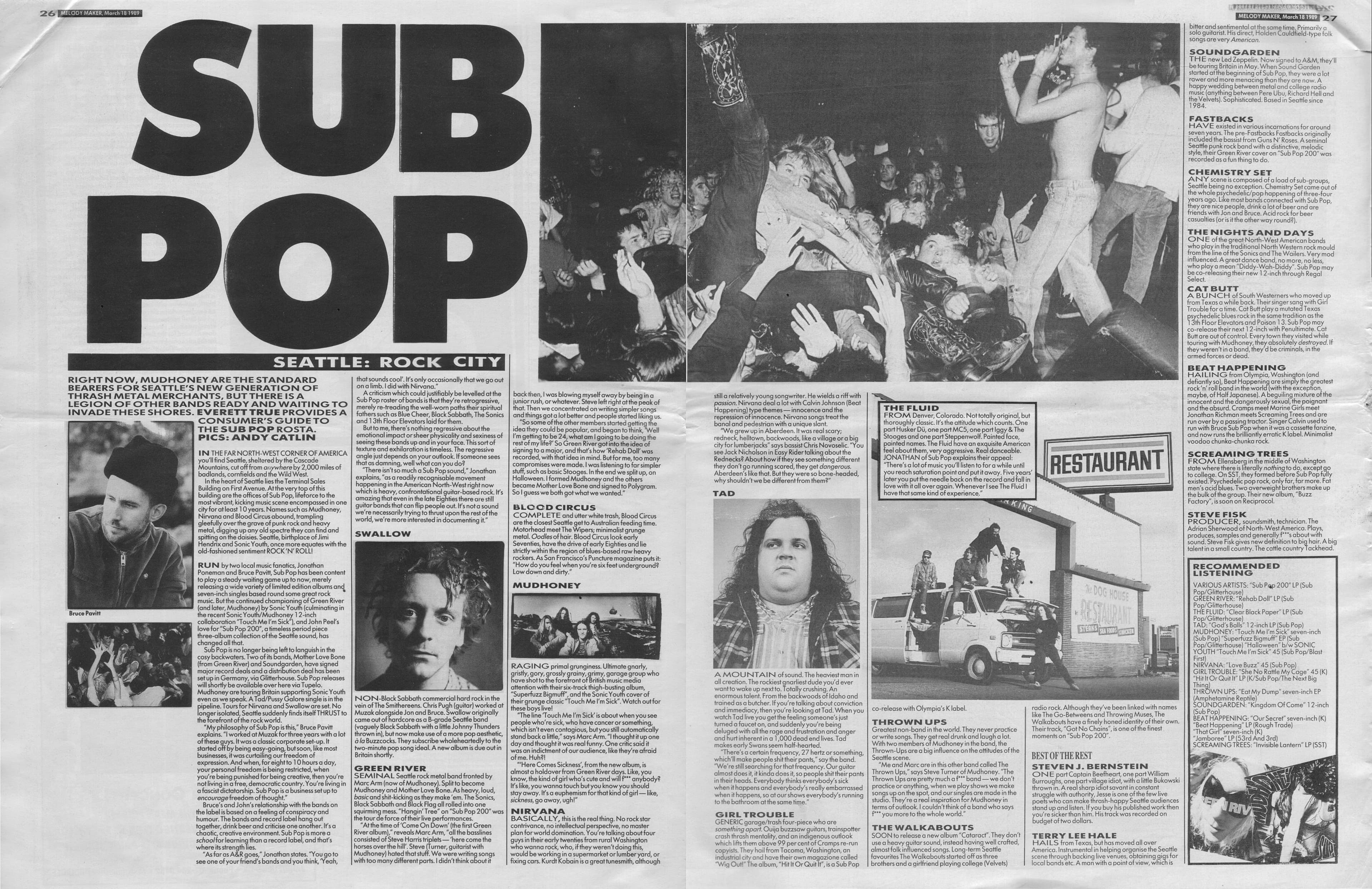
    The Sub Pop label paid for journalist Everett True, then writing for Melody Maker, to fly to the sleepy northwestern city to check out the scene, which was breeding a curious mix of punk rock and heavy metal. The gambit worked. "The most vibrant, kicking music scene encompassed in one city for at least 10 years," Everett wrote.

  • Why grunge artists loathed the term 'grunge'

    As the music took off, the word quickly became a convenient marketing term that lumped together bands that were rather distinct. "'Grunge,' as a term, nobody liked that," Soundgarden's Kim Thayil once said. "Everyone thought, 'Oh this is a marketing thing. This is a way to file Seattle on a retail display in a record store.'"

  • Why Neil Young is sometimes called 'the godfather of grunge'

    The legendary singer-songwriter's work with his band Crazy Horse, especially "Rust Never Sleeps" and "Ragged Glory," married infectious melodies with overpowering guitars, a formula that many grunge acts would replicate. Young would go on to perform with Pearl Jam (like in the performance of "Rockin' in the Free World" below) and record the 1995 album "Mirror Ball" with them.

  • Before he was Soundgarden's singer, Chris Cornell was the band's drummer

    Cornell was the band's first drummer, but got out from behind the kit in 1985 so he could focus on vocals. That foundation, though, is what his bandmate Kim Thayil claimed gave Cornell his unique singing style. "Chris has an amazing way of writing melody around these odd time signatures that a lot of people have a tough time doing," he said. "It's very natural for Chris, though, because he was our original drummer, so he can think in those terms."

Explore Society & Culture

Art, music, sports, entertainment, movies, and many other subjects—these elements define who we are as a society and how we express ourselves as a culture. Take a deep dive into the topics shaping our shared norms, values, institutions, and more.

View All Society & Culture