Space

From roughly 60 miles above the Earth's surface to farther than light has traveled during the entire age of the universe, space has captured human imagination for millennia. Explore the final frontier with the best resources curated from across the internet.

1440 Findings

Hours of research by our editors, distilled into minutes of clarity.

  • Astrophysics

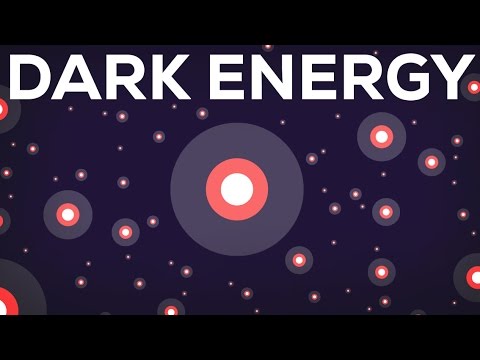
    Dark matter and dark energy, explained

    What is dark energy? What is dark matter? Well, if we knew exactly, we would have a Nobel prize—we know that they exist, though. Scientists have theorized that the former may be a property of three-dimensional space itself, while the latter could be exotic particles that interact with almost nothing. This video from Kurzgesagt explains what we know and what we don't.
    Video
    Dark matter and dark energy, explained

  • Saturn

    Visualizing the history of Saturn and its rings

    Every 13 to 16 years, Saturn's rings become far less visible because its plane becomes exactly even with Earth's. This visual-rich essay explores the history of humanity's perception of Saturn, from Galileo's first sighting (and dubbing the rings "ears") to the idea that the rings won't last more than a few hundred millions years more. Explore this fascinating planet here.

  • Mars

    How NASA measures marsquakes

    Most probes sent to other planets and asteroids focus on surface phenomena, but NASA's InSight Lander is interested in looking deeper. Studying marsquakes as well as the red planet's crust and core, InSight provided four years of insight into how the rocky planets of the inner solar system formed.

  • Space Debris

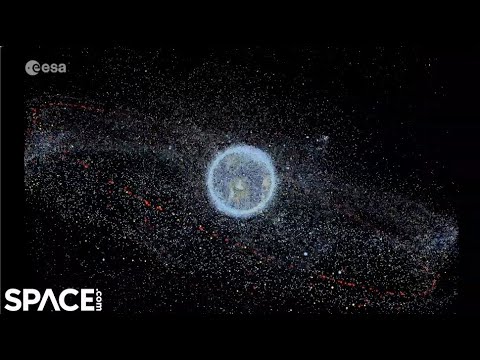
    Visualizing Earth's space garbage

    An unsavory byproduct of humanity's brilliant exploration of space, the Moon, and more, is the rapid production of space debris floating around in orbit. Its estimated over 25,000 objects are in orbit, a number that grows everyday as satellites are decommissioned, rockets enter orbit, and more. Now, you can visualize what this debris looks like from a zoomed-out perspective with this brief video.

    Video

    Visualizing Earth's space garbage

  • Solar System

    A map of every object in our solar system

    The infographic from 2020 illustrates the complexity of our solar system, mapping over 18,000 objects including asteroids, comets, planets, and moons. Created by biologist Eleanor Lutz using data from NASA, it shows the non-linear distribution of objects due to the sun's gravitational pull. Objects nearer to the sun are more numerous, forming tighter orbits, while those farther out are fewer and more widely spaced.

  • Astrophysics

    What are pulsars?

    Pulsars are neutron stars created as part of stellar evolution and emit radiation beams visible from Earth. These beams pulse like a lighthouse's light due to the star's rotation, creating periodic high-energy emissions. Pulsars were first discovered as radio sources; it was also discovered they emit gamma rays. NASA uses its Fermi Gamma-ray Space Telescope to retrieve and analyze data from pulsars.

    Video

    What are pulsars?

Next page