Olympics

Overview

The Olympic Games are a multisport athletic competition held every four years where athletes from around the world compete at the highest level in their discipline. 

1440 Findings

Hours of research by our editors, distilled into minutes of clarity.

  • The story of the 1996 Women's Olympic Dream Team

    The 1996 US Women’s Basketball Team went 60-0 on their gold medal run and is considered one of the greatest basketball teams ever assembled. The ESPN documentary “30 for 30: Dream On” examines the team’s 14-month journey, which changed the landscape of women’s sports. WNYC’s Alison Stewart interviews Director Kristen Lappas and Dream Team member Carla McGhee about their experience.

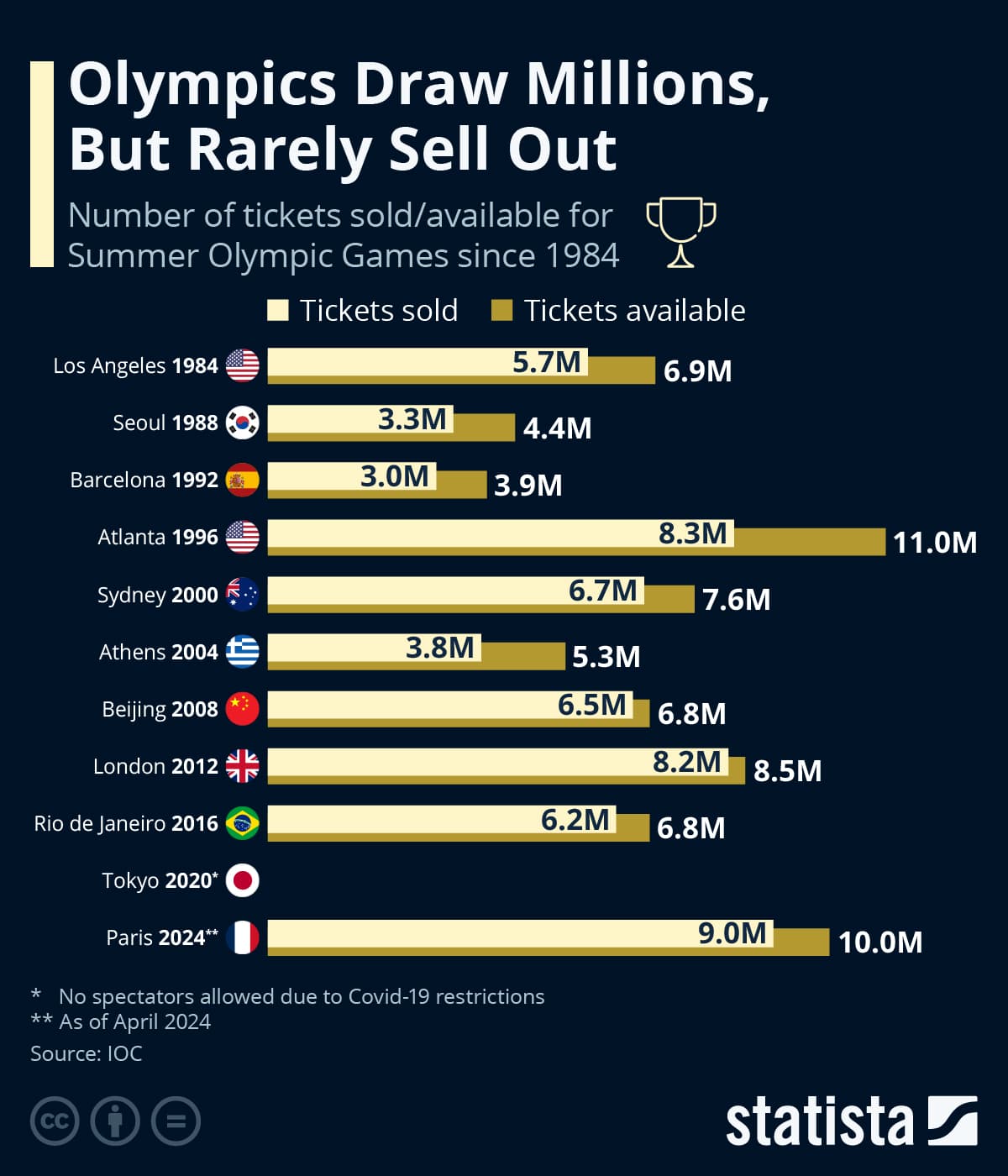
  • Olympics draw millions, but rarely sell out

    This chart explores the total number of tickets sold to Summer Olympic sporting events versus the number of tickets available. The article sources the data from the International Olympic Committee website and goes back to the 1984 Games in Los Angeles. Data for the 2024 Paris Games is projected.

  • The Olympic torch relay

    The 1936 Berlin Games were the first to use a torch relay to light the Olympic cauldron. In each Olympics Games afterwards, the host country designed a new set of torches. See what each torch looked like, the start and end date of the relay, the number of torches produced, what type of fuel was used, and view a map of the route.

  • How the Olympic Games began

    The Olympic Games have evolved from a sacred footrace in 776 BCE honoring Zeus to a global celebration of athletic excellence and unity. Ancient Greek city-states set aside their conflicts under a sacred truce for events like wrestling and chariot racing. Though the Games ended in 393 CE, Pierre de Coubertin revived them in 1896, adding modern elements like the torch relay and the inclusion of women. Over time, the Olympics expanded with Winter and Paralympic Games and became a worldwide phenomenon through television broadcasts. Today, they stand as a testament to resilience, unity, and the enduring Olympic spirit.

    Split image featuring Olympic athletes Jesse Owens, Michael Phelps, and Sha'Carri Richardson, with the bold text "OLYMPICS" across the center.
    Video 1440 Original

    How the Olympic Games began

  • The 1992 Olympic games in Barcelona

    The 1992 Olympics is often regarded as Barcelona’s grand re-introduction to the world stage. Just 17 years after emerging from Francisco Frano’s dictatorship, the coastal city held the summer games. Neighborhoods, transportation systems, and public spaces were redeveloped as sporting venues were built. These infrastructure upgrades – and its performance as a host – helped propel Barcelona to become the tourist destination it is today, according to this article, which also contains a full-length version of the opening ceremony.

  • The history of the Paralympic movement

    Dr. Ludwig Guttmann, the founder of the Paralympic movement, revolutionized spinal injury treatment. His belief in the power of sports for rehabilitation led to the creation of the Paralympic Games, now celebrated every Olympic year. This in-depth article from The History Press details the life and achievements of Dr. Guttmann, and includes historical photos and videos of the veterans-turned-athletes whose lives he changed.

  • Jesse Owens: My greatest Olympic prize

    When American athlete Jesse Owens hit the long jump pit with a gold medal distance of 26 ft, 5 inches, his competitor, German athlete Luz Long, was the first to embrace the new Olympic champion. Read Owens first-person account of how Long helped get him to the finals, and how that hug cemented a friendship that lasted until Luz died in WWII.

  • The greatest Olympic moments of all time

    For over 120 years the modern Olympics has given us dozens of iconic, breathtaking, and historic moments. This Men’s Health list walks through a century of the Summer and Winter Games' greatest moments. These 44 images start in black and white with Jesse Owens' four gold medal performance in 1936 Nazi-occupied Germany, and move through the classic NBC-delivered iconic Olympic moments of the 1990s and 2000s.

Explore Society & Culture

Art, music, sports, entertainment, movies, and many other subjects—these elements define who we are as a society and how we express ourselves as a culture. Take a deep dive into the topics shaping our shared norms, values, institutions, and more.

View All Society & Culture