Martin Luther King Jr.
Overview
The Rev. Dr. Martin Luther King Jr. was a Baptist minister and the founding president of the Southern Christian Leadership Conference from 1957 until his assassination in 1968. In that role, he became the leading public strategist of the American Civil Rights movement, helping coordinate nonviolent campaigns that secured major political, legal, and social victories.
Those efforts dismantled central pillars of the Jim Crow legal system of segregation that had shaped the American South since the end of Reconstruction in 1877. Dr. King is best known for his philosophy of nonviolence, which he treated as a disciplined method for confronting injustice. Grounded in Christianity and shaped by the teachings of Mahatma Gandhi, he argued that nonviolent direct action could shift public opinion and force political change.
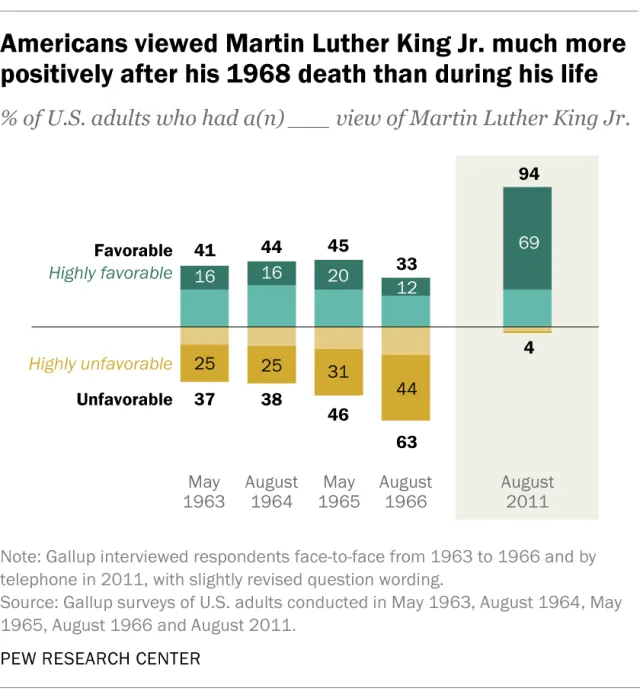
In his final years, Dr. King broadened his focus to economic justice and opposition to the Vietnam War, positions that cost him political support. He was assassinated in 1968, sparking widespread unrest and contributing to the fragmentation of the Civil Rights movement. In 1983, Martin Luther King Jr. Day was established as a federal holiday in the US by law and is observed on the third Monday in January, falling on or near his birthday.
1440 Findings
Hours of research by our editors, distilled into minutes of clarity.



Explore Civics
An informed citizenry is the backbone and bulwark of a vibrant democracy. From the principles behind the founding of the country to the forces that shaped our modern institutions, explore the most illuminating and insightful Civics resources from across the internet.