‘The Wizard of Oz’

Overview

“The Wizard of Oz” is a 1939 musical film based on the 1900 L. Frank Baum novel “The Wonderful Wizard of Oz.” The movie is considered a landmark moment in cinematic history and was nominated for five Academy Awards, including best picture, though it was initially a commercial failure. It gained popularity after being broadcast repeatedly on television, with some estimates suggesting that it’s one of the most viewed films in history.

1440 Findings

Hours of research by our editors, distilled into minutes of clarity.

  • Some believe 'The Wonderful Wizard of Oz' is a political allegory

    Although Baum claimed his book was intended as a simple children's story, scholars challenged that notion. One high school history teacher, Henry Littlefield, began teaching the book as a satire of the Gilded Age and published an essay inspiring other scholars to consider the text as a politically charged allegory.

  • 'The Wonderful Wizard of Oz' was inspired by a drought

    In 1886, Baum moved to Aberdeen, South Dakota, opening a general store and a newspaper. A drought afflicted the area, decimating crops. Baum moved, but his first 'Oz' book describes Dorothy's Kansas in a way that matched what he saw in South Dakota.

  • 'The Wonderful Wizard of Oz' was the first major American fantasy

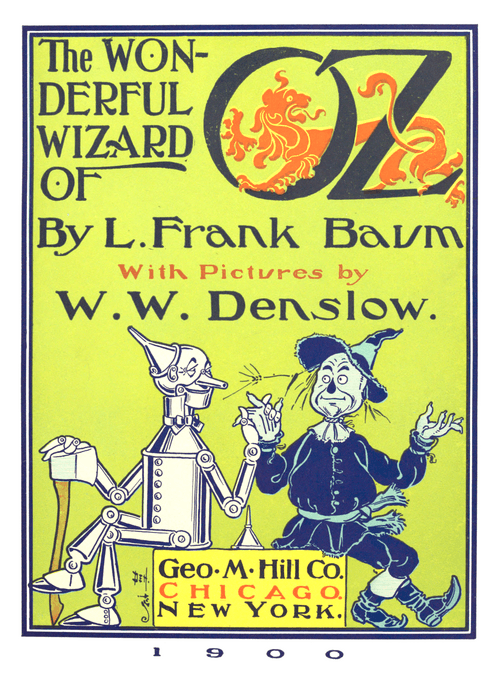
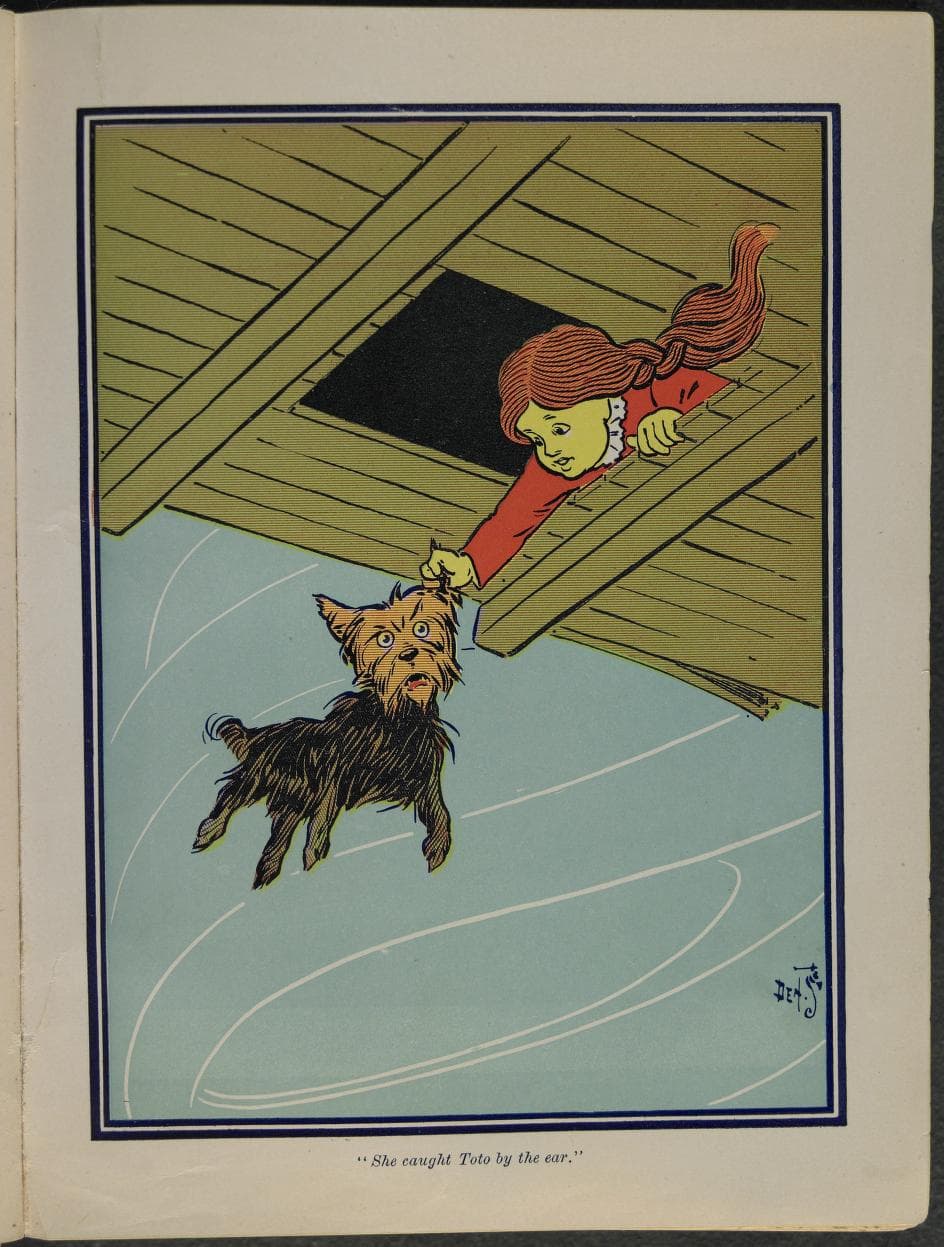
    Baum blended elements of Hans Christian Andersen, the Brothers Grimm, and Lewis Carroll, placing them in an American context. The illustrations of William Wallace Denslow brought the fantastical elements to life, as seen below. The book was an instant smash hit, selling out its initial 10,000-book pressing within the first eight months. By the time it entered the public domain in 1956, it had sold 3 million copies.

  • Baum wrote 14 'Oz' novels in total

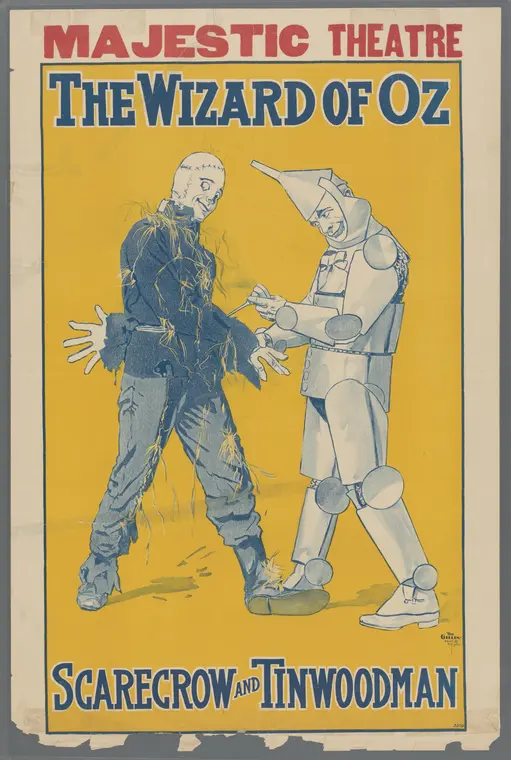
    Following the success of ‘The Wonderful Wizard of Oz,’ Baum continued writing about the fictional world until his death, turning the world into a lucrative brand. One of the books, “The Patchwork Girl of Oz,” was turned into a silent film and released in 1914.

  • The 1925 ‘Wizard of Oz’ predates the classic 1939 film

    The film differs significantly from the 1900 book and the later 1939 film adaptation: Dorothy is 18 years old, the Tin Woodman is a villain, and the entire story of Oz is framed by a toy-maker reading the original Baum book to his granddaughter.

  • The 1939 ‘Wizard of Oz’ reimagined Baum’s book for a new age

    Technological breakthroughs brought high-quality, synchronized sound to films by the end of the 1920s. By the 1930s, the movie-musical, a genre that blended artful cinematography and Broadway-style musicals, became more popular. “The Wizard of Oz” evolved the form further by structuring the plot into episodes anchored by memorable, revelatory songs.

Explore Society & Culture

Art, music, sports, entertainment, movies, and many other subjects—these elements define who we are as a society and how we express ourselves as a culture. Take a deep dive into the topics shaping our shared norms, values, institutions, and more.

View All Society & Culture