Sovereign Wealth Funds
Overview
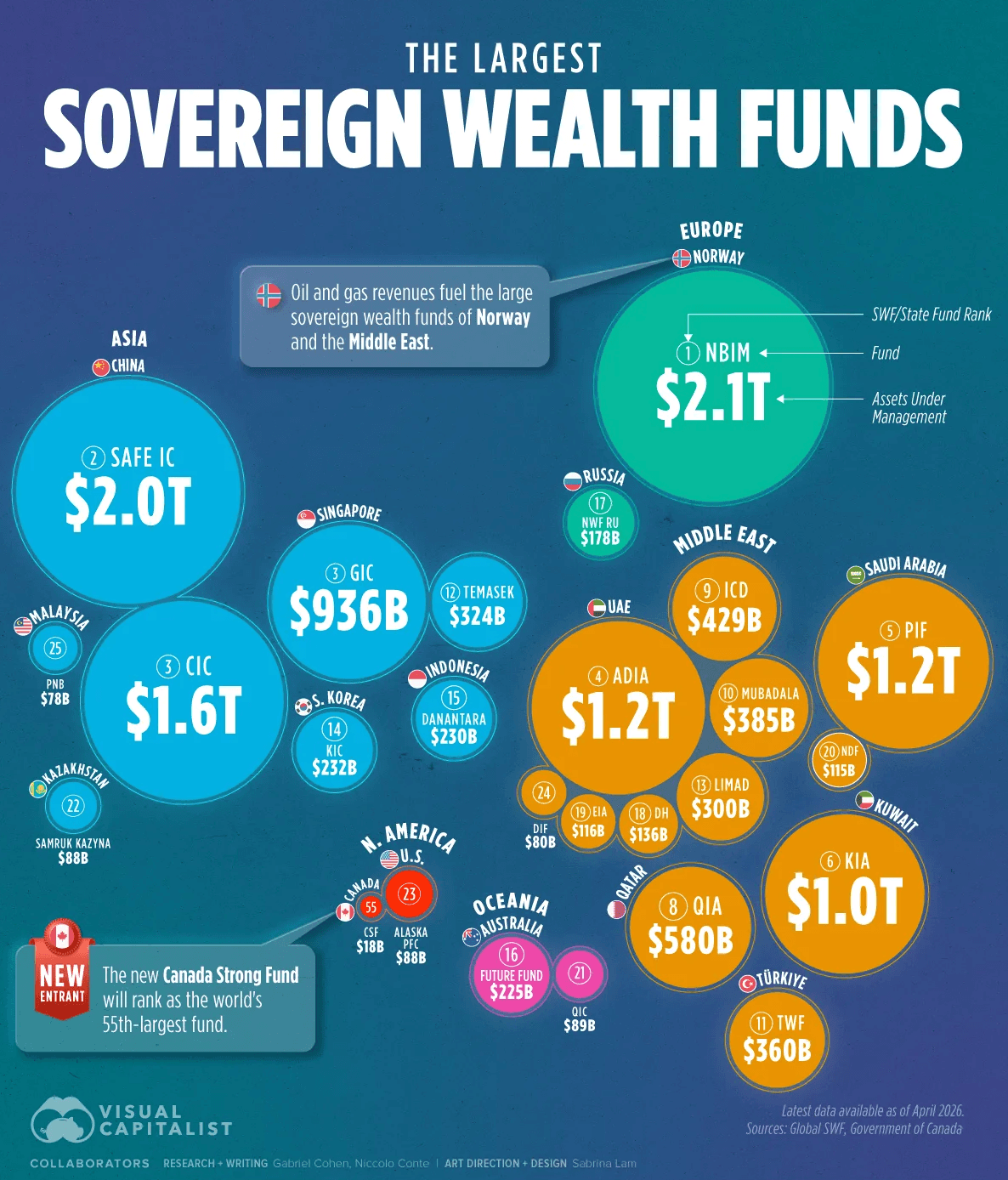
First created in 1953 by Kuwait to sustainably grow excess oil profits, sovereign wealth funds are state-owned investment funds that largely invest in foreign assets. Total assets under management ranged between $13T and $15T as of 2025, with SWFs in the Middle East and Asia accounting for more than half of that total.
Nations with budget surpluses—often driven by windfalls in natural resource profits (like oil and gas) or trade—sometimes create these special-purpose vehicles because their domestic economies are too small to productively absorb the excess capital. While SWFs are usually funded by the state, they're often run independently by fund managers appointed by an investment authority reporting to the government.
SWFs typically invest in higher-risk assets (think: equities, real estate, fixed-income through bonds, and alternative investments) than traditional reserve holdings, maximizing long-term returns while preserving wealth for the nation's future. Each SWF is structured differently to achieve different goals set by the government that owns the fund, not fund managers.
Most countries reveal few details about their SWFs' investment strategies due to national security concerns, making them controversial for those concerned with the potential power foreign actors could have to undermine markets.
1440 Findings
Hours of research by our editors, distilled into minutes of clarity.




Explore Business & Finance
The United States is home to more than 33 million businesses, the vast majority of which are small businesses, with millions being created (and others closing shop) every year. These businesses often rely on loans, provide the goods and services that keep the economy flowing, and sometimes even grow large enough to enter public markets or provide private investment opportunities. Explore key topics central to business and finance, from the role of the Federal Reserve to how initial public offerings work, how millions of American students finance higher education, and more.
Featured Topics
- 401(k)
- Amazon
- Bankruptcy
- Bitcoin
- Bonds
- Capital Gains
- College Tuition
- Consulting
- Creator Economy
- Credit Unions
- Federal Reserve
- Gig Economy
- Individual retirement accounts
- Inflation
- Initial Public Offerings
- Investment Banking
- Labor Unions
- Life Insurance
- Macy’s
- Minimum Wage
- Mutual Funds
- OpenAI
- Startups
- Stock Market
- Student Debt
- US Currency
- Venture Capital
- Wall Street
- Warren Buffett
- Y Combinator