Person silhouetted against starry night sky above a calm lake surrounded by hills.

Science & Technology

Edited by Marco Daniel Machado

Dive into the dynamic world of science and technology, where curiosity has brought about extraordinary understandings of the universe and creativity has led to the breakthroughs and innovations that have transformed our world. Explore a wide range of topics, from the natural and physical sciences to cutting-edge technologies and the people who shaped them, each of which is accompanied by carefully curated resources meant to inform, engage, and inspire those eager to uncover the nature of reality.

Content on 1440 is curated and distilled by our team of human editors.
Read our use of AI for more details.

Posted by

With less than 50 milligrams present in the top kilometer of Earth's crust at any given time, astatine is the rarest naturally occurring element on the planet.

Posted by

While constructing the tunnel connecting the UK and France, satellite positioning systems were supplemented by paleontologists on either side of the tunnel, who analyzed fossils to ensure excavation was at the correct depth.

Posted by

Scientists define sea level as the elevation to which water would settle on Earth's surface, given the planet's gravitational field and rotation.

Posted by

Airport security scanners use X-rays to infer baggage contents, with newer machines combining images taken at multiple angles and with various X-ray energies for improved threat detection.

Posted by

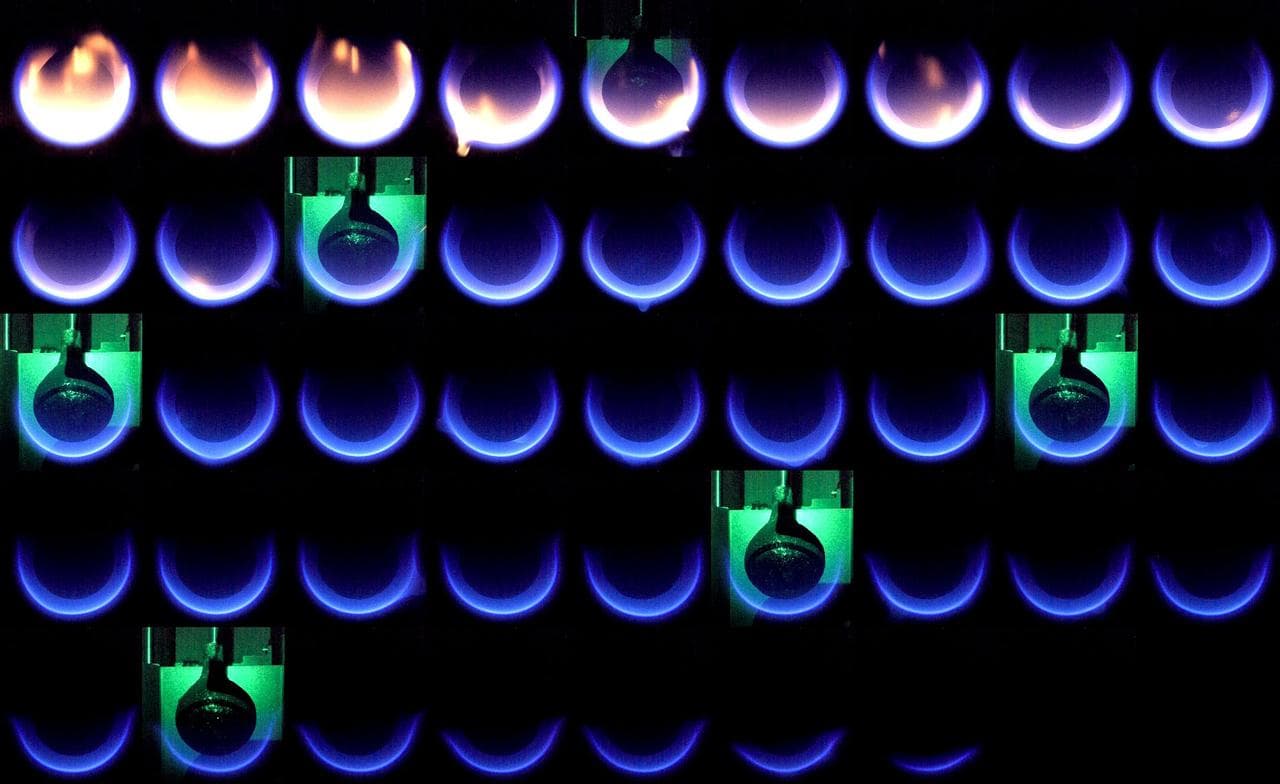
When helicopters fly near sandy surfaces, these granular particles can strip off fragments from a blade's abrasion strip, which then quickly react with the air and ignite, producing rings of light.

Posted by

The flavor of food can be enhanced by combining chemicals known to trigger umami taste receptors with nucleotides—building blocks of DNA and RNA—triggering an effect called umami synergy.

Posted by

On credit and debit cards, magnetic stripes have been slowly replaced by microchips that use dynamic, encrypted data to prevent card cloning and counterfeit fraud.

Posted by

As of 2025, LUX-ZEPLIN is the world's most sensitive dark matter experiment, which is designed to indirectly detect a potential candidate for the invisible form of matter.

Posted by

You have never made physical contact with anything in your life because electrons in the outer layer of atoms on the surface of objects repel one another.

Posted by

Self-driving car companies like Waymo use LiDAR technology for navigation, which constructs 3D maps of a car's surroundings by emitting light pulses in all directions.

Posted by

In the US, flash floods—rapid floods that occur within six hours of rain—kill more people than tornadoes, hurricanes, and lightning.
Posted by

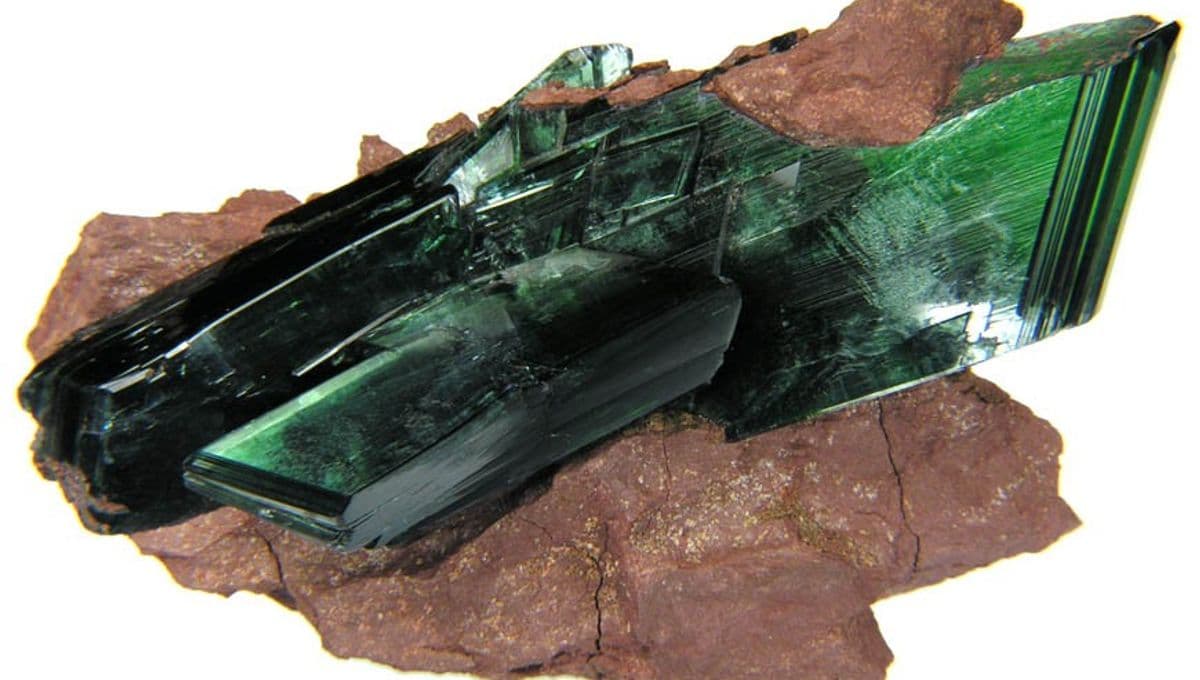
As crystals form, their properties and the shapes they take on, including cubic, tetragonal, and hexagonal patterns, reflect the arrangement of their constituent atoms.

Posted by

The deaths of massive stars and the mergers of neutron stars and black holes can produce gamma-ray bursts—jets of particles moving in opposite directions at near-light speed that comprise the universe's most powerful explosions.

Posted by

Airplanes generate enough lift to fly by accelerating air faster over their moving wings, which makes the pressure above the wings lower than the pressure below.

Posted by

Among the smallest mass-produced mechanical calculators in history, the Curta was designed by Austrian engineer Curt Herzstark while imprisoned in a Nazi concentration camp during World War II.

Posted by

All hurricanes have a central eye, where no extreme weather occurs, surrounded by intense winds and thunderstorms.

Posted by

The Foucault pendulum is direct evidence that the Earth rotates, as the apparent change in the plane of its swing results from the ground beneath the pendulum rotating over several hours.

Posted by

Although consuming saltwater can dehydrate and kill organisms, some fish survive by using specialized gills that leach excess salt from their bodies back into the surrounding water.

Posted by

Listen to what a forest in the Jurassic Period may have sounded like with this reconstructed soundscape, which was created by analyzing the fossilized wings of 165 million-year-old insects.

Posted by

If there were a swimming pool on the moon, where gravity is about one-sixth that of Earth, championship finswimmers could potentially launch themselves up to 5 meters (16 feet) in the air.

Posted by

One of the first mechanical calculators—the Pascaline—was built in 1643 by French mathematician Blaise Pascal to help his father, who worked as a tax collector.

Posted by

Chameleons change color by altering the spacing of nanocrystals under their skin, which changes what colors of light are absorbed and reflected.

Posted by

Known as bullet trains in English, the Shinkansen uses electric motors, aerodynamic design, and infrastructure that prioritizes straightaways to travel at speeds equivalent to commercial planes' takeoff velocity.

Posted by

The average banana produces one positron—the antimatter counterpart to an electron—every 75 minutes as its trace amounts of radioactive potassium decay.

Posted by

The movement of molten metal around Earth's inner core creates the planet's magnetic field, whose north and south poles do not align with the planet's geographic poles.

Posted by

Rather than removable armor like snail shells, turtle shells are part of the organism's skeleton and consist of 50 to 60 fused bones that grow with the organism.

Posted by

The moon is slowly contracting as its interior cools, creating moonquakes and lobate scarps—cliffs that are steep on one side and gently sloping on the other—as the moon's surface buckles.