Montreal Protocol

Overview

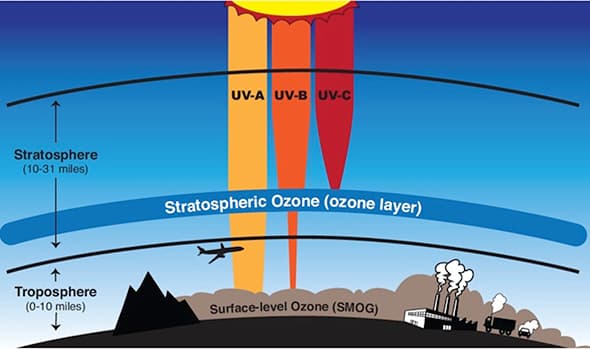
The Montreal Protocol, established in 1987, is a landmark international treaty aimed at phasing out and banning substances that break apart ozone molecules. Composing the ozone layer, these molecules block about 98% of harmful ultraviolet radiation from the sun, but can be destroyed by atoms released by chlorofluorocarbons and other chemicals. The 1985 discovery of a growing hole in the ozone layer over Antarctica caused by CFCs prompted the agreement, which became the first treaty ratified by every UN member state in history.

1440 Findings

Hours of research by our editors, distilled into minutes of clarity.

  • The history of the Montreal Protocol, the only universally ratified treaty in UN history

    Mario Molina and F. Sherwood Rowland discovered that chlorofluorocarbons released chlorine atoms that could break down molecules making up the protective ozone layer. Despite attempts to discredit scientists and economic concerns raised by politicians, the agreement to phase out ozone-depleting substances was signed in 1987.

  • How sunlight helps chlorofluorocarbons destroy the ozone molecules that block solar radiation

    CFCs, which are used in old refrigerants, air conditioners, and aerosol sprays, do not react with atmospheric molecules. Once they reach the stratosphere, ultraviolet radiation breaks chlorine atoms off of them, which can each break apart more than 100,000 ozone molecules, thinning Earth's protective layer against ultraviolet radiation.

  • Why the Antarctic climate enabled British scientists to discover the ozone hole

    In the Antarctic stratosphere, polar conditions facilitate the formation of polar stratospheric clouds, which allow chlorine compounds from chlorofluorocarbons to accumulate. In 1985, British Antarctic Survey scientists detected massive springtime losses over Antarctica, as accumulated compounds destroyed significant amounts of ozone once sunlight returned.

  • Watch a 1986 television special about the discovery of the ozone hole

    The groundbreaking discovery of the Antarctic ozone hole in the mid-1980s marked a critical turning point, galvanizing international action to address the ozone-depleting properties of chlorofluorocarbons, which had been identified about a decade earlier. This environmental crisis was brought vividly to public attention through media pieces like this one.

  • Why a Montreal Protocol amendment cut back on the replacements for CFCs

    Hydrofluorocarbons were introduced in the 1990s as ozone-safe substitutes for chlorofluorocarbons and hydrochlorofluorocarbons. However, scientists later found that they trap thousands of times more thermal energy in the atmosphere than carbon dioxide does, prompting a 2016 amendment to the Protocol to phase them out.

  • Why Earth would become a more deadly environment without the ozone layer

    The ozone layer blocks almost all of the sun's harmful, including dangerous UVC rays that can damage cells by breaking chemical bonds. Without it, rates of skin cancer, crop failures, oceanic die-offs, and widespread ecosystem collapse would increase significantly, making Earth largely uninhabitable.

Explore World History

Weave together the many narratives of world history with our highly curated and expanding selection of diverse, fascinating resources designed to showcase the breadth and richness of Earth's story, from the earliest traces of human civilization to the dramatic developments of contemporary cultures.

View All World History