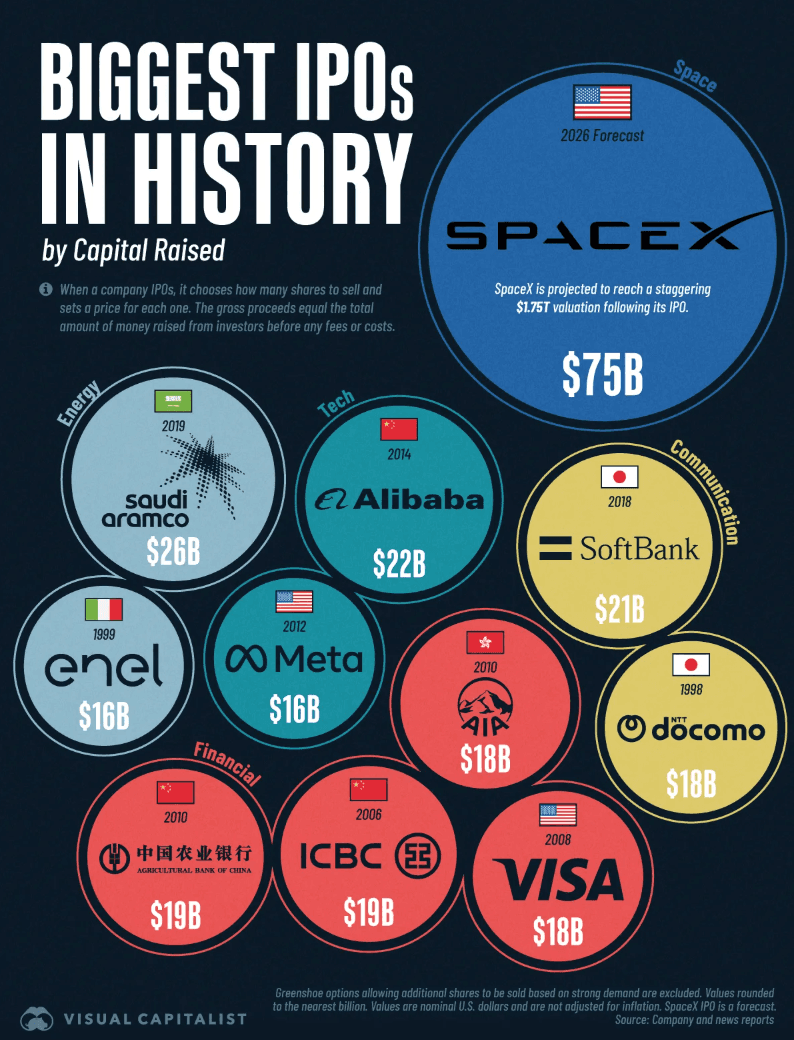
The 25 biggest IPOs in US history
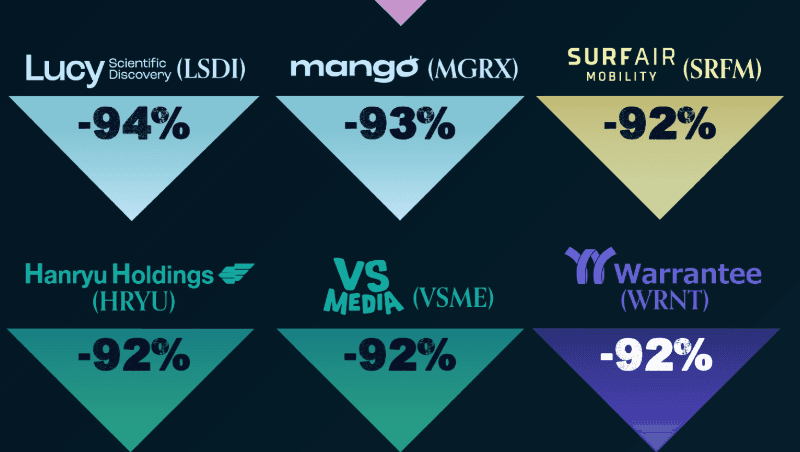
These 25 companies—which include UPS, Uber Technologies, AT&T, and The Kraft Heinz Co.—had some of the biggest IPO drops in US history. However, not all these drops led to long-term (or even immediate) success.
Hours of research by our editors, distilled into minutes of clarity.
These 25 companies—which include UPS, Uber Technologies, AT&T, and The Kraft Heinz Co.—had some of the biggest IPO drops in US history. However, not all these drops led to long-term (or even immediate) success.
This milestone requires plenty of preparation, starting with the SEC's S-1 registration, revealing key details about the company's finances and strategy. Investment bankers set valuations, secure long-term investors, and finalize share pricing before the public launch. IPOs provide companies with significant capital, but also demand transparency and invite public scrutiny.
It first offered shares to the public in the 1600s on the Amsterdam Stock Exchange to help finance its passages. The Dutch East India Co. succeeded in part due to its monopolistic hold over the East Indies at the time.
When a company completes its IPO, it's no longer a privately owned organization. Anyone can invest in the company by buying its shares on the stock market—opening up ownership of the business to the general public.
Shares are traded on the stock market. Once you buy a single share of a company, you are considered a shareholder of that company and may have certain rights as a partial owner, such as voting on business decisions.
These 25 companies—which include UPS, Uber Technologies, AT&T, and The Kraft Heinz Co.—had some of the biggest IPO drops in US history. However, not all these drops led to long-term (or even immediate) success.
In 1996, more than 7,300 companies traded publicly on US stock markets, but that number has recently dropped to 4,300. Economists point to two reasons: First, going public requires full disclosure of operations, exposing it to scrutiny from investors, competitors, and analysts. Second, the IPO process is expensive and time-consuming.
An article details some of the wildest bell-ringing day stunts in recent history, from Clifford the Big Red Dog ringing the opening bell to one company's employees roasting marshmallows in a campfire on Wall Street as it went public.
An S-1 or prospectus is a registration form filed with the US Securities and Exchange Commission when a company wants to go public. They can be pretty juicy documents, as S-1s can reveal previously private details about companies to the public, often for the first time.
To go public, a company has to file a registration statement with the US Securities and Exchange Commission, also known as the SEC. You can find these filings on the SEC’s website to learn more about a company’s share pricing before its IPO date.
In 2021, investing app Robinhood went public—and decided to go about its IPO process differently. Unlike other companies, it opened up its IPO for the general public to purchase right away. A podcast episode explains what made Robinhood’s IPO so unique prior to its launch date.
The United States is home to more than 33 million businesses, the vast majority of which are small businesses, with millions being created (and others closing shop) every year. These businesses often rely on loans, provide the goods and services that keep the economy flowing, and sometimes even grow large enough to enter public markets or provide private investment opportunities. Explore key topics central to business and finance, from the role of the Federal Reserve to how initial public offerings work, how millions of American students finance higher education, and more.