Income Taxes
Overview
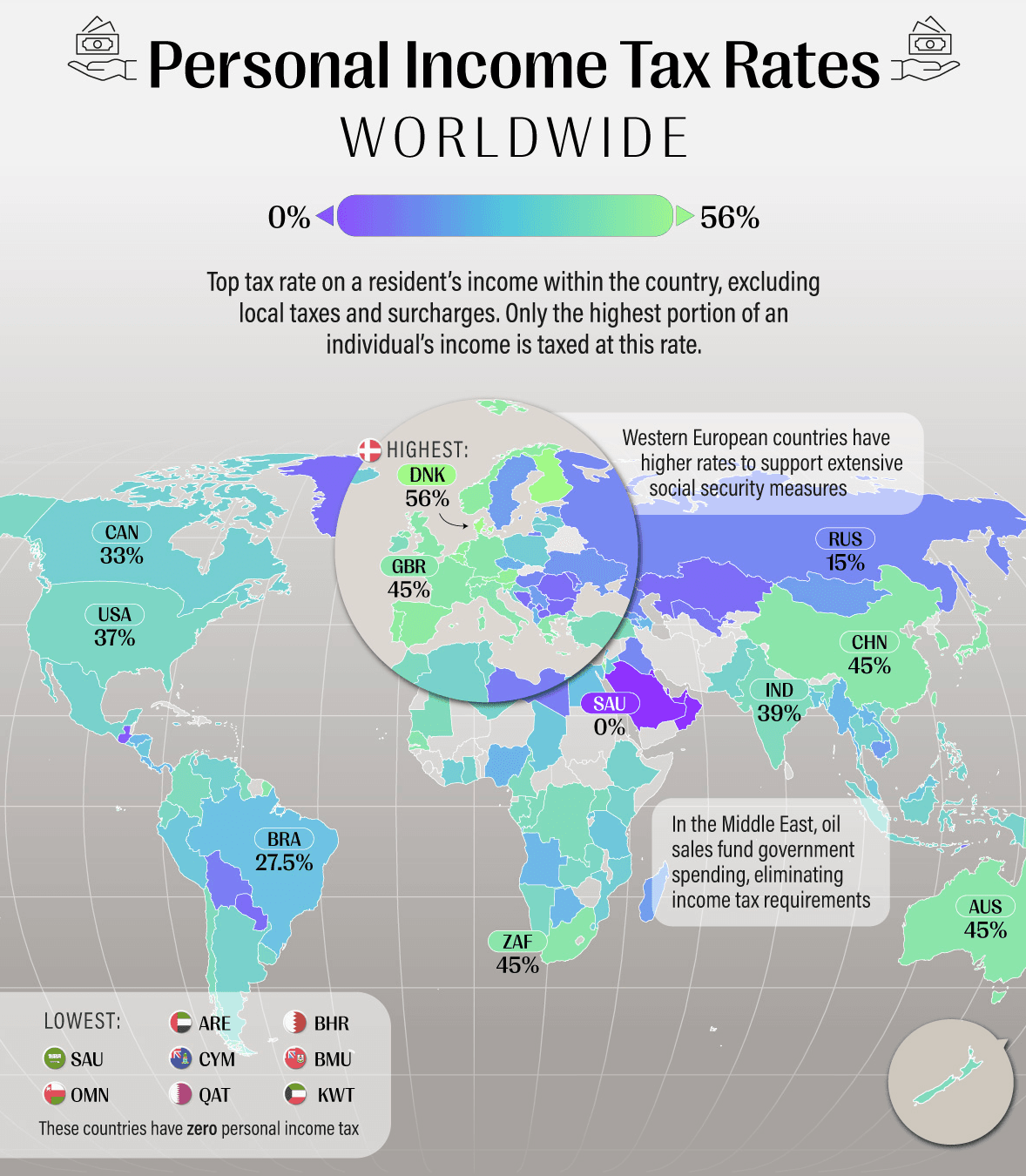
Income taxes are taxes governments levy on money earned by businesses and individuals. What's more, they're also many countries' largest source of revenue: In the US, individual income taxes made up nearly half of the federal government's revenue in 2024, while corporate income taxes added another 11%.
Enshrined in the 16th Amendment, the individual income tax the US uses today was enacted in 1913. World War II prompted the federal government to greatly expand the number of people required to pay income taxes, from about 5% of American workers in 1939 to 90% submitting tax forms and 60% paying income taxes by the end of the war.
Because income taxes' primary purpose is financing government operations—such as funding public programs like food stamps benefiting lower-income households—these taxes are also seen as an economic tool to redistribute resources and reduce inequality. But taxation is historically contentious. Critics argue income taxes discourage career advancement and push taxpayers to move to areas with lower rates.
1440 Findings
Hours of research by our editors, distilled into minutes of clarity.




Explore Business & Finance
The United States is home to more than 33 million businesses, the vast majority of which are small businesses, with millions being created (and others closing shop) every year. These businesses often rely on loans, provide the goods and services that keep the economy flowing, and sometimes even grow large enough to enter public markets or provide private investment opportunities. Explore key topics central to business and finance, from the role of the Federal Reserve to how initial public offerings work, how millions of American students finance higher education, and more.
Featured Topics
- 401(k)
- Amazon
- Bankruptcy
- Bitcoin
- Bonds
- Capital Gains
- College Tuition
- Consulting
- Creator Economy
- Credit Unions
- Federal Reserve
- Gig Economy
- Individual retirement accounts
- Inflation
- Initial Public Offerings
- Investment Banking
- Labor Unions
- Life Insurance
- Macy’s
- Minimum Wage
- Mutual Funds
- OpenAI
- Startups
- Stock Market
- Student Debt
- US Currency
- Venture Capital
- Wall Street
- Warren Buffett
- Y Combinator