Hubble Space Telescope

1440 Findings

Hours of research by our editors, distilled into minutes of clarity.

  • Pinned

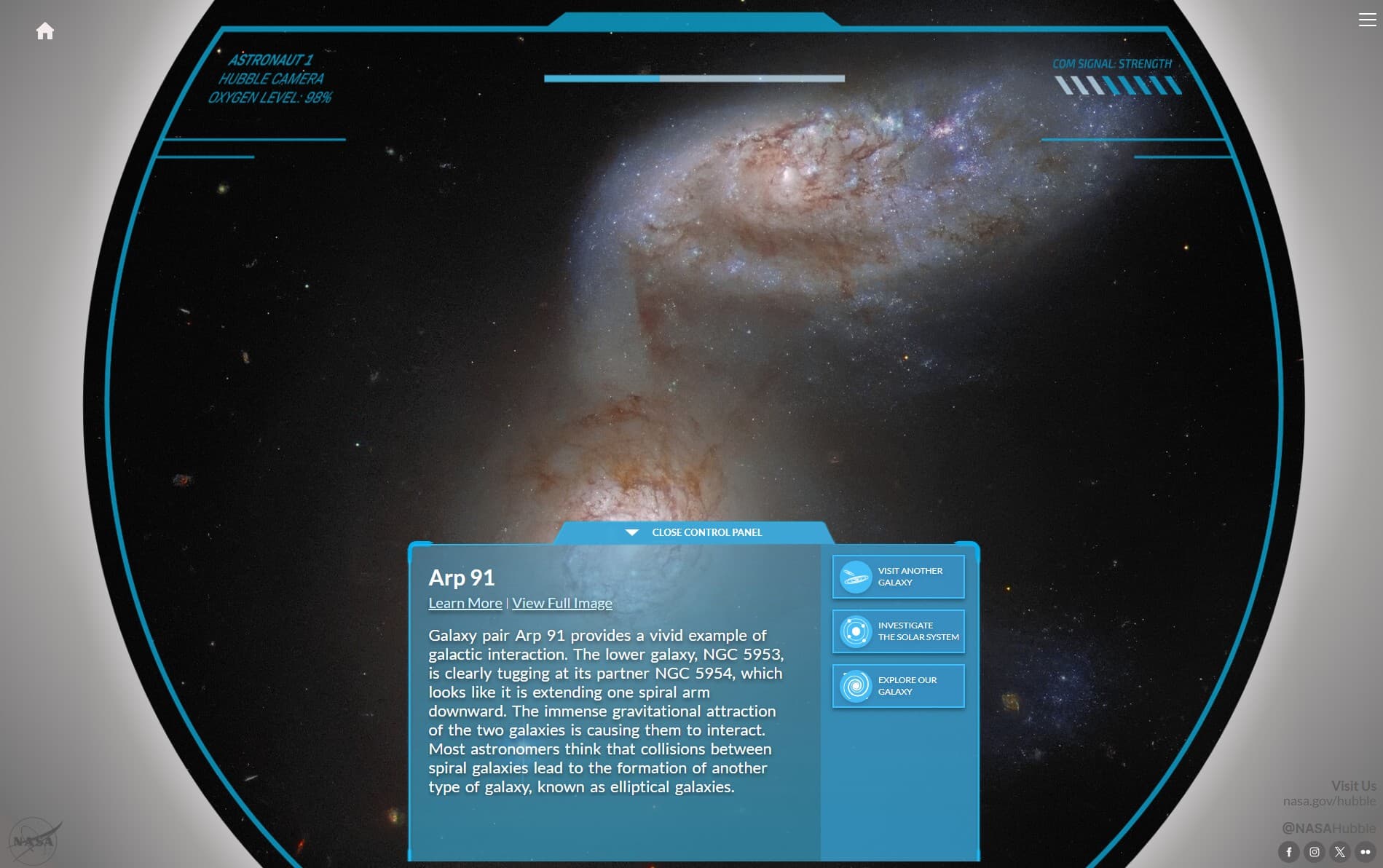
    Fly through the deepest image of space ever taken by the Hubble Space Telescope

    Taken over 11 days between 2003 and 2004, when the space telescope was aimed at a seemingly empty patch of the sky, the Hubble Ultra Deep Field revealed about 10,000 sources of light, most of which are entire galaxies. This visualization expands the two-dimensional image into a 3D view spanning 12 billion years.
  • Hubble overcame early optical failure and become a critical scientific instrument

    The flaw in Hubble’s mirror was smaller than the width of a human hair, but fixing it required a space mission as complex as a Hollywood rescue story—with astronauts installing corrective optics like contact lenses for a giant eye in the sky.

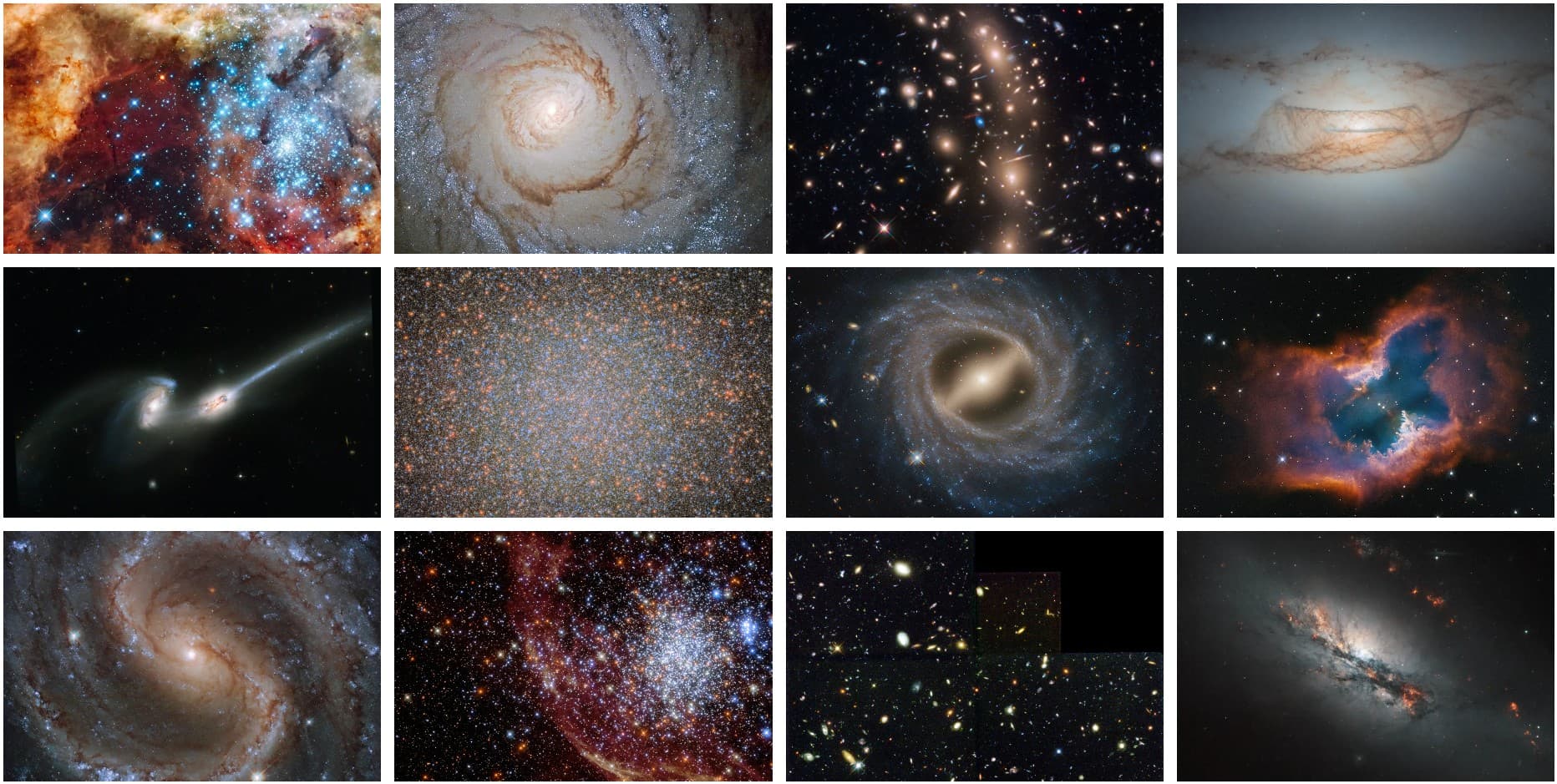
  • View galleries of images taken by the Hubble Space Telescope

    With more than 1.7 million observations made since 1990, the Hubble Space Telescope has captured images of space missions, planets, stellar nurseries, interstellar comets, star clusters, galaxies, and more. This search tool allows users to sort and filter across these celestial objects to explore over 35 years of Hubble's astrophotography.

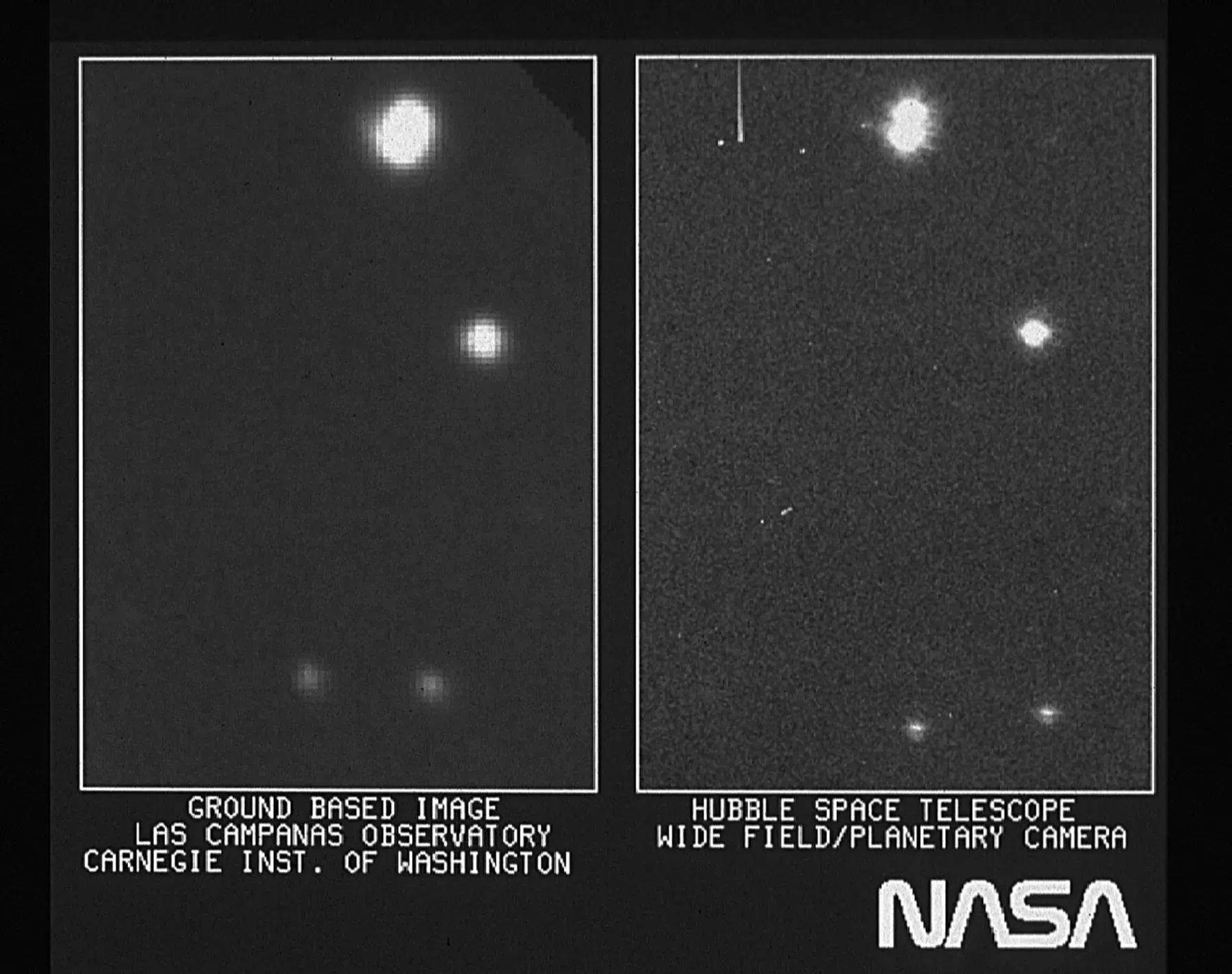
  • Hubble's first light test produced an underwhelming photograph

    This test represents the first time light travels entirely through an observatory's optical system and reaches its detectors, producing an image. Although the telescope's warped mirror was not discovered and announced until a month after first light, the issue was not responsible for the simplicity of the first light image.

  • Hubble revealed that planet-forming disks are common around young stars

    One of Hubble’s early images captured 30 young star systems in the Orion region, each surrounded by material that looked like it was forming planets. These systems increased the number of data points scientists had to test planetary formation models.

  • Watch a tour of a 3D visualization of the Pillars of Creation

    Combining observational data from the Hubble and James Webb Space Telescopes has allowed NASA scientists to create a multiwavelength model of the star-forming region at the heart of the Eagle Nebula.

Explore Science & Technology

Since our ancient human relatives began using stone tools to perform tasks, humans have harnessed scientific knowledge and new technologies to expand the boundaries of our understanding of the natural world. From quantum computing and microplastics to artificial intelligence and memory, explore these topics and more with our concise yet informative overviews and expert-curated resources.

View All Science & Technology