Overview

Advent—from "adventus," the Latin word for “arrival”—is a season of observance that forms part of the annual liturgy (or public worship) of many Christian denominations. Generally spanning the four weeks leading up to Christmas, the tradition emerged in fourth-century Christian communities in Western Europe and is observed by both the religious and as part of the secular holiday calendar.

1440 Findings

Hours of research by our editors, distilled into minutes of clarity.

  • Advent marks the beginning of the church calendar in Western Christianity

    Each denomination’s calendar of holy days varies, but most mark the start of a new year at the beginning of Advent. Within Roman Catholicism, Advent is a distinct period from Christmas, alongside other seasons: Ordinary Time, Lent, Easter, Holy Week, and Pentecost.

  • One of the earliest Advent practices came as a response to a heretical movement

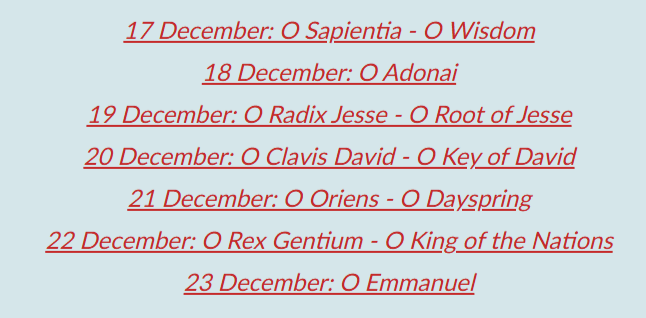
    In 380 CE, the Council of Saragossa met to oppose the spread of Priscillianism, a local heresy. The council ordered Christians to observe strict church attendance from Dec. 17 to Christmas—one of the earliest documented Advent-like practices.

Explore Society & Culture

Art, music, sports, entertainment, movies, and many other subjects—these elements define who we are as a society and how we express ourselves as a culture. Take a deep dive into the topics shaping our shared norms, values, institutions, and more.

View All Society & Culture