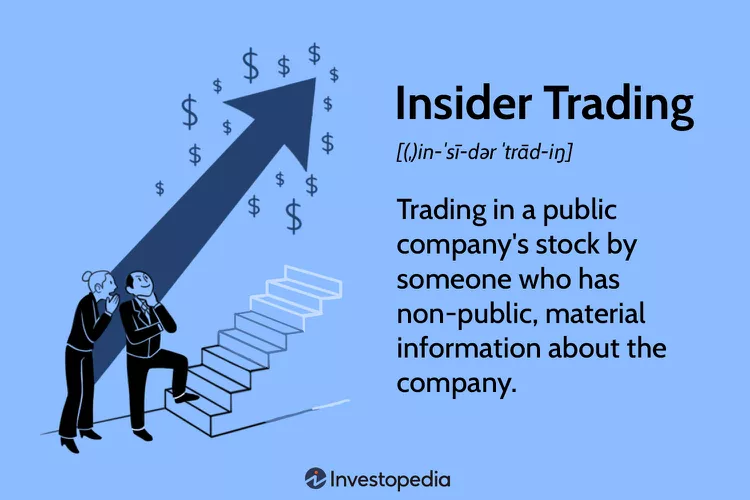
Posted by Phoebe BainMar 16Insider trading is the practice of trading a company's securities based on material, nonpublic information.Show 3 more findings ZoomWhat Is Insider Trading and When Is It Legal?Investopediahttps://www.investopedia.com/terms/i/insidertrading.asp
Posted by Phoebe BainMar 16Prediction markets—the platforms where users can trade bets that pay out depending on certain event outcomes—have faced questions about insider trading.Show 4 more findingsInsiders Are Cashing In on Prediction MarketsThe Journal.https://open.spotify.com/episode/3GG31yy5LRfvQxUc6Xo4xF
Posted by Meher QazilbashJul 22, 2025A landmark hedge fund court case once reshaped high financeHedge fund traders tied to insider trading by probing prosecutors are relatively rare. When billionaire hedge fund legend Steve Cohen, founder of SAC Capital, pleaded guilty to trading on inside information, Wall Street trembled. The outcome of the case remains a cautionary tale for traders today. 53:19Before The Mets, Steve Cohen Was The Hedge-Fund King (full documentary) | FRONTLINEhttps://www.youtube.com/watch?v=1szayJV505M
Posted by Meher QazilbashJun 3While day trading has risen in popularity in recent years, the SEC warns it is a speculative strategy that can cause big lossesA day trader is anyone who buys and sells a stock within the same trading day. They quickly move in and out of the market to try and profit. Some day traders are professionals, while others are retail investors. ZoomThinking of Day Trading? Know the Risks. | Investor.govInvestor.govhttps://www.investor.gov/additional-resources/spotlight/directors-take/thinking-day-trading-know-risks
Posted by Phoebe BainMar 26Some experts and investors think short selling—a strategy in which investors bet that a stock will drop in value—helps keep the market healthy.Show 3 more findings 10:12- YouTubeCNBChttps://www.youtube.com/watch?v=djt9mPq_Hck
Posted by Phoebe BainApr 29Retail investors are individuals who trade stock for themselvesInstitutional investors, on the other hand, are investing for someone else. There are big differences between the two, one being that institutional investors can be granted certain special treatment (like being able to purchase IPOs right away). ZoomIndividual Investors Vs. Institutional Investors: How They Differ | BankrateSofihttps://www.sofi.com/learn/content/institutional-vs-retail-investors/
Posted by Meher QazilbashJul 22, 2025Shorting is a high-risk and expensive investment strategy that hedge funds specialize inMost investors buy stocks with the expectation that those stocks will be worth more tomorrow than they are today. Short selling, known as “shorting,” a stock is the opposite: The investor is betting the stock will drop in value. ZoomShort Selling: How To Short Sell Stocks | BankrateBankratehttps://www.bankrate.com/investing/short-selling-how-to-short-a-stock/
Posted by Phoebe BainMar 26Read about why bans on short selling are a controversial policyGenerally, short selling is legal, but regulations often restrict short positions when a stock has experienced a sharp price decline (more than 10% in one day). However, negative feedback loops in times of financial crisis have given short selling a bad reputation. The government has temporarily banned short selling during previous market downturns—like The Great Recession of 2008 and the early months of the COVID-19 pandemic—but experts argue whether those bans actually improved market stability or just distorted prices.https://cepr.org/voxeu/columns/impact-short-sale-bans-during-crises-closer-look-2020-covid-crash-response#:~:text=Although%20both%20proponents%20and%20detractors,market%20participants%20to%20widen%20spreads.
Posted by Phoebe BainApr 3Prediction markets and sports betting are not forms of investing, despite how some fans portray them.Show 5 more findings ZoomPSA: Prediction Markets and Sports Betting Aren't InvestingKiplingerhttps://www.kiplinger.com/investing/prediction-markets-and-sports-betting-arent-investing
Posted by Phoebe BainMar 16Prediction markets help people bet on almost anything—which can be controversialCritics point to incidents such as traders placing bets on the Venezuelan President Nicolás Maduro's capture and the two people in Israel who were charged on suspicion of using classified information to place bets about military actions.Everything can be a bet now – the rise and risks of prediction marketsThe Conversationhttps://theconversation.com/everything-can-be-a-bet-now-the-rise-and-risks-of-prediction-markets-276464
Posted by Phoebe BainMar 26Investors need a 'margin account' to short sell stockMargin accounts are leveraged accounts through brokerage firms that allow investors to make trades without the full amount of capital on hand. Similar to a secured loan, margin accounts often require some form of collateral and typically have a cap on how much investors can borrow. However, trading with a margin account is much riskier than a traditional investment account. Fees and charged interest are due on margin accounts, regardless of trade performance, meaning it's possible for investors to lose more money than just their initial investment.NerdWallethttps://www.nerdwallet.com/investing/learn/what-is-a-margin-trading-account-and-how-does-it-work
Posted by Phoebe BainApr 18Prediction markets convinced regulators they're not gambling, but exchanging commodity futures contractsKalshi built a legal case that argues its yes/no bets on real-world events are futures contracts, and the relevant regulator—the Commodity Futures Trading Commission—agreed in 2020. Many states are now suing major prediction markets, arguing this legal case is faulty and obscures the true substance of the business: gambling. Do prediction market bettors make anything better?NPRhttps://open.spotify.com/episode/7jE6nhFetl29yyRWbRjoG7
Posted by Phoebe BainAug 18Learn about the essential Securities and Exchange Commission filing types, including S-1, 10K, 10Q, and 8-K.Show 7 more findings ZoomEssential SEC Filings for Investors: Key Forms ExplainedInvestopediahttps://www.investopedia.com/articles/fundamental-analysis/08/sec-forms.asp
Posted by Phoebe BainMar 26Bear raiding is a manipulative tactic to bring a stock price down—and part of why short selling can be controversialBear raids occur when short sellers use manipulative tactics—like spreading false rumors or coordinating trades—to artificially drive down a stock's price and profit from short positions. Although bear raids are an illegal form of market manipulation, they can spook investors, prompting large selloffs of shares and causing a company's value to plummet. As a result, investors may be hesitant to invest in the company in the future, creating a feedback loop of stock downturn.https://knowledge.wharton.upenn.edu/podcast/knowledge-at-wharton-podcast/bear-raid-stock-manipulation-how-and-when-it-works-and-who-benefits/
Posted by Phoebe BainMar 16How prediction markets differ from sportsbooks matters for regulationThere are a number of differences and similarities between sportsbooks and prediction markets, despite both allowing people to bet on outcomes for sports-related events. For instance, prediction markets typically earn revenue through transaction fees rather than taking directional exposure to outcomes.Prediction Markets vs. Sports Betting: Similar Mechanics, Different StructuresSports Illustratedhttps://www.si.com/betting/prediction-market/prediction-markets-101/prediction-markets-vs-sports-betting
Posted by Phoebe BainOct 30, 2024Chapter 7 and Chapter 11 filings can impact common stockholdersPublicly traded companies don’t file for bankruptcy out of nowhere—there are typically warning signs in a stock’s performance, quarterly earnings calls, and US Securities and Exchange Commission filings. ZoomBankruptcy and stocks | Fidelityhttps://www.fidelity.com/viewpoints/active-investor/stocks-and-bankruptcy
Posted by Phoebe BainMay 4What is after-hours trading?While both the New York Stock Exchange and the Nasdaq open at 9:30 am ET and close at 4 pm ET, some trading is allowed after that. After-hours trading was once only open to institutional investors and people with particularly high net worths. Now, with the advent of computers, anyone can trade stocks anywhere online, and those regulations have broadened.After-Hours Trading: How It Works, Pros & Cons, Example | The Motley Foolhttps://www.fool.com/terms/a/after-hours-trading/
Posted by Phoebe BainMar 31Some private credit funds trade on the stock marketThese funds, which trade at market prices, are called "public BDCs," which stands for "business development companies." For instance, the global alternative investment manager Ares Management Corp. has a public BDC.https://privatebank.jpmorgan.com/latam/en/insights/markets-and-investing/private-credit-under-the-microscope-separating-headlines-from-fundamentals
Posted by Phoebe BainJun 26'The stock market' can be loosely defined as a set of exchanges and other places where shares of public companies are bought and sold. Show 3 more findings 3:10Stock Market Explained in 3 Minutes1440 Originalshttps://youtu.be/jXLGDe5Y1j4
Posted by Phoebe BainApr 10Commodity traders are most commonly 'hedgers' or 'speculators'While hedgers often produce and consume physical commodities (like corn, copper, or natural gas) and use the markets to manage the price risk for those commodities, speculators provide liquidity by betting on commodity price changes.https://www.lancasterfarming.com/farming-news/ag-business/navigating-commodity-markets-the-role-of-hedgers-and-speculators/article_b6c1cdf1-2fe3-509c-bd25-1bddfccb4ce2.html
Posted by Phoebe BainNov 14, 2024Special-purpose acquisition companies let companies skirt the IPO processA video explains how private companies have taken advantage of this loophole, why investing in these companies isn’t always a good idea, and how blank-check companies (as they’re commonly called) work. 6:37How Private Companies Are Bypassing the IPO Process | WSJThe Wall Street Journalhttps://www.youtube.com/watch?v=okyT7KfnFrI
Posted by Meher QazilbashJul 11, 2025An S-1 reveals financial and other details to the public, often for the first time, when filing for an IPOTo file for an IPO, a company must file a registration form called an S-1 or prospectus with the US Securities and Exchange Commission. S-1s detail a company's current business model, competitive landscape, and other financial information. ZoomSEC Form S-1: What It Is, How to File It or Amend ItInvestopediahttps://www.investopedia.com/terms/s/sec-form-s-1.asp
Posted by Phoebe BainAug 10Ride along on one coffee company's journey through the stock market to better understand how a company goes from private to public.Show 5 more findings 4:30How does the stock market work? - Oliver ElfenbaumTED-Edhttps://www.youtube.com/watch?v=p7HKvqRI_Bo
Posted by Phoebe BainMar 16Prediction market Kalshi's CEO Tarek Mansour has said that prediction markets are similar to the stock market—except instead of buying and selling shares of companies, users buy and sell "yes" or "no" on whether an event is going to happen or not.Show 4 more findings 6:44Wanna bet? Online prediction markets wager that you willCBS Sunday Morninghttps://www.youtube.com/watch?v=iGx-kqf_840
Posted by Meher QazilbashMar 26Retail investors are getting burned by long/short strategiesIn the US, many retail investors lack the SEC-mandated status (a high enough net worth, income, and other factors) to directly invest in hedge funds. The regulator considers hedge funds too risky for the masses. Hedge fund-like strategies have emerged as a workaround, despite potential pitfalls.Rethinking Equity Long/Short Allocations For Retail Investorshttps://thehedgefundjournal.com/rethinking-equity-long-short-allocations-for-retail-investors/
Posted by Phoebe BainMar 26A short squeeze happens when short sellers increase stock prices by buying shares back quicklyWhen short sellers realize their positions may be incorrect—usually triggered by increasing share prices—they often try to quickly buy back their shares in order to minimize their total losses. When this happens on a large scale, that buying activity can drastically increase to represent the seemingly high demand for that stock. The result is called a "short squeeze," which refers to short sellers literally being squeezed out of their positions by rising prices.Charles Schwabhttps://www.schwab.com/learn/story/whats-short-squeeze-and-why-does-it-happen
Posted by Phoebe BainApr 10Commodity trading is regulated by the CFTC to mitigate fraud and riskEstablished in 1974, the CFTC regulates these markets (including swaps, futures, and certain types of options) to protect market participants from fraud, ensure fair trading conditions, and generally reduce financial risk.USAFactshttps://usafacts.org/explainers/what-does-the-us-government-do/agency/commodity-futures-trading-commission/
Posted by August MoonJun 3In early 2021, GameStop's stock surge brought retail investing into the spotlightUsing platforms like Robinhood, everyday investors became a growing presence in financial markets during the Gamestop short squeeze, revealing the influence retail investors can have on the market. 1:29Retail Investors and the GameStop Short Squeeze1440 Originalshttps://youtube.com/shorts/mKy5y2e4Sn4?feature=share
Posted by Phoebe BainApr 2940 key stock market terms, explainedLiquidity. Forex. Capitalization. Blue chip stocks. These are just a few pieces of stock market vocabulary most people who don't spend all day on a trading floor might not know. Thankfully, we found a fun infographic that makes it easier to learn what 40 key stock market terms mean and why each of them matters. ZoomMarkets 40 Stock Market Terms That Every Beginner Should KnowVisual Capitalisthttps://www.visualcapitalist.com/40-stock-market-terms-every-beginner-know/
Posted by Phoebe BainAug 18Largely considered to be the inspiration for Gordon Gekko in the movie 'Wall Street,' Ivan Boesky was one of the most high-profile white-collar criminals and faced a $100M fine for insider trading in 1986.Show 4 more findings 19:20The Biggest Fraud on Wall StreetHamish Hodderhttps://www.youtube.com/watch?v=aybl-1krYX0
Posted by August MoonJun 11The number of publicly traded companies has decreased in recent years.In 1996, more than 7,300 companies traded publicly on US stock markets, but that number has recently dropped to 4,300. Economists point to two reasons: First, going public requires full disclosure of operations, exposing it to scrutiny from investors, competitors, and analysts. Second, the IPO process is expensive and time-consuming. 1:09Why Has the Number of Publicly Traded Companies Shrunk?1440 Originalshttps://youtube.com/shorts/nCm_NbjBYtA
Posted by August MoonFeb 27An initial public offering is how a private company becomes public.This milestone requires plenty of preparation, starting with the SEC's S-1 registration, revealing key details about the company's finances and strategy. Investment bankers set valuations, secure long-term investors, and finalize share pricing before the public launch. IPOs provide companies with significant capital, but also demand transparency and invite public scrutiny.Show 3 more findings 4:36The What, How, and Why Behind IPOs1440 Originalshttps://www.youtube.com/watch?v=eNicdvnWTQc
Posted by Phoebe BainFeb 19Prediction markets have their own lingo that's an amalgamation of Gen Z and Gen Alpha slangFor instance, if you've been out-maneuvered by another trader, you've been "mogged." A "rulescuck" is someone who is a stickler for betting market rules and may try to win on a technicality. ZoomThey quit their day jobs to bet on current events. A look inside the prediction market maniaNPRhttps://www.npr.org/2026/01/17/nx-s1-5672615/kalshi-polymarket-prediction-market-boom-traders-slang-glossary
Posted by Teddy BurkhardtMay 4The stock market, explained in 3 minutesThe stock market consists of a set of exchanges and other venues where shares of public companies are bought and sold. The Nasdaq and the New York Stock Exchange are two of the most well-known exchanges in the US, while major exchanges also operate around the world, including in Tokyo, Shanghai, London, and São Paulo. 3:10Stock Market Explained in 3 Minutes1440 Originalshttps://www.youtube.com/watch?v=jXLGDe5Y1j4
Posted by Phoebe BainAug 14, 2024Why does the stock market matter?Open any newspaper, turn on your local TV news station, or listen to a daily business radio segment, and you’re bound to hear about how the stock market is performing. Netflix created a 17-minute (free) explainer that dives deep into the nitty-gritty of how we got here. 17:34Explained | The Stock Market | FULL EPISODE | Netflixhttps://youtu.be/ZCFkWDdmXG8?feature=shared
Posted by Meher QazilbashMar 28, 2025Retail investors are average joes, while institutional investors often move billions of dollars a dayRetail investors often trade 100 shares at a time, while institutional investors trade 10,000 or more. The biggest difference is that, unlike retail investors, institutional investors are professionals who are trading someone else’s money. ZoomInstitutional Investors vs. Retail Investors: What’s the Difference?Investopediahttps://www.investopedia.com/ask/answers/06/institutionalinvestor.asp
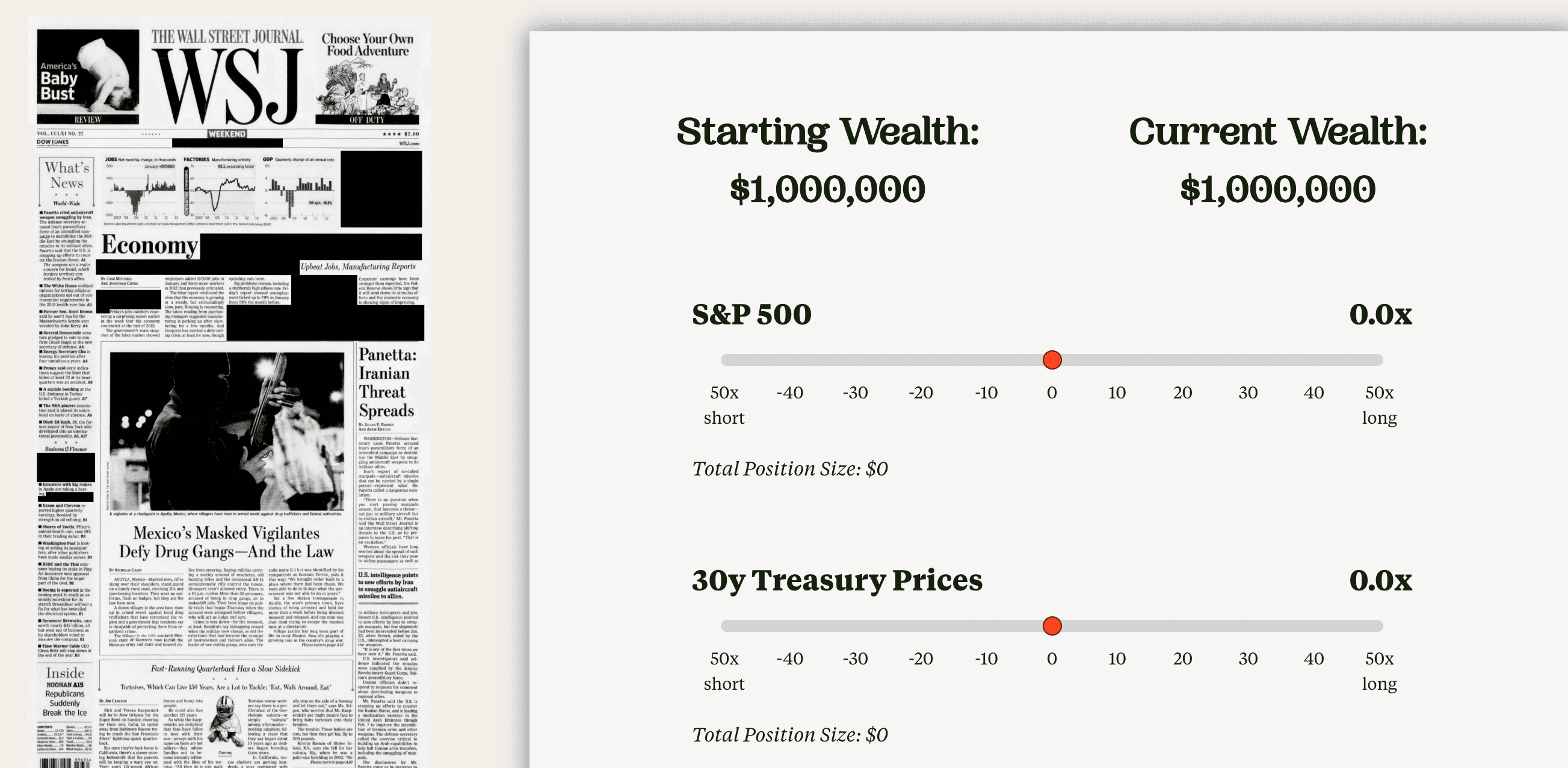
Posted by Phoebe BainJul 25, 2025Play a game that reveals if investors with a crystal ball make better tradesThe "crystal ball" game reveals how well you would do trading stocks and bonds if you could see the front page of the Wall Street Journal one day in advance. ZoomCrystal Ball Trading Challenge - Elm Wealthhttps://elmwealth.com/crystal-ball-challenge/
Posted by Meher QazilbashJun 3Electronic trading transformed investing, ushering in a new era for retail investors in which average Americans could research stocks online and then use early platforms like StreetSmart and E-Trade to conduct their transactionsIn the early 1990s, stock brokerages knew that online trading would be a great equalizer, creating opportunities for more individuals to buy and sell stocks. ZoomPage Not Found | MIT - Massachusetts Institute of TechnologyMassachusetts Institute of Technologyhttps://web.mit.edu/smadnick/www/wp2/2000-02-SWP%234104.pdf
Posted by Phoebe BainMay 21Learn how to read a prospectus, the juicy document that any company must file with the SEC before going publicA prospectus typically contains information about the company's operations, including details about its management team and their compensation, financial statements, how it intends to use any capital raised by the IPO, and more. While these documents can be dense and lengthy, experts say that some of the most important sections of a prospectus for investors to look at include the risk factors section and the use of proceeds section. Show 2 more findings ZoomWhat Is a Prospectus? Example, Uses, and How to Read ItInvestopediahttps://www.investopedia.com/terms/p/prospectus.asp#toc-how-to-read-a-prospectus
Posted by Phoebe BainMar 5Private credit is a nonbank loan made directly to a businessSimilar to private equity, private credit is part of the private markets world. Both strategies offer illiquid, privately negotiated investments for privately held companies. Unlike private equity investors, however, private credit investors typically do not take ownership stakes in the companies they invest in. ZoomPrivate Credit vs. Private Equity: What's the Difference?Investopediahttps://www.investopedia.com/private-credit-vs-private-equity-7565530