Posted by Phoebe BainAug 18Learn about the essential Securities and Exchange Commission filing types, including S-1, 10K, 10Q, and 8-K.Show 7 more findings ZoomEssential SEC Filings for Investors: Key Forms ExplainedInvestopediahttps://www.investopedia.com/articles/fundamental-analysis/08/sec-forms.asp
Posted by Meher QazilbashJul 11, 2025An S-1 reveals financial and other details to the public, often for the first time, when filing for an IPOTo file for an IPO, a company must file a registration form called an S-1 or prospectus with the US Securities and Exchange Commission. S-1s detail a company's current business model, competitive landscape, and other financial information. ZoomSEC Form S-1: What It Is, How to File It or Amend ItInvestopediahttps://www.investopedia.com/terms/s/sec-form-s-1.asp
Posted by Phoebe BainMay 21Learn how to read a prospectus, the juicy document that any company must file with the SEC before going publicA prospectus typically contains information about the company's operations, including details about its management team and their compensation, financial statements, how it intends to use any capital raised by the IPO, and more. While these documents can be dense and lengthy, experts say that some of the most important sections of a prospectus for investors to look at include the risk factors section and the use of proceeds section. Show 2 more findings ZoomWhat Is a Prospectus? Example, Uses, and How to Read ItInvestopediahttps://www.investopedia.com/terms/p/prospectus.asp#toc-how-to-read-a-prospectus
Posted by Phoebe BainAug 18Explore EDGAR: the Securities and Exchange Commission's free, public database with information and filings from public companies.Show 2 more findings ZoomSEC.gov | Search FilingsU.S. Securities and Exchange Commissionhttps://www.sec.gov/search-filings
Posted by Phoebe BainNov 14, 2024Airbnb’s S-1 in 2020 revealed how it weathered the pandemic and its financialsAn S-1 or prospectus is a registration form filed with the US Securities and Exchange Commission when a company wants to go public. They can be pretty juicy documents, as S-1s can reveal previously private details about companies to the public, often for the first time. Zoomhttps://www.sec.gov/Archives/edgar/data/1559720/000119312520294801/d81668ds1.htm
Posted by Phoebe BainJul 13Watch this video to learn how to read a company's earnings report, the documents that reveal key details about a public company's recent financial performance.Show 2 more findings 4:46How to understand earnings, explained by Yahoo FinanceYahoo Financehttps://www.youtube.com/watch?v=AMeeZLR8464
Posted by Phoebe BainOct 30, 2024Chapter 7 and Chapter 11 filings can impact common stockholdersPublicly traded companies don’t file for bankruptcy out of nowhere—there are typically warning signs in a stock’s performance, quarterly earnings calls, and US Securities and Exchange Commission filings. ZoomBankruptcy and stocks | Fidelityhttps://www.fidelity.com/viewpoints/active-investor/stocks-and-bankruptcy
Posted by August MoonFeb 27An initial public offering is how a private company becomes public.This milestone requires plenty of preparation, starting with the SEC's S-1 registration, revealing key details about the company's finances and strategy. Investment bankers set valuations, secure long-term investors, and finalize share pricing before the public launch. IPOs provide companies with significant capital, but also demand transparency and invite public scrutiny.Show 3 more findings 4:36The What, How, and Why Behind IPOs1440 Originalshttps://www.youtube.com/watch?v=eNicdvnWTQc
Posted by Phoebe BainAug 10Ride along on one coffee company's journey through the stock market to better understand how a company goes from private to public.Show 5 more findings 4:30How does the stock market work? - Oliver ElfenbaumTED-Edhttps://www.youtube.com/watch?v=p7HKvqRI_Bo
Posted by Phoebe BainJul 13Earnings season—the time period at the end of each quarter when many public companies release their earnings reports—offers a chance for investors and Wall Street analysts to evaluate how a wide range of companies are performing at once.Show 4 more findings ZoomWhat Is Earnings Season?FINRAhttps://www.finra.org/investors/insights/earnings-season
Posted by Phoebe BainJun 22Companies go public via an initial public offering (IPO) to raise large amounts of capital, helping them expand, invest in new ventures, hire more staff, or pay off debts.Show 3 more findings 4:13What is an IPO? | CNBC ExplainsCNBChttps://www.youtube.com/watch?v=l4HMCr5roAM&t=68s
Posted by Phoebe BainAug 18Watch former Securities and Exchange Commission Chair Gary Gensler's 'Eras Tour' for the agency's 90th anniversary, a look back on the pivotal moments in the agency's history. Show 6 more findings 5:36Eras Tour of The Securities and Exchange Commission | The SEC’s 90th AnniversaryU.S. Securities and Exchange Commissionhttps://www.youtube.com/watch?v=cwHStptkOLw
Posted by Phoebe BainMay 21SpaceX's S-1 or 'prospectus' revealed many previously unknown details about the companyThose revelations include the company's unprofitability despite doing $18.7B in revenue in 2025, exactly how many voting shares Elon Musk will have in the company (roughly 85%), and more.Show 3 more findingsSpace Exploration Technologies - S-1SEChttps://www.sec.gov/Archives/edgar/data/1181412/000162828026036936/spaceexplorationtechnologi.htm
Posted by Phoebe BainAug 18Read a breakdown of the different financial and banking regulatory bodies in the US, including the SEC.Show 9 more findings ZoomKey U.S. Agencies Regulating Financial Institutions and MarketsInvestopediahttps://www.investopedia.com/ask/answers/063015/what-are-some-major-regulatory-agencies-responsible-overseeing-financial-institutions-us.asp
Posted by August MoonAug 18The Securities and Exchange Commission was created during the Great Depression to restore public trust in financial markets after the 1929 crash. Show 4 more findings 1:18Why the SEC Was Started1440 Originalshttps://www.youtube.com/shorts/i7ET0f_DjWc
Posted by Phoebe BainNov 14, 2024Smaller companies’ IPO information can be hard to track downThis calendar keeps you updated on the current IPO dates and pricing from different companies. You can search for upcoming and future IPO dates and see which companies withdrew from the IPO process. ZoomMarketWatchhttps://www.marketwatch.com/tools/ipo-calendar
Posted by Meher QazilbashJul 11, 2025WeWork filed its first S-1 in 2019When WeWork prepared to file for its initial public offering in 2019, its S-1 revealed its poor financial state to the public. Zoomhttps://www.sec.gov/Archives/edgar/data/1533523/000119312519220499/d781982ds1.htm
Posted by Phoebe BainAug 27The term 'securities' refers to different types of investments, such as stocks or bonds. Show 3 more findings ZoomSecurities DefinedUS Newshttps://money.usnews.com/investing/term/securities
Posted by August MoonJun 11The number of publicly traded companies has decreased in recent years.In 1996, more than 7,300 companies traded publicly on US stock markets, but that number has recently dropped to 4,300. Economists point to two reasons: First, going public requires full disclosure of operations, exposing it to scrutiny from investors, competitors, and analysts. Second, the IPO process is expensive and time-consuming. 1:09Why Has the Number of Publicly Traded Companies Shrunk?1440 Originalshttps://youtube.com/shorts/nCm_NbjBYtA
Posted by Meher QazilbashJul 11, 2025WeWork’s S-1 was full of alarming financial and business information that concerned investors and the publicWhen WeWork’s S-1 came out, investors were particularly concerned about WeWork’s expenses far outpacing its growing revenue and its complex company structure, as well as a few potential conflicts of interest within the company. ZoomThe strangest and most alarming things in WeWork's IPO filingCNBChttps://www.cnbc.com/2019/08/17/wework-ipo-filing-strangest-and-most-alarming-things.html
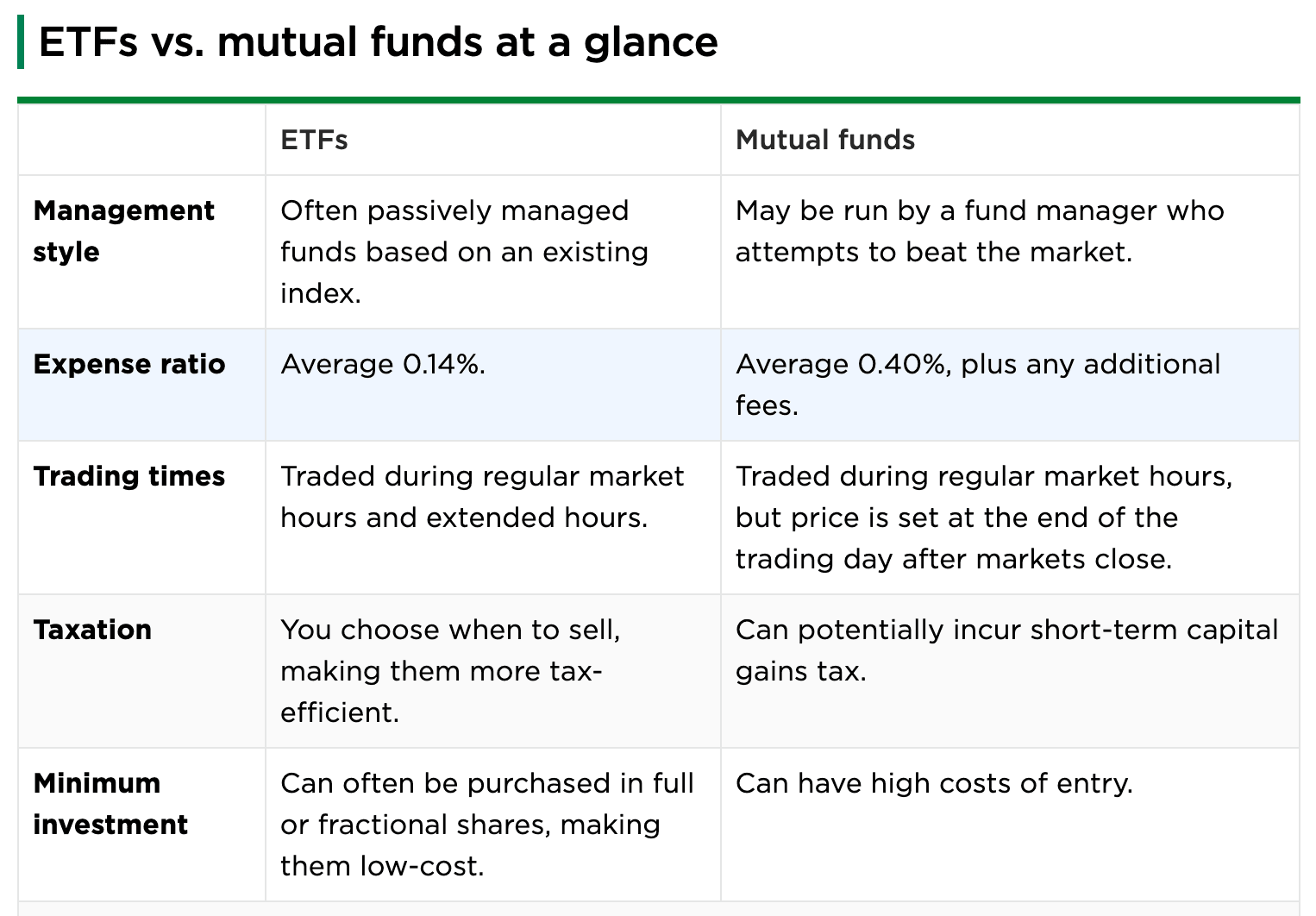
Posted by Meher QazilbashAug 4, 2025Test your ETF knowledge A 10-question quiz from the SEC allows investors to test their basic knowledge about exchange-traded funds and their investing counterparts, mutual funds. Here’s a sample question: Is the past performance of a fund a good indicator of future results? (Hint, the answer is no). ZoomMutual Funds and ETFs – Investing Quiz | Investor.gov(link is external)(link is external)https://www.investor.gov/additional-resources/spotlight/investing-quizzes/mutalfund-etfs-quiz
Posted by Phoebe BainOct 30, 2024The most common types of bankruptcy filings are Chapter 7, Chapter 11, and Chapter 13However, there are actually six types in practice today. These less-common options can be lifelines for foreign businesses operating in the US, local governments, and farms and fisheries. ZoomBankruptcy Explained: Types and How It WorksInvestopediahttps://www.investopedia.com/terms/b/bankruptcy.asp
Posted by Phoebe BainJun 11Going public has pros and cons for a company.An organization transfers ownership over to new shareholders—who could be anyone—following its IPO date. However, going public expands a company's ability to increase funding and grow its business. This guide dives into the advantages and disadvantages of going public, and what those pros and cons can mean for investors. ZoomWhat Are the Advantages and Disadvantages of a Company Going Public?Investopediahttps://www.investopedia.com/ask/answers/advantages-disadvantages-company-going-public/
Posted by Teddy BurkhardtMay 4The stock market, explained in 3 minutesThe stock market consists of a set of exchanges and other venues where shares of public companies are bought and sold. The Nasdaq and the New York Stock Exchange are two of the most well-known exchanges in the US, while major exchanges also operate around the world, including in Tokyo, Shanghai, London, and São Paulo. 3:10Stock Market Explained in 3 Minutes1440 Originalshttps://www.youtube.com/watch?v=jXLGDe5Y1j4
Posted by Phoebe BainAug 14, 2024Initial public offering (IPO) is the term for when a company goes publicWhen a company completes its IPO, it's no longer a privately owned organization. Anyone can invest in the company by buying its shares on the stock market—opening up ownership of the business to the general public. Zoomhttps://www.nerdwallet.com/article/investing/what-is-ipoNerdWallethttps://www.nerdwallet.com/article/investing/what-is-ipo
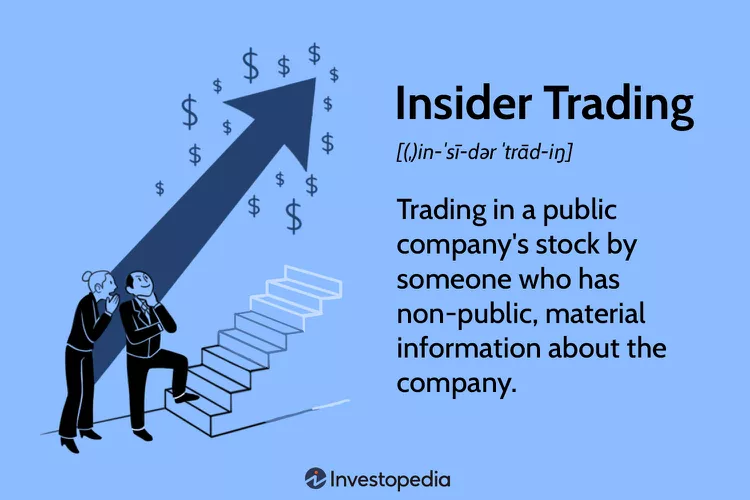
Posted by Phoebe BainMar 16Insider trading is the practice of trading a company's securities based on material, nonpublic information.Show 3 more findings ZoomWhat Is Insider Trading and When Is It Legal?Investopediahttps://www.investopedia.com/terms/i/insidertrading.asp
Posted by Phoebe BainApr 2940 key stock market terms, explainedLiquidity. Forex. Capitalization. Blue chip stocks. These are just a few pieces of stock market vocabulary most people who don't spend all day on a trading floor might not know. Thankfully, we found a fun infographic that makes it easier to learn what 40 key stock market terms mean and why each of them matters. ZoomMarkets 40 Stock Market Terms That Every Beginner Should KnowVisual Capitalisthttps://www.visualcapitalist.com/40-stock-market-terms-every-beginner-know/
Posted by Phoebe BainSep 25, 2025Companies often use different share classes, like Class A or Class B, to structure ownershipShare classes refer to specific types of company stock that are distinguished by the rights they grant, such as voting power and dividend access.Understanding Class of Shares: Types, Voting Rights, and DividendsInvestopediahttps://www.investopedia.com/terms/c/class.asp
Posted by Phoebe BainApr 3The S&P 500 selection committee has strict rules around adding a company to the indexWhile the decision to add a company to the index is ultimately up to the selection committee, any prospective company has to meet some criteria to be considered. To join, the company must have been profitable for the last four quarters, must have a market capitalization exceeding $22.7B, and meet certain requirements around tradeable stock availability (or float).Charles Schwabhttps://www.schwab.com/learn/story/new-stocks-on-block-how-stocks-join-sp-500
Posted by Phoebe BainAug 14, 2024Why does the stock market matter?Open any newspaper, turn on your local TV news station, or listen to a daily business radio segment, and you’re bound to hear about how the stock market is performing. Netflix created a 17-minute (free) explainer that dives deep into the nitty-gritty of how we got here. 17:34Explained | The Stock Market | FULL EPISODE | Netflixhttps://youtu.be/ZCFkWDdmXG8?feature=shared
Posted by Phoebe BainNov 14, 2024It's difficult for individual investors to purchase IPO sharesAlthough the process of going public means the general public can invest in a company, the initial investment period is different. Before individual investors get in on the action, investment bankers sell the shares to larger financial institutions who can afford the asking price and risk associated with an IPO. ZoomInitial Public Offerings, Why Individuals Have Difficulty Getting Shareshttps://www.investor.gov/introduction-investing/investing-basics/glossary/initial-public-offerings-why-individuals-have
Posted by Phoebe BainFeb 27Private companies are often harder to value than public companiesThat's partly because there isn't readily available stock information, and financial accounting is kept behind closed doors. Typically, determining the value of a private company involves, among other things, closely comparing the private company with its competitors. ZoomHow to Value Private CompaniesInvestopediahttps://www.investopedia.com/articles/fundamental-analysis/11/valuing-private-companies.asp
Posted by Phoebe BainNov 14, 2024Special-purpose acquisition companies let companies skirt the IPO processA video explains how private companies have taken advantage of this loophole, why investing in these companies isn’t always a good idea, and how blank-check companies (as they’re commonly called) work. 6:37How Private Companies Are Bypassing the IPO Process | WSJThe Wall Street Journalhttps://www.youtube.com/watch?v=okyT7KfnFrI
Posted by Teddy BurkhardtApr 3A stock index is a group of companies clustered together, often providing a condensed snapshot of a market segment.Show 3 more findings 7:47What Are Stock Market Indicies? (S&P 500, Dow Jones, & NASDAQ Explained)Whyzehttps://www.youtube.com/watch?v=y-RGEos-lus
Posted by Phoebe BainApr 3Investors rely on the S&P 500 as a benchmark for the state of the economySince the index represents a broad range of diverse industries, it's become a proxy for the market itself and a common benchmark for investors to compare returns and performance patterns against. Generally speaking, when someone says a stock is under- or out-performing the market, that actually means under- or out-performing the S&P 500. The S&P 500 is exchange-agnostic, and includes companies listed on both the NYSE and Nasdaq.Investopediahttps://www.investopedia.com/ask/answers/041315/what-are-pros-and-cons-using-sp-500-benchmark.asp
Posted by Phoebe BainJun 26'The stock market' can be loosely defined as a set of exchanges and other places where shares of public companies are bought and sold. Show 3 more findings 3:10Stock Market Explained in 3 Minutes1440 Originalshttps://youtu.be/jXLGDe5Y1j4
Posted by Phoebe BainApr 3Listen to the methods and strategy of the secretive S&P 500 selection committeeStocks are added to the S&P 500 by a secret selection committee that meets regularly to assess which companies can remain in the index, which companies need to be added, and which companies no longer meet the criteria. The members of the committee used to be public, but S&P Global decided to keep its members confidential after companies sent packages, letters, and gifts to try to make it into the index.https://open.spotify.com/episode/0H272OTIzQ8IzfZ4ZJiyLa
Posted by Phoebe BainNov 14, 2024Just because a big name company is going public doesn’t guarantee a successful stockA reporter dove into how highly anticipated IPOs can still be risky, and why retail investors should be wary of investing right away. 3:18History lessons from the recent blockbuster IPOshttps://www.youtube.com/watch?v=Gvh7vE3IWE8
Posted by Meher QazilbashJan 10, 2025Startups fundraise in 'rounds' as they prove out their business and scale When startups take on outside funding, those investments are divided into different "rounds." These rounds are catered to different stages in a startup's life cycle—a startup often needs different types of investors and amounts of funding at different stages of the business. For instance, a pre-seed investment round can include investments ranging from about $25K to $500K, whereas a Series D investment can be hundreds of millions of dollars. ZoomStartup Funding Rounds: Complete Guide for Founders | Ripplinghttps://www.rippling.com/blog/startup-funding-rounds