Space

From roughly 60 miles above the Earth's surface to farther than light has traveled during the entire age of the universe, space has captured human imagination for millennia. Explore the final frontier with the best resources curated from across the internet.

1440 Findings

Hours of research by our editors, distilled into minutes of clarity.

  • Black Holes

    What is the Event Horizon Telescope?

    Black holes in the modern sense were first predicted as a consequence of Einstein’s general theory of relativity. These objects are so dense, they are surrounded by a boundary called an event horizon; anything crossing that boundary can never return to the outside universe. Despite their ubiquity and large mass, black holes are relatively small in size meaning even our best telescopes can’t take images of them— at least when working alone. The EHT yokes multiple telescopes together, giving it the resolution necessary to take an image of the supermassive black hole in the giant elliptical galaxy M87.

  • Planets

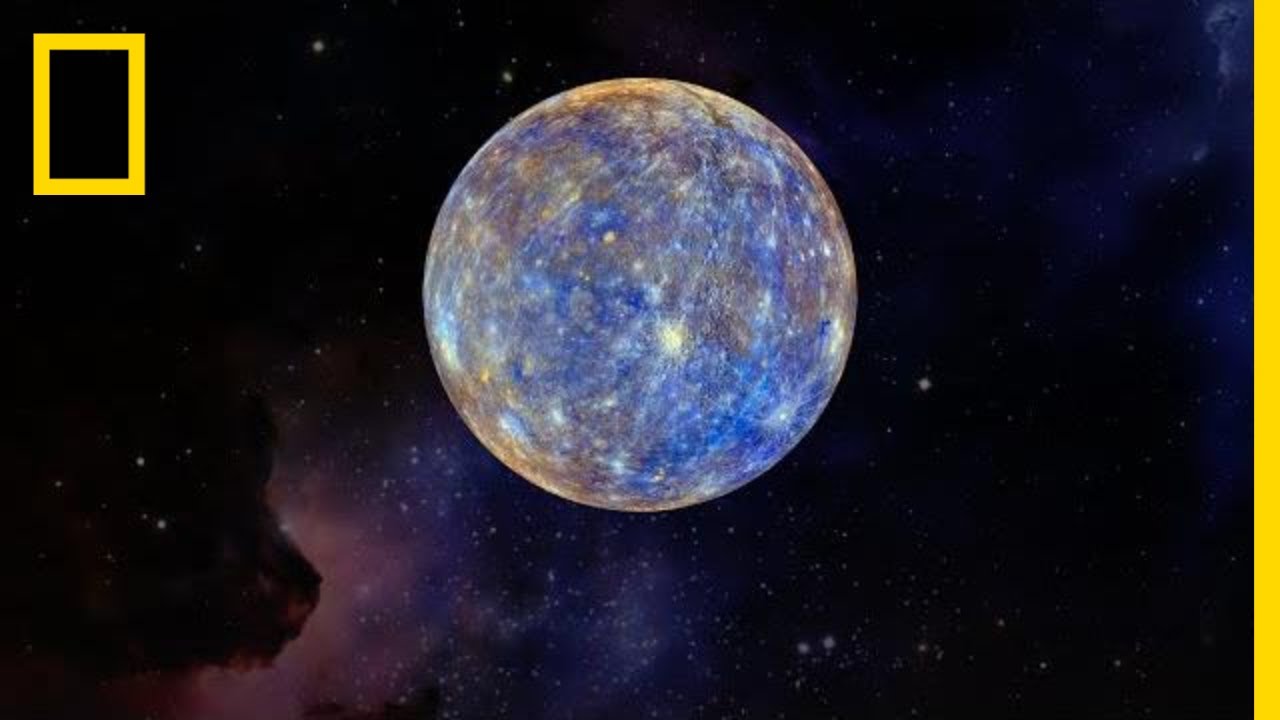
    Mercury 101: An intro to the nearest planet to the sun

    The solar system's smallest planet was named after the Roman god Mercury (the Greeks' Hermes), the swift messenger, as the ancients observed Mercury's quick revolutions around the Sun—a result of its proximity to the Sun's gravity. With a 3,000-mile diameter, Mercury is roughly the size of the continental United States. A terrestrial (primarily solid land) planet like Earth, Mercury's inner core is filled with more iron than Earth's. As the iron cooled, Mercury shrunk, possibly contributing to the planet's diminutive shape. Its thin atmosphere allows for major temperature swings throughout its day. Watch a three-minute video overview here.

    Video

    Mercury 101: An intro to the nearest planet to the sun

  • Cosmology

    A scale of the universe, from atoms to cosmos

    Can you really appreciate just how small protons are, or how massive the universe is? To attempt to grasp it, watch this short video which zooms out from a young woman in California to the very limits of the cosmos using established scales. Then, dive deep into the atoms of her white blood cells for a fully-rounded effect.

    Video

    A scale of the universe, from atoms to cosmos

  • Human Spaceflight

    Using fitness wearables to track muscle wasting in astronauts

    All that exercising, and astronauts still are likely to lose a large amount of muscle mass while in microgravity. Astronauts can lose up to 20 percent of their muscle in as little as five days in space. Currently, tracking muscle loss means waiting until astronauts land to remeasure their muscle density post-trip. This article explains a NASA-backed fitness wearable that may be able to track muscle atrophy as it happens.

  • Astrophysics

    Galactic archaeologists trace the evolution of the Milky Way

    Archaeologists reconstruct the history of previous civilizations. Researchers in the new field of galactic archaeology have even greater ambitions: They intend to reconstruct the history of the whole Milky Way. Broadly speaking, the Milky Way galaxy is roughly 13.6 billion years old, with its first stars very large but short lived. Over time, our galaxy became a mix of young and old stars—studying them provides details into how our universe unfolded. This article explores the work of galactic archaeologists and the tools they use to explore the evolution of the galaxy.

  • Planets

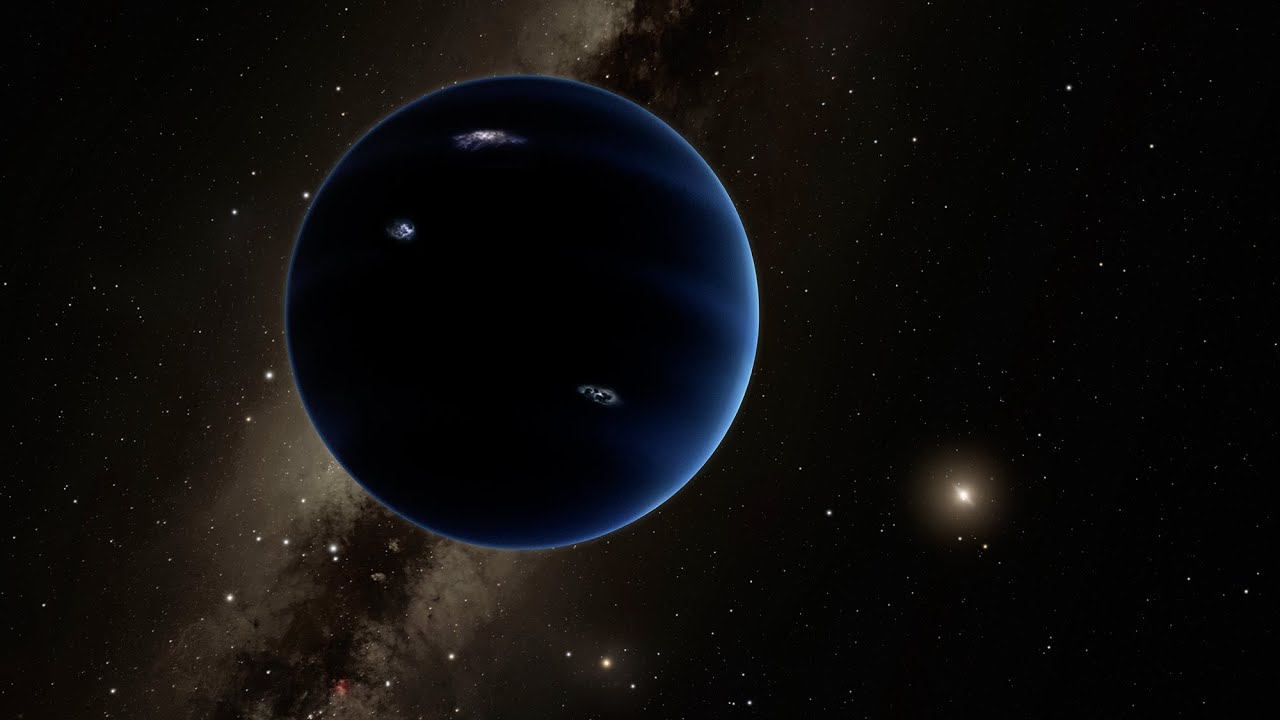
    Evidence for a ninth planet in our solar system

    Is there a massive ninth planet on the edge of our solar system? Many of our solar system's most distant objects tend to swing out in one direction, hinting at evidence for a previously unknown ninth planet potentially larger than Earth. This theoretical planet's orbital period is estimated to be roughly 20,000 years, revolving around the sun at a distance of 60 billion miles. Experts break down the evidence in this quick video.

    Video

    Evidence for a ninth planet in our solar system

  • Moon

    The race to build a permanent lunar base

    NASA's Artemis mission—the first to return humans since 1972—aims to explore the moon's water-rich south pole. Finding water is a crucial goal of NASA's Artemis program, which aims to establish a permanent, sustainable human habitat on the moon. NASA also hopes to create a refueling station by using water as a rocket propellant as well as nuclear reactors and solar farms to sustain astronauts. Obviously, significant challenges remain. This article captures the current status of plans to build a lunar base.

  • Jupiter

    The most volcanic body in the solar system

    As part of NASA’s real-time science encyclopedia of deep space exploration, you can take a look around the most volcanic object in our solar system: Io, one of Jupiter's moons discovered by the great Renaissance astronomer Galileo Galilei. The moon—roughly the size of Earth's moon—is covered in dozens of active volcanoes, with many erupting lava flows miles into the sky. Io's extreme volcanism results partly from the gravitational tensions from Jupiter and two other nearby moons. Learn more about this lava-filled hot spot in the solar system here.

  • Planets

    The ride of your life: How Earth moves

    As stable as Earth feels, our planet is always moving: it's rotating on an axis, revolving around the Sun at the center of its orbit, and through space within the solar system and broader Milky Way galaxy. All these movements occur in a mostly regular way and provide reference points for our record of time: days (rotation), months (lunar cycle), and years (revolution around the Sun). But these patterns aren't quite exact, with the length of a day just a little over 24 hours. This quirk has resulted in some surprising calendar bloopers over the centuries, including September 1752, in the United Kingdom, where 11 days were removed.

    Video

    The ride of your life: How Earth moves

Next page