The global economy runs on US dollars
Nearly 90% of international trade in 2019 was processed in US dollars. It’s not only the most circulated currency in the world but also considered one of the most stable.
Hours of research by our editors, distilled into minutes of clarity.
Nearly 90% of international trade in 2019 was processed in US dollars. It’s not only the most circulated currency in the world but also considered one of the most stable.
US tariffs peaked in 1930 with the Smoot-Hawley Tariff Act, which slashed global trade by 65%. Once a key revenue source, tariffs gave way to income taxes in 1913, leading to decades of lower trade barriers. Today, US tariffs remain among the lowest worldwide.
While tariffs can generate government revenue and encourage the consumption of locally produced goods, they can often lead to higher consumer prices and may negatively impact economic growth.
Nearly 90% of international trade in 2019 was processed in US dollars. It’s not only the most circulated currency in the world but also considered one of the most stable.
After China joined the World Trade Organization in 2001, the trade partnership between the US and China bloomed. But it's not without pros and cons, including lower prices for US consumers and higher profits for US corporations alongside the loss of American jobs due to import competition and multinational companies moving overseas.
Adam Smith’s revolutionary ideas about free trade were often ignored throughout American history to protect domestic industry—until World War II caused a shift in sentiment about global trade.
While some mainstream economists are skeptical about tariffs, President Donald Trump is bullish on them. The pros and cons of tariffs include their ability to help governments raise money and the potential for retaliatory tariffs.
Mexico, Canada, and China are the top trade partners for 42 of the states.
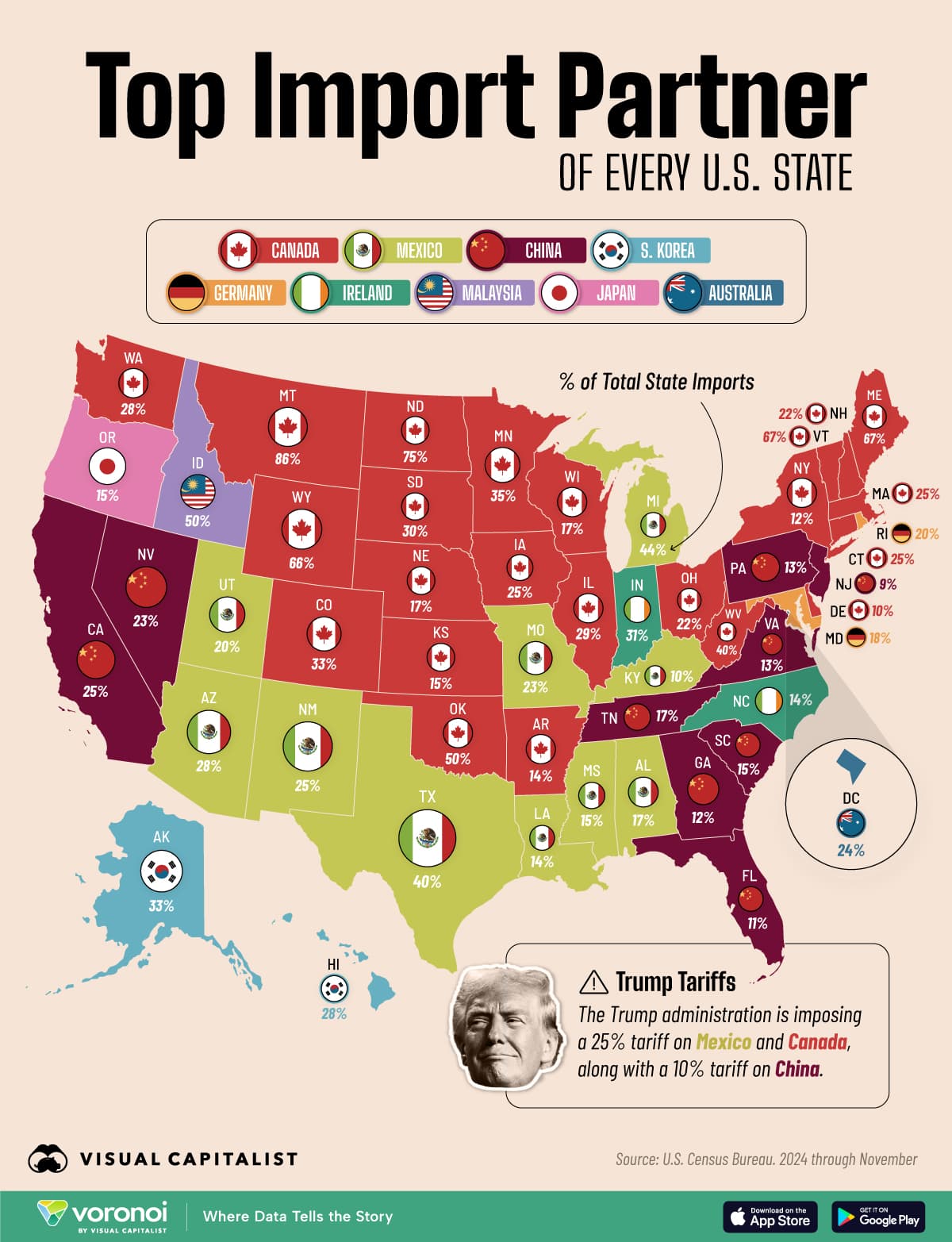
The US-China trade war is one example. While they aim to protect domestic industries, they can lead to higher prices for consumers and strained international relations.
This brief animated video from Time walks through a simple example of a tariff on a single good, illustrating how this would affect the market for the good—both domestically and abroad—and who would eventually bear the cost of the tariff.
This comprehensive report from the Congressional Research Service explores the evolving role of tariffs—from a major source of government revenue to a tool for trade and foreign policy—providing insights into current practices, legal foundations, and global trade dynamics.
The United States is home to more than 33 million businesses, the vast majority of which are small businesses, with millions being created (and others closing shop) every year. These businesses often rely on loans, provide the goods and services that keep the economy flowing, and sometimes even grow large enough to enter public markets or provide private investment opportunities. Explore key topics central to business and finance, from the role of the Federal Reserve to how initial public offerings work, how millions of American students finance higher education, and more.