Private Education
Overview
Private education is a broad term encompassing schools not managed by the state. Because they are not publicly funded, private schools have more autonomy—setting their own curriculum, discipline, and culture—than public schools.
Although there are now legal distinctions between public and private education, there was no dichotomy in early American education. During colonial times, cooperating families and religious groups—including the Jesuits, Puritans, and Quakers—opened schools that blended academic and spiritual instruction. By 1918, every state had a law requiring the education of children, effectively creating the federally-funded public school system—as well as the private one.
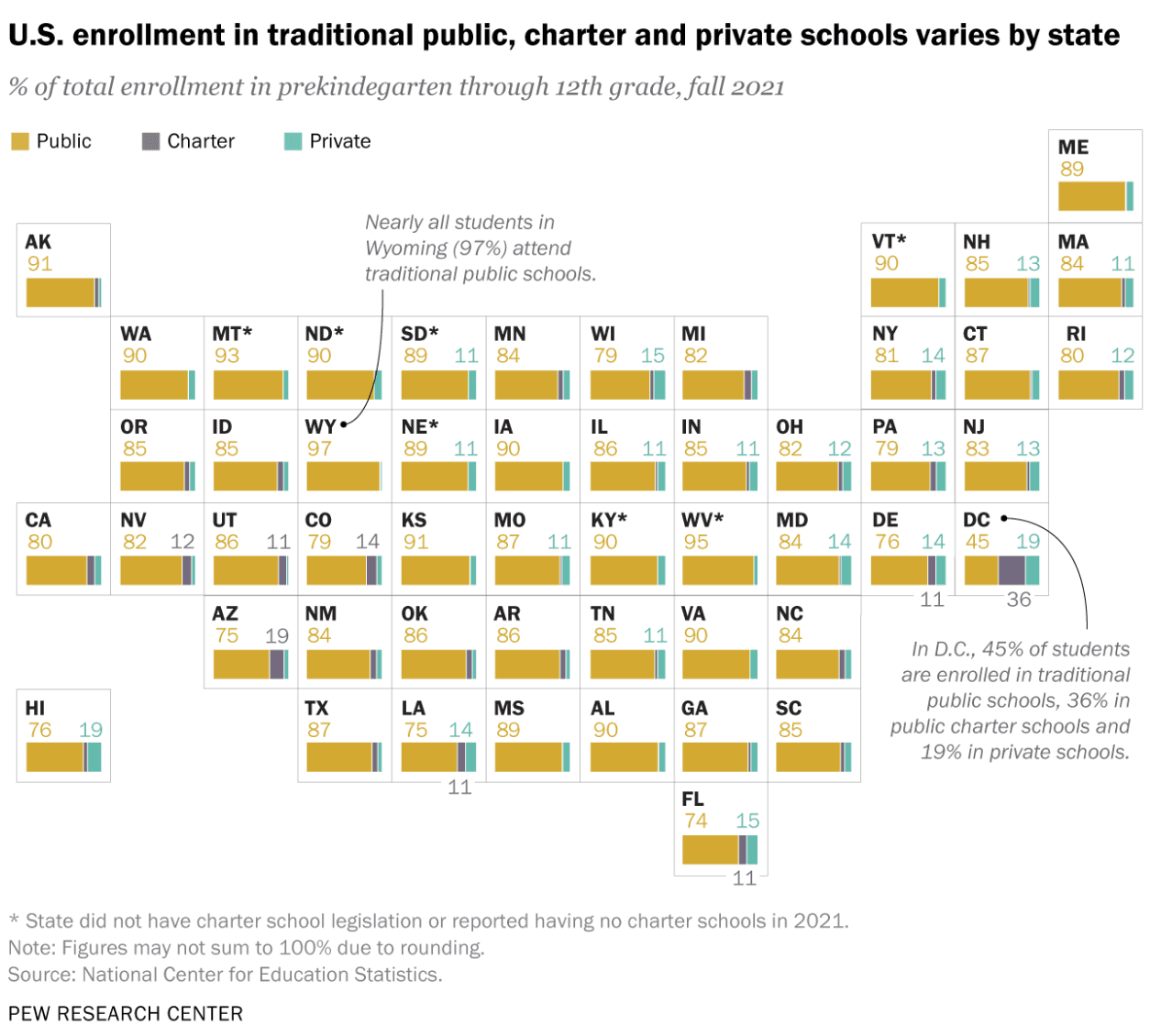
Approximately 10% of American K-12 students are enrolled in private schools, with over three-quarters enrolled in religiously affiliated schools. For its supporters, private education remains a much-needed resource for needs not offered by the larger public education system. Still, scholars note that private schools are often reserved for those who can afford tuition.
1440 Findings
Hours of research by our editors, distilled into minutes of clarity.



Explore Society & Culture
Take a deep dive into the topics shaping our shared norms, values, and institutions. Art, music, and sports. Literature, architecture, and TV. Film, food, and philosophy. If it defines who we are as a society or how we express ourselves as a culture, then we're exploring it here.
Featured Topics
- Barbecue
- Beat Generation
- Bob Dylan
- Broadway
- Bruce Springsteen
- Burning Man
- The Burrito
- Country Music
- Dystopian Literature
- Flannery O’Connor
- Frank Lloyd Wright
- Girl Groups
- Hip-Hop
- James Beard Awards
- Memes
- National Football League
- National Parks
- Netflix
- Opera
- Rock 'N' Roll
- Salvador Dalí
- 'Saturday Night Live'
- Shakespeare
- 'The Star-Spangled Banner'
- Steven Spielberg
- Title IX
- True Crime
- Vacationing
- Walt Whitman