National Debt
Overview
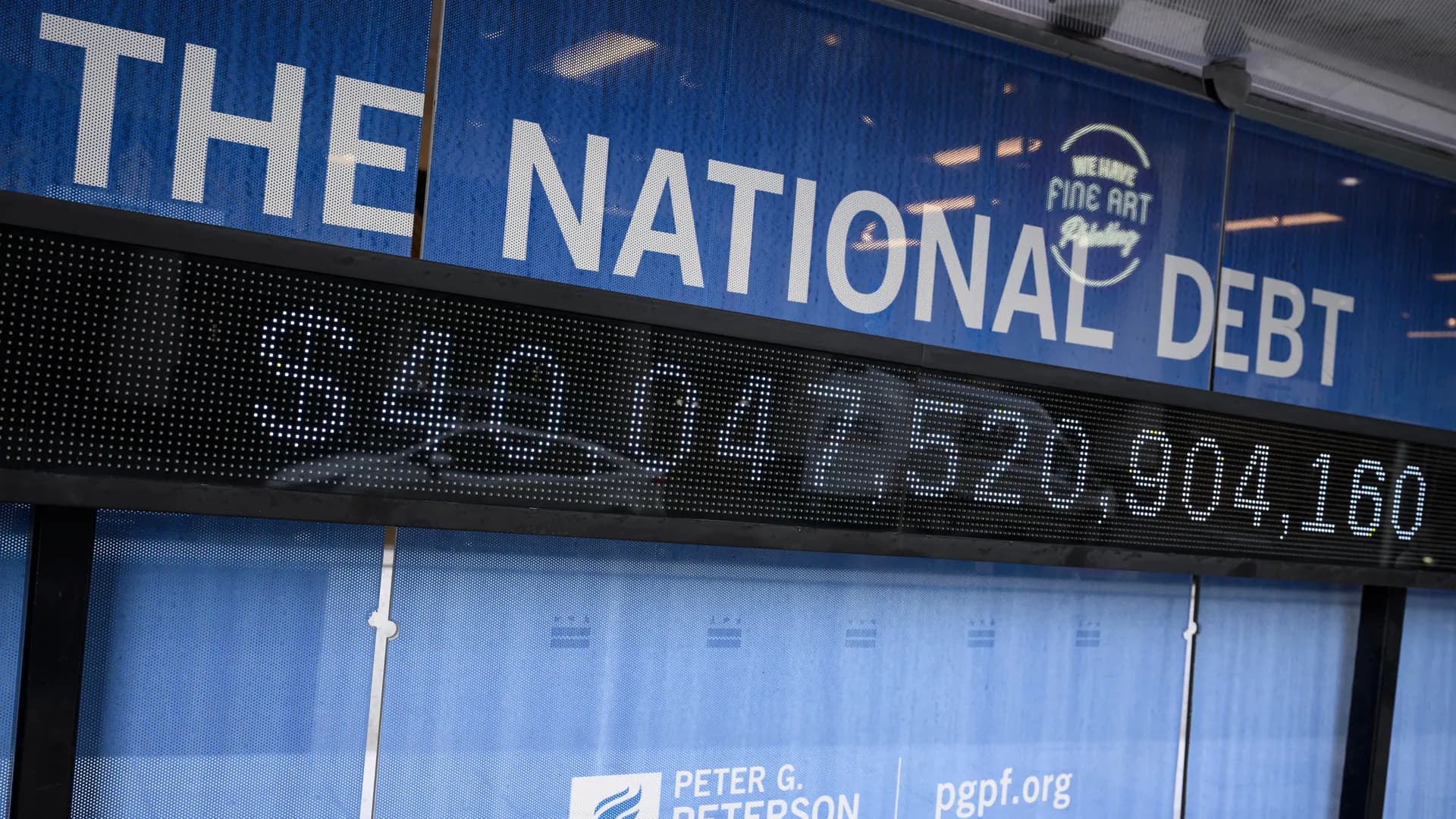
The national debt is the total amount of money the federal government has borrowed. This money supplements taxpayer dollars to fund government operations, from national defense to welfare programs. In August 2026, the US national debt passed $40T for the first time.
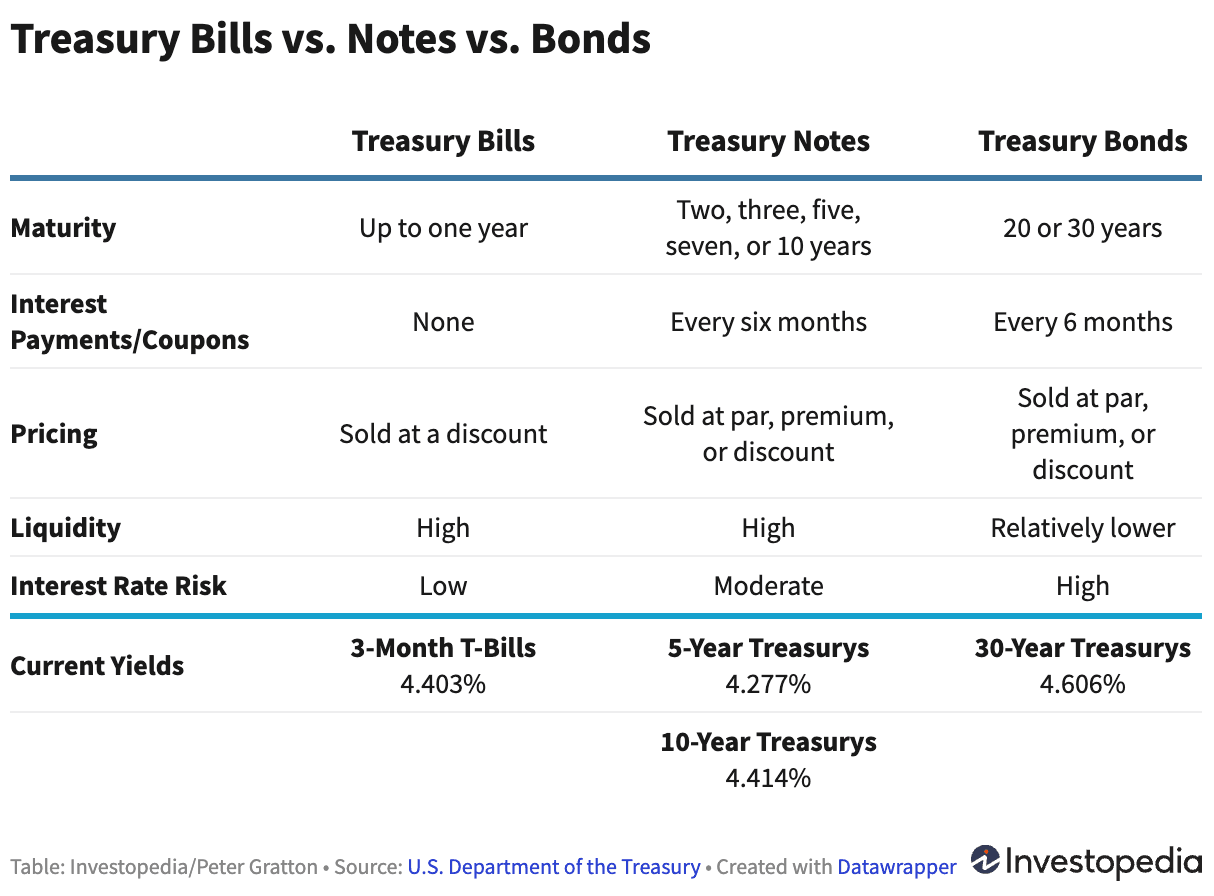
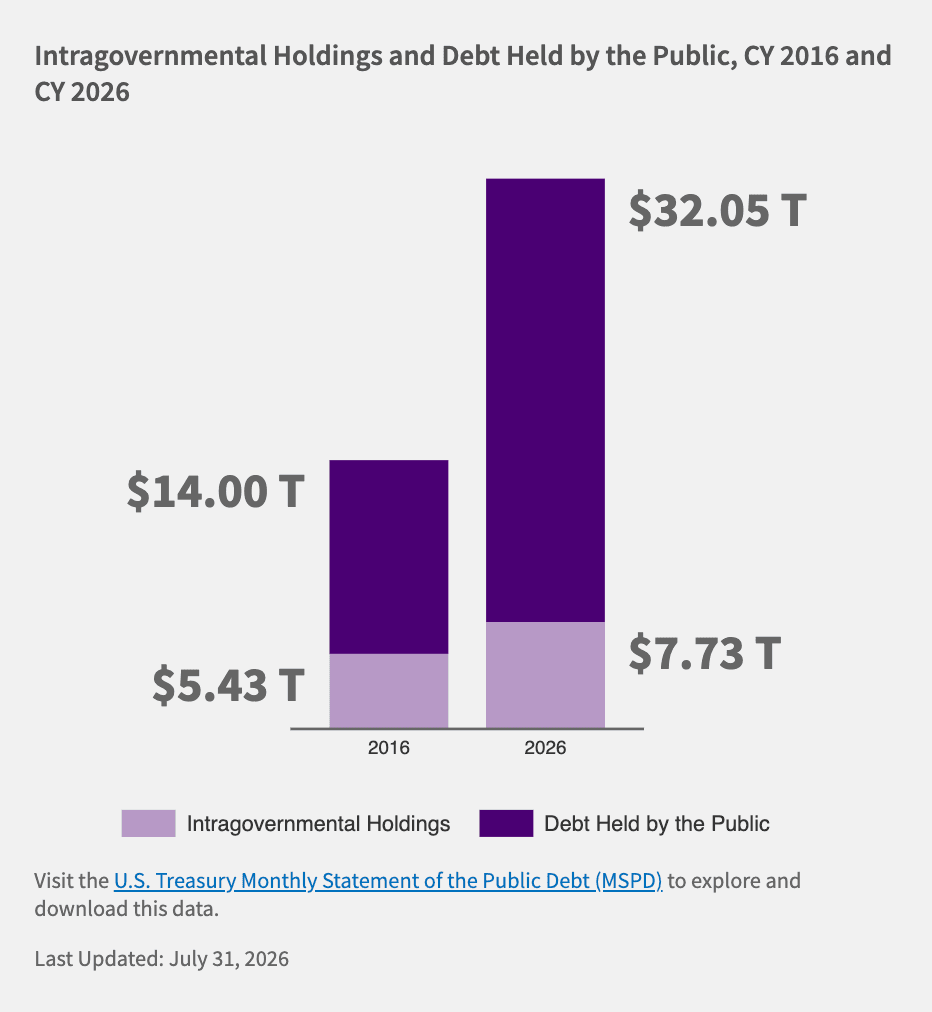
While taxes help pay for these programs, government spending often exceeds the revenue collected. The US government primarily sells bills, notes, and bonds (collectively called securities) to domestic and foreign individuals, companies, and other governments to cover the gap. This is called public debt. The government also has intragovernmental debt, or money one government sector owes to another. In both cases, the government promises to pay back the original value of the security plus interest to make it worth it for the lender.
The US has accrued debt since its infancy. Only seven years into nationhood, debts from the Revolutionary War totaled $43M. In recent years, the wars in Afghanistan and Iraq, the 2008 recession, and the COVID-19 pandemic have significantly increased the national debt. It surpassed US GDP in spring 2026, when the country's public debt was estimated to be $31.3T.
1440 Findings
Hours of research by our editors, distilled into minutes of clarity.








Explore Business & Finance
The United States is home to more than 33 million businesses, the vast majority of which are small businesses, with millions being created (and others closing shop) every year. These businesses often rely on loans, provide the goods and services that keep the economy flowing, and sometimes even grow large enough to enter public markets or provide private investment opportunities. Explore key topics central to business and finance, from the role of the Federal Reserve to how initial public offerings work, how millions of American students finance higher education, and more.
Featured Topics
- 401(k)
- Amazon
- Bankruptcy
- Bitcoin
- Bonds
- Capital Gains
- College Tuition
- Consulting
- Creator Economy
- Credit Unions
- Federal Reserve
- Gig Economy
- Individual retirement accounts
- Inflation
- Initial Public Offerings
- Investment Banking
- Labor Unions
- Life Insurance
- Macy’s
- Minimum Wage
- Mutual Funds
- OpenAI
- Startups
- Stock Market
- Student Debt
- US Currency
- Venture Capital
- Wall Street
- Warren Buffett
- Y Combinator